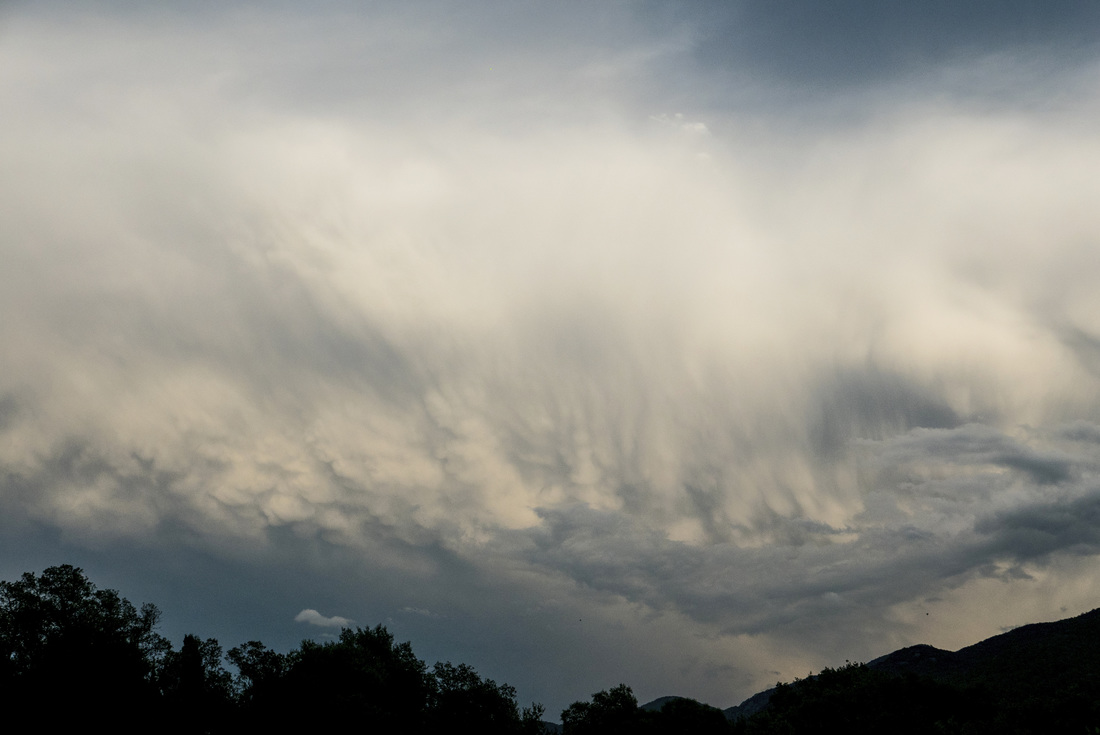
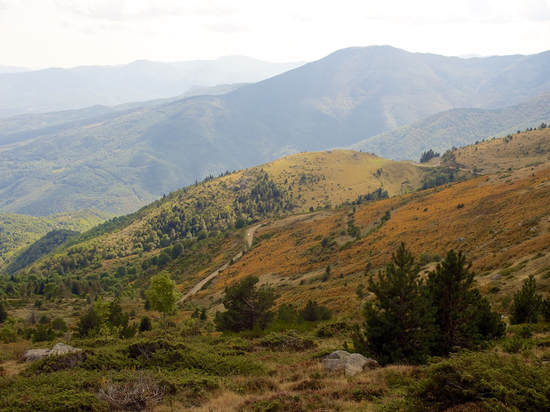
September is fading fast, and as we both have to return to Britain for a while, there is a distinct end-of-the-holidays feeling about what we do. We had friends from Scotland staying, and we wanted to show them a few of our favourite places so, of course, went up to the Batere Highlands. Actually, it was reminiscent of the Scottish Highlands in one way: an expanse of bracken (an invasive plant I detest) was golden-to-russet in the autumn sun and, I hate to admit it, looked lovely.
|
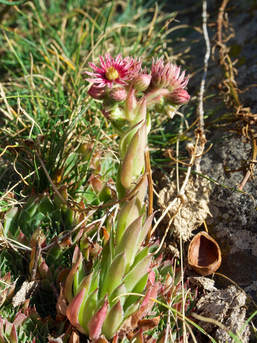
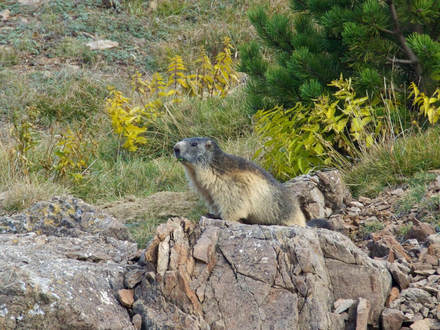
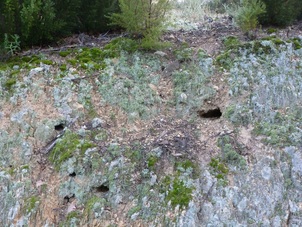
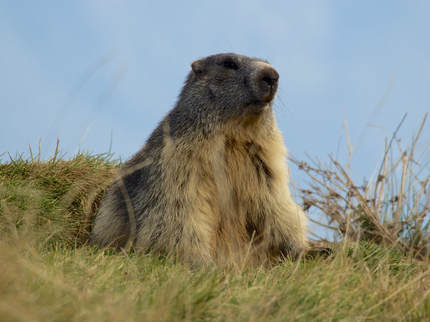
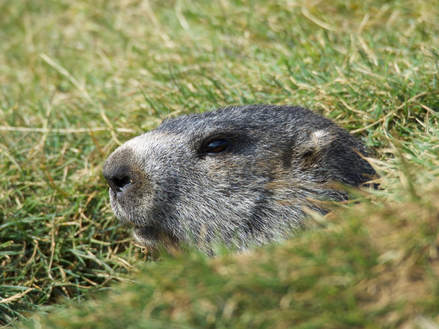
By Robin Noble Photos by Martine Howard September is fading fast, and as we both have to return to Britain for a while, there is a distinct end-of-the-holidays feeling about what we do. We had friends from Scotland staying, and we wanted to show them a few of our favourite places so, of course, went up to the Batere Highlands. Actually, it was reminiscent of the Scottish Highlands in one way: an expanse of bracken (an invasive plant I detest) was golden-to-russet in the autumn sun and, I hate to admit it, looked lovely. There were few birds and only two plants that we found in flower: one, a perfect autumn crocus, and the other, quite a fine houseleek. Otherwise, grazed and bleached grass... It was the marmots that provided the highlight of the day; altogether we had sightings of nine. One or two looked rather elderly, and had clearly been feeding up for the winter – they were taking the sun outside their burrows, or pottering about gently. A couple of youngsters were much more lively but, naturally, rather more difficult to photograph. Some of them inhabit a slightly elevated mound, which gives them a good, all-round view; in the past, Martine has spent frustrating minutes trying to approach them unseen, but on this occasion she had more luck. I was watching from a distance, through the binoculars, and it looked as though she could have reached out and touched that rather solid figure on the grass. Another place, an old quarry that has evolved into a rather enchanting little amphitheatre, gave us views of quite a few; one posed against an attractive background. Although this is quite a popular area for folk to walk in (and some that day were rather noisy!), it does look as if this population is faring reasonably well.
0 Comments
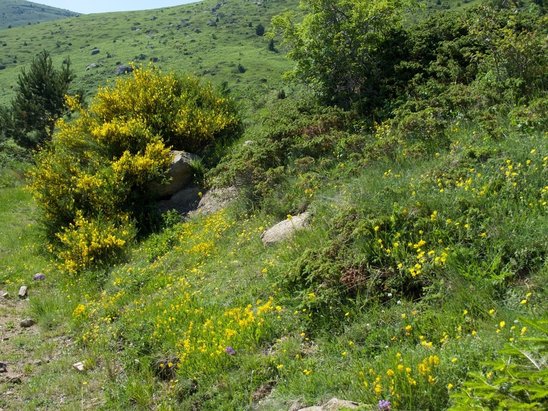
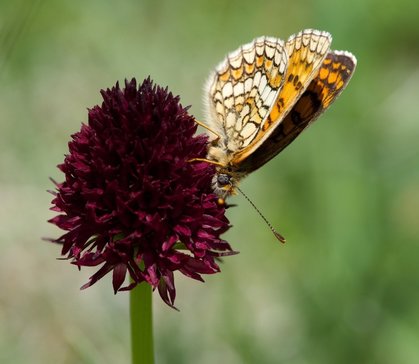
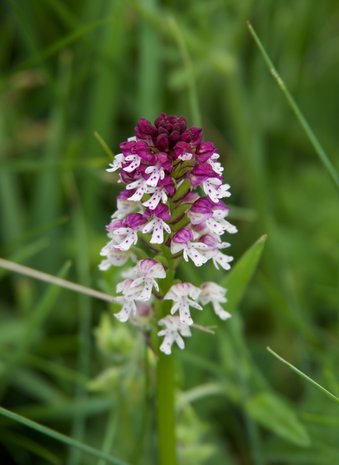
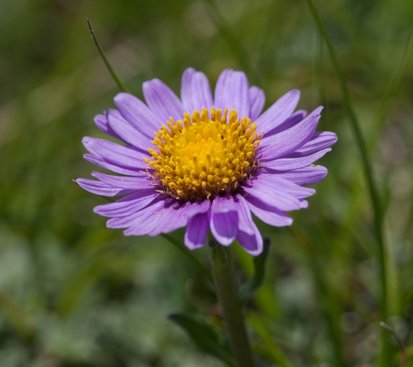
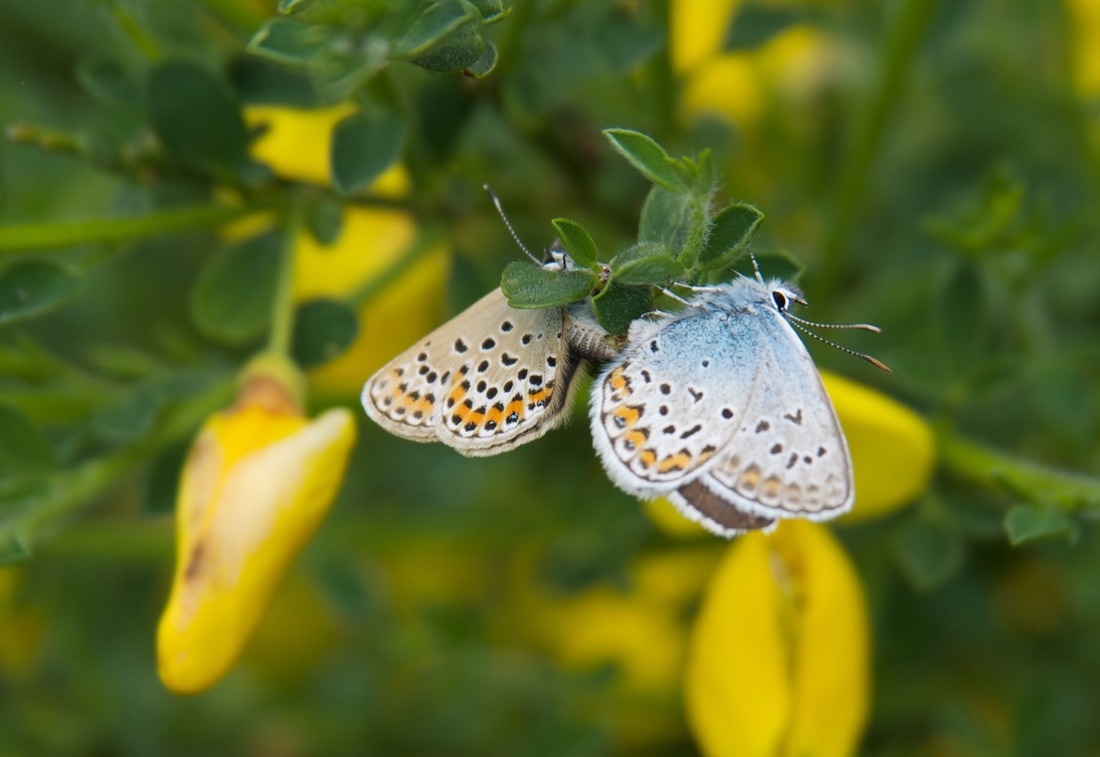
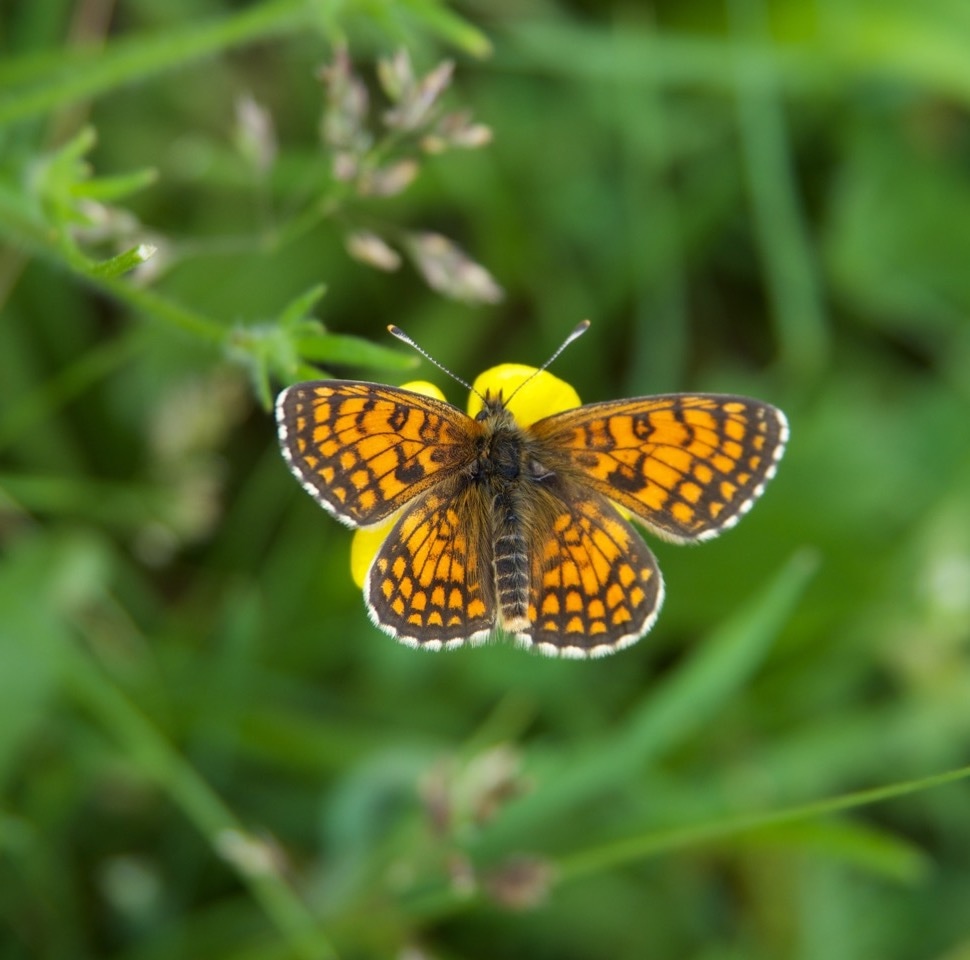
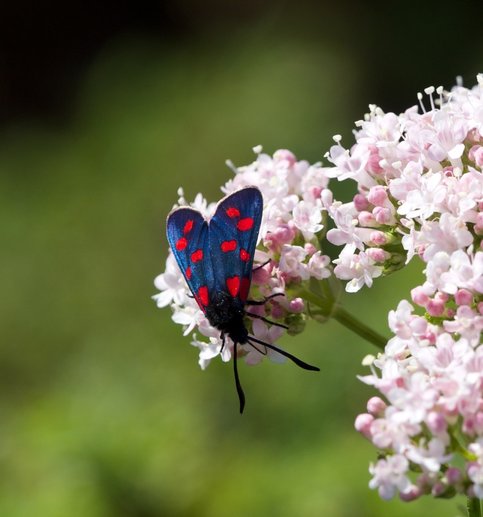
By Robin Noble (photos by Martine Howard) What used to be called nature conservation is as prone to fads, fashions and buzzwords as anything else, and "biodiversity" may well seem to some folk to be just another example. As a concept, it is at least easy to understand, as it simply means the diversity of "life-forms", really of life itself, and understanding its importance begins with the recognition that somehow, through time, our home planet has ended up endowed with a myriad of living organisms. These range in size from microscopic bacteria to elephants and whales, and they all are, somehow, more interconnected and interdependent than one can easily comprehend. We are slowly learning the nature and scope of this web of life, whether it is an understanding of the importance of mycorrhizal fungi in the root systems of trees, or the significance of the colonies of bacteria to which our own bodies are, whether we like it or not, the constant hosts. Just as it is now authoritatively believed that after heavy treatment with serious antibiotics, our bodily systems may suffer seriously in a number of ways, so too do many of us feel that the maintenance of as much as possible of the overall "web-of-life", (that complex natural system which was in place across the entire surface of the planet before our species began to destroy it), is crucial to the continued function of the life support systems with which Earth provides us. Living in an area with quite a significant population, with expanding towns and villages, all of which eat into the natural environment of PO, it is at least comforting to realise what a reservoir of biodiversity this part of France is. There are two crucial aspects of biodiversity; one is precisely that diversity, the great variety of life forms - like the fascinating insects which Lesley has been photographing and writing about lately. The idea here is that each type, for instance, of insect plays its part in the crucial processes of the world, whether it is recycling decaying matter or in pollinating flowers, aspects which we readily accept are crucial to our own lives. What we tend to call "Nature", (and James Lovelock refers to as "Gaia"), does not believe in single solutions to problems, or in supplying only one carrier-out-of-tasks, but goes in for a multitude of versions of the required organisms; quite simply, "safety in numbers". Keeping this complex web of organisms in balance requires in itself yet more organisms, species who appear to function as regulators of the entire system. But the other crucial aspect of biodiversity is that its component parts must be widespread, active over as large an area as possible. An obvious example, of great relevance to PO and its lovely, and important orchards, is that we need to have a lot of bees; a few tucked away in the equivalent of a small insect zoo will simply not manage the necessary task on the required scale- and we all would suffer greatly. One recent day spent in one of our very favourite places, the high foothills of Canigou, illustrated this word, "biodiversity", in the most wonderful and life-affirming of ways. As it happened, there was rather less activity among the birds than usual, and the marmots disdained to offer many photographic opportunities, so you might have thought that we would be rather disappointed. But it did not matter. From the moment we stopped the van and got out, it was apparent that the wildflowers were in wonderful profusion. The regular episodes of heavy rain which have characterised the spring and summer so far have resulted in more than simply a perceptible increase in the number of biting insects; there was a carpet of wildflowers, more than we have ever known before. Much of it was yellow, like the broom, brilliant against the fresh green, and the small cistus or rock-rose, which spread everywhere. Often I am quite happy simply to recognise the botanical family to which the flowers belong: scattered throughout was the crisp white of a small mouse-ear, and the vivid blue of a speedwell. But there were small groups of special flowers as well, including two beautiful orchids, which were new to us, illustrated below. The uniform, dark orchid, with packed small flowers, is one of the fragrant orchids - not, as far as I can find, endowed with an English name, and, perhaps surprisingly, the iconic flower of the Province of Jamtland In Sweden. Its Latin name is Gymnadenia nigra. The second, very beautiful species is burnt, (or burnt-tip) orchid, Neotinea ustulata. And finally, I found one lovely, single flower of the alpine aster, which has become a popular garden flower. And with this botanical profusion went the butterflies - mostly tiny, jewel-like, dancing over the flowers, or settled on damp sand at the side of the track. I was not conscious of a great number of species (although, in any case, I find it hard to keep track of individual butterflies when hosts are flitting distractingly around me), simply of their fragile, flickering abundance. Many of them were blue, and we show some examples below: Click on photos for larger image. Perhaps the most spectacular of these photographs (all by Martine) shows a common flower, the valerian, and a moth: sometimes in Scotland we see one member of this brilliant family, the burnet moths, in areas where the wild mountain thyme flourishes (it was blooming here, too!). The Scottish examples are six-spot burnet moths, and I think that these Catalan examples are the same. To provide any accurate, scientifically-valid account of the biodiversity experienced in this wonderful place on this glorious day, we should, of course, have done a meticulous survey, counting species in grid squares, or on specified transects, but of course, we did nothing of the kind. We stopped and marvelled, took some photos, and strolled on, our hearts delighted by the beauty of the occasion.
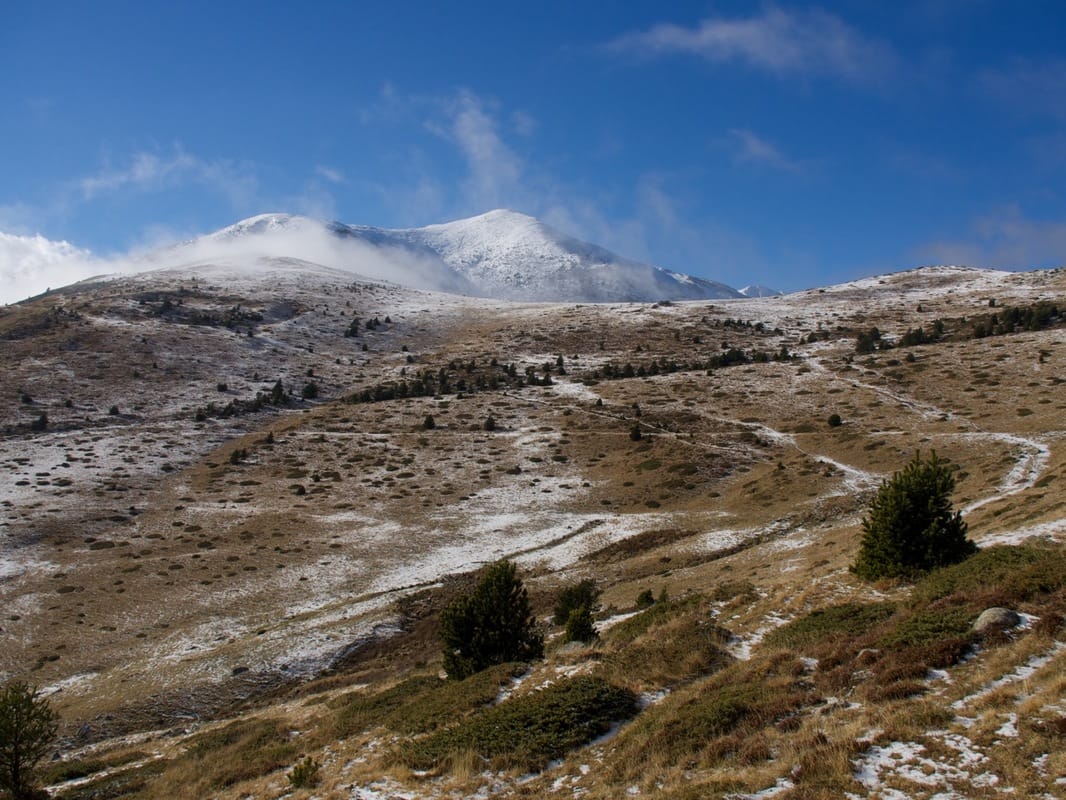
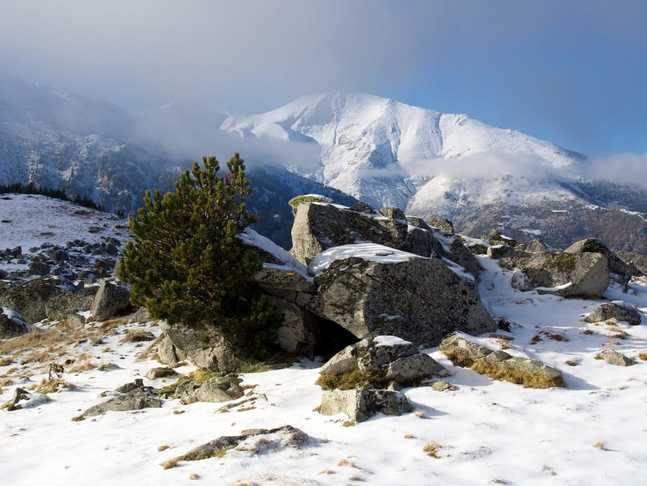
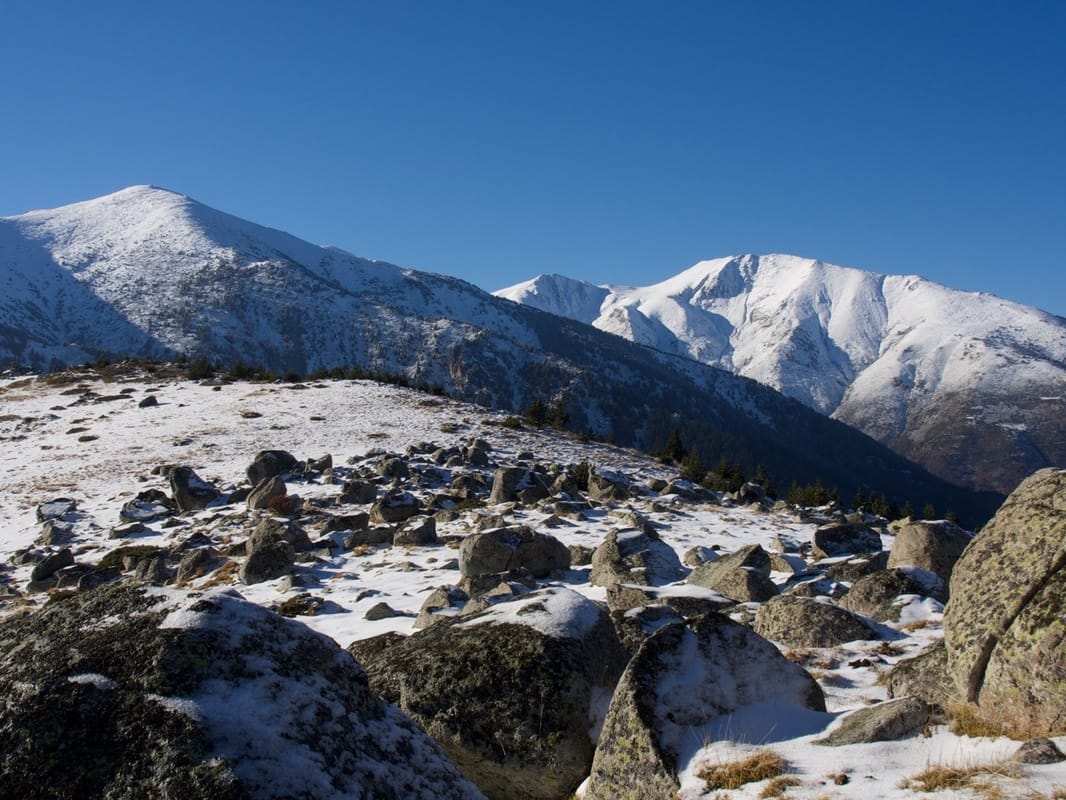
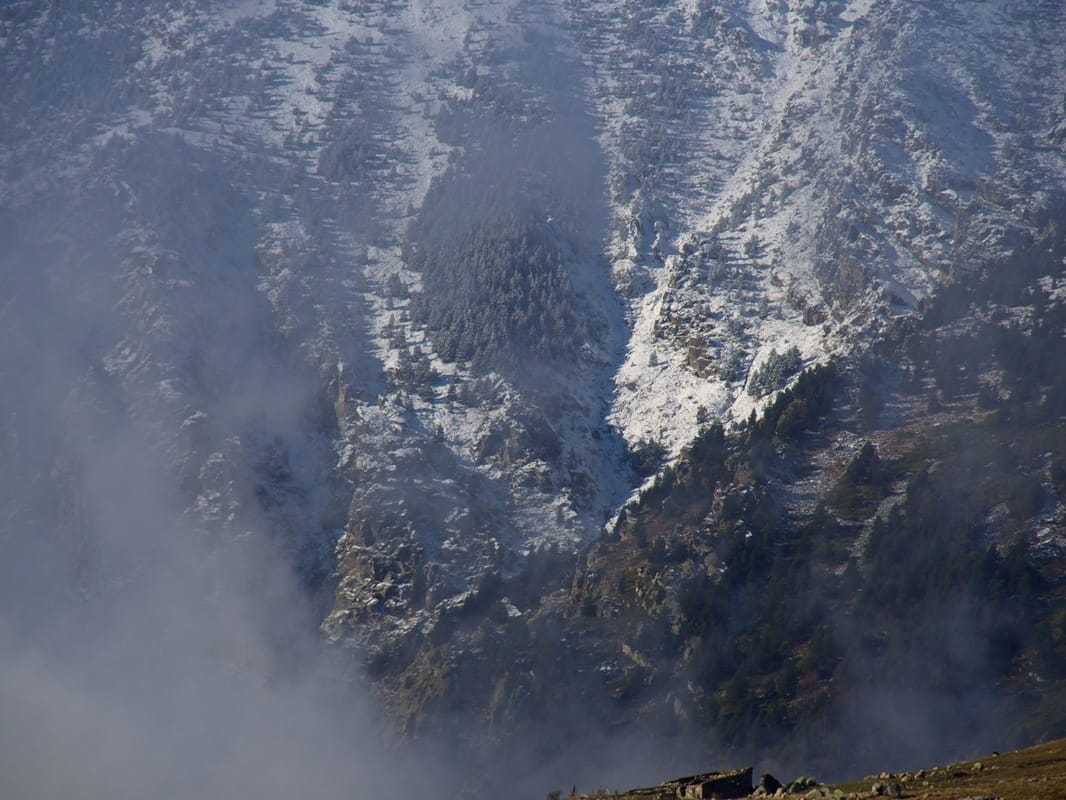
As an important foot-note, I should add, as I have before, one significant point. The wonderful diversity of this area is enhanced, part-created, by the inter-action between man - or in this case, his animals, the grazing flocks of sheep, cattle and horses which frequent these high pastures - and Nature. Without the grazing, the hillside would clearly revert to scrub woodland and bracken, which would be very different, and significantly less varied. Many bio-diverse habitats, like traditional hay-meadows or coppice woodlands, owe their richness to this interaction. However often we may feel the opposite, our species certainly had, in the past, the ability to work with nature, not to destroy it as now so often happens right across the planet. By Robin Noble Photos by Martine Howard One week before Christmas, with sun forecast for the weekend – to be followed by cold, grey days – we decided to go to the high foothills of Canigou, which so often appear in these blogs. I was not convinced of the wisdom of this, as when we started it was still quite cloudy; in fact the mist seemed to stay around the Albères and the lower Pyrenees, but it slowly cleared above us, and the high, snowy peaks appeared wonderfully – as Martine’s photographs well show. As we started to climb these gentle foothills, we had, through the thinning mist, a splendidly romantic view of an undoubted golden eagle. It was circling, never flapping, and as it headed for a while in my direction it assumed a posture which made it clear that it was certainly not a buzzard; it is surprisingly easy to confuse the two, especially if there is nothing else in sight to give a clear indication of scale. I could see that it had no underwing pattern, its great wings looked as though they were pointing forward, and the truly big pinion feathers were spread and reaching high – no room for doubt!
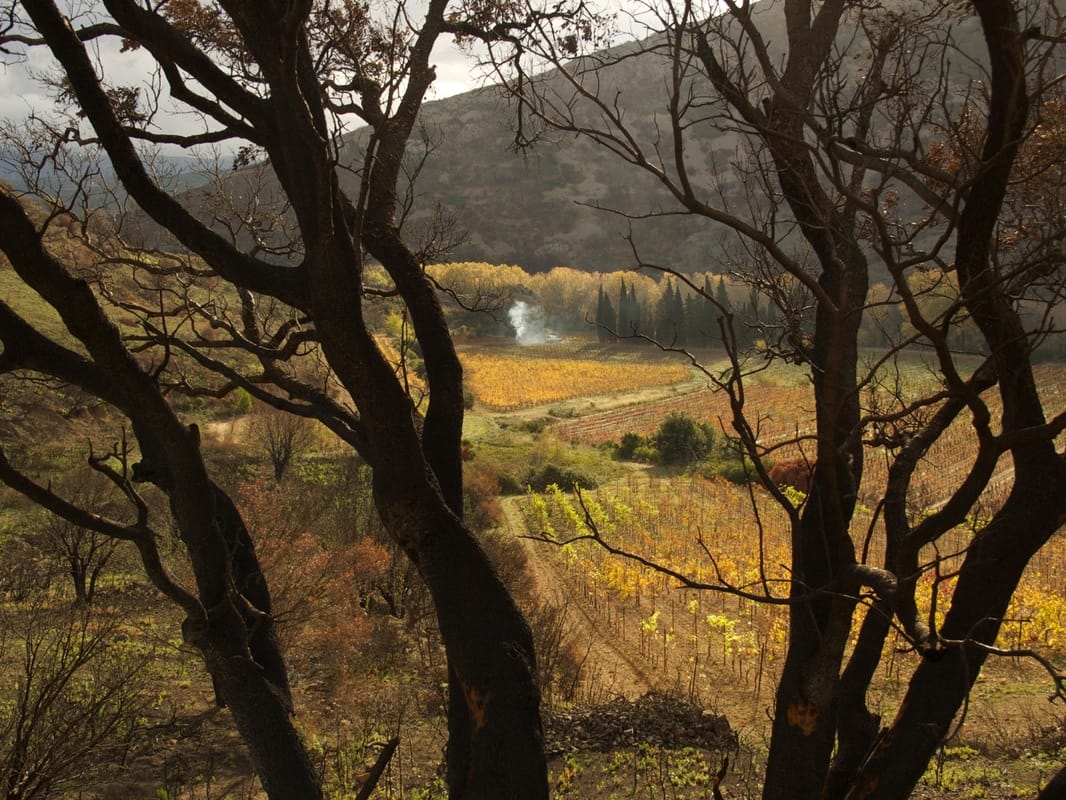
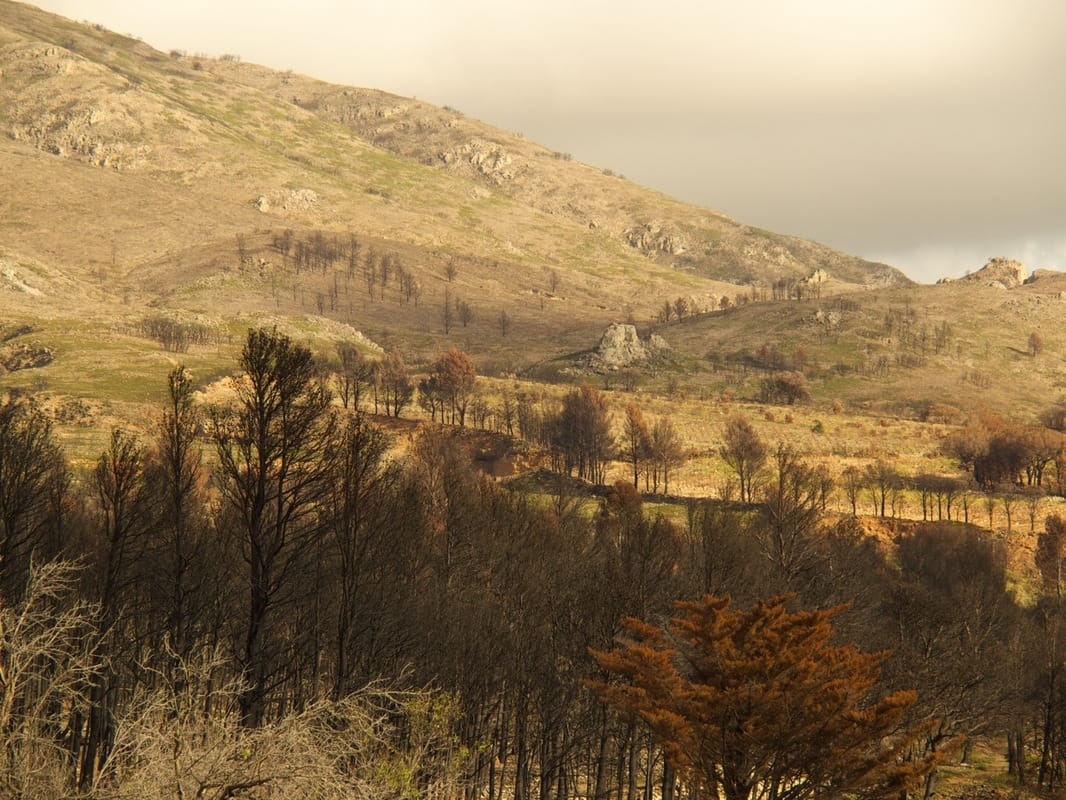
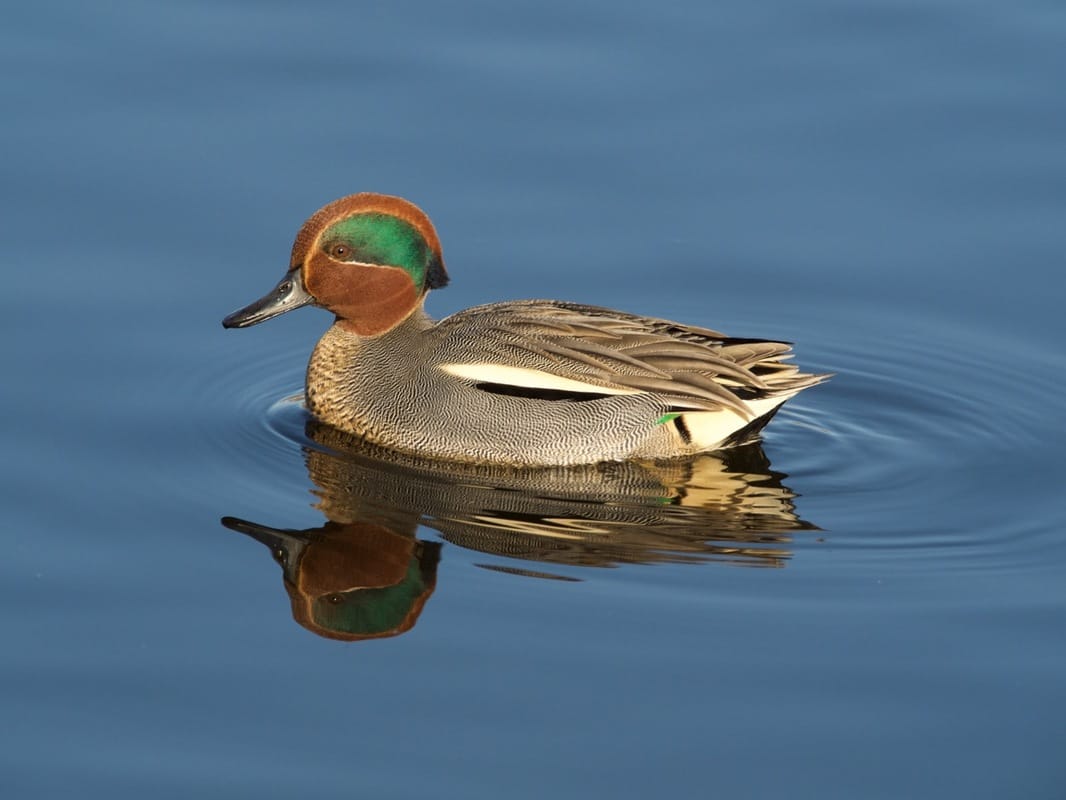
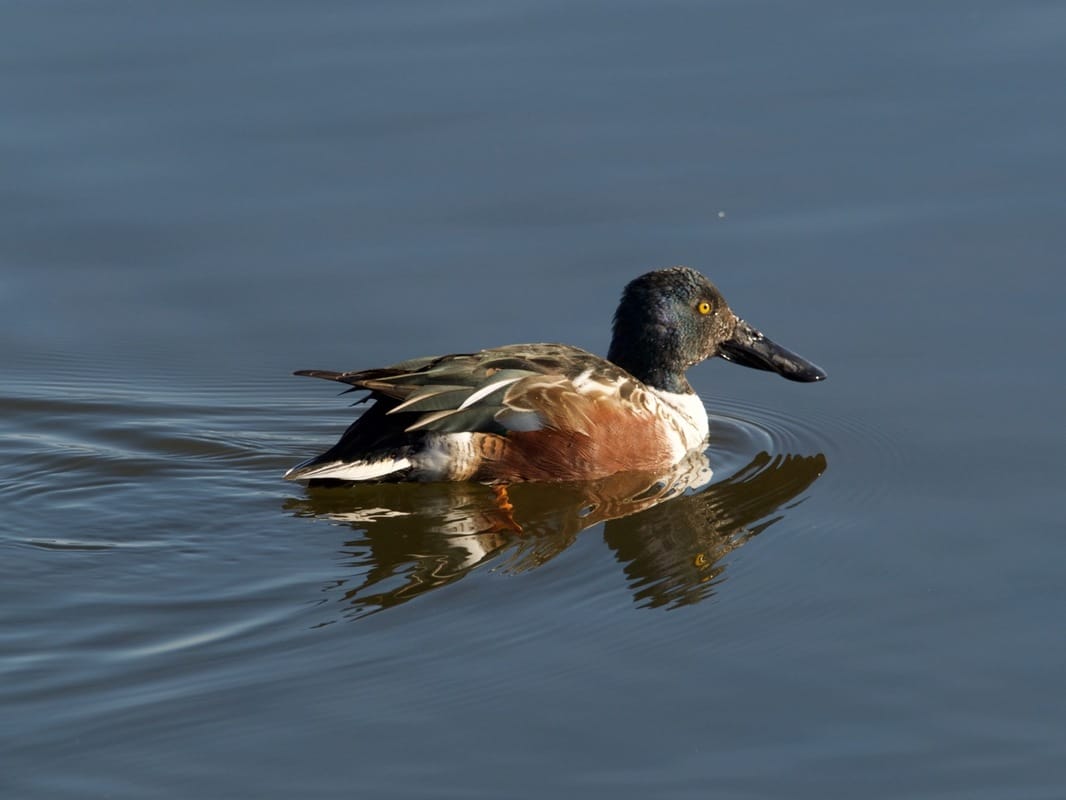
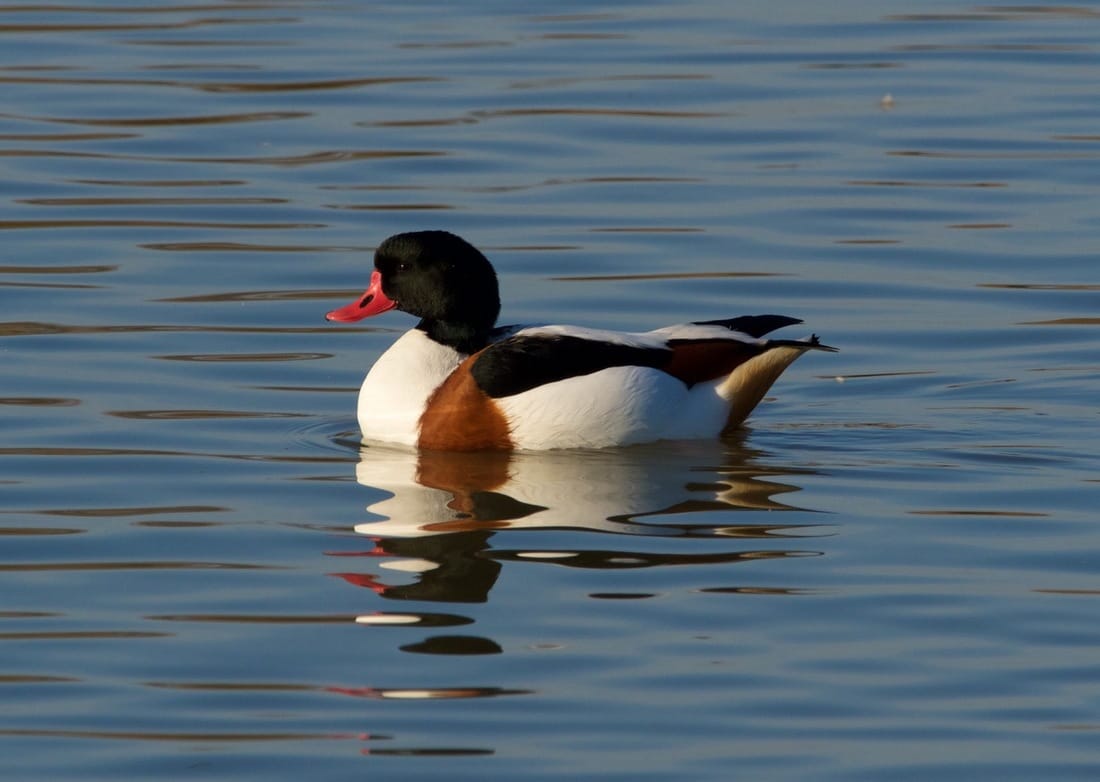
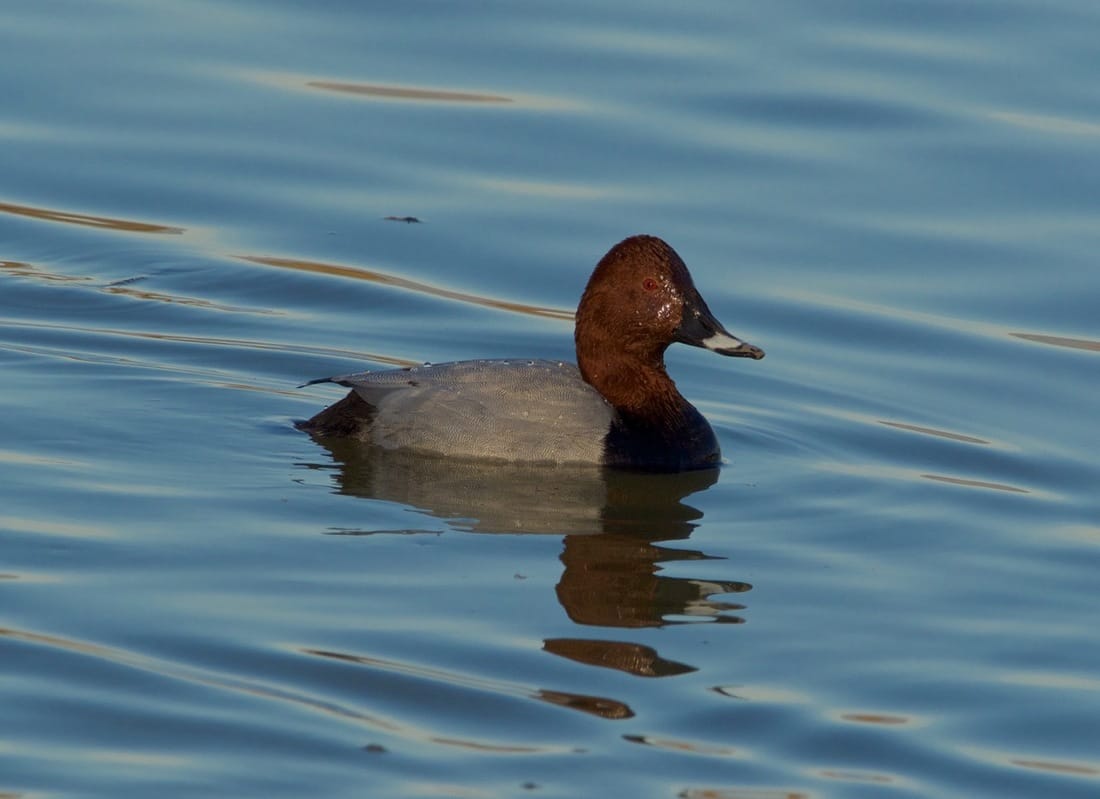
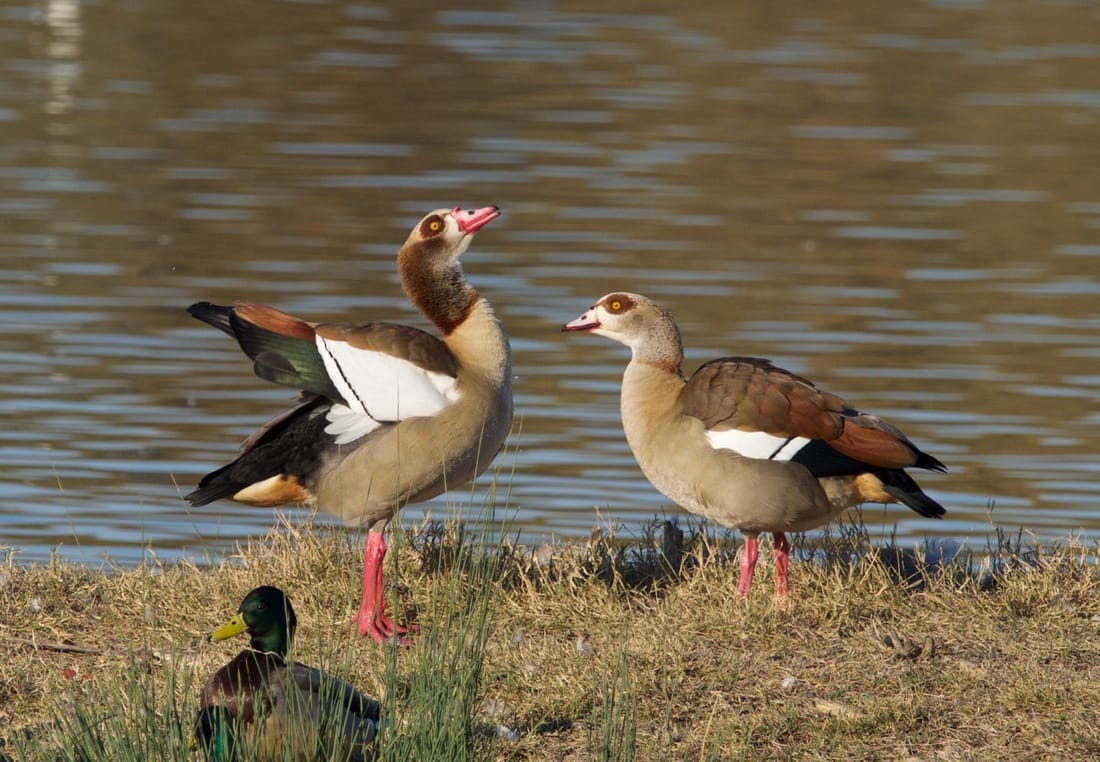
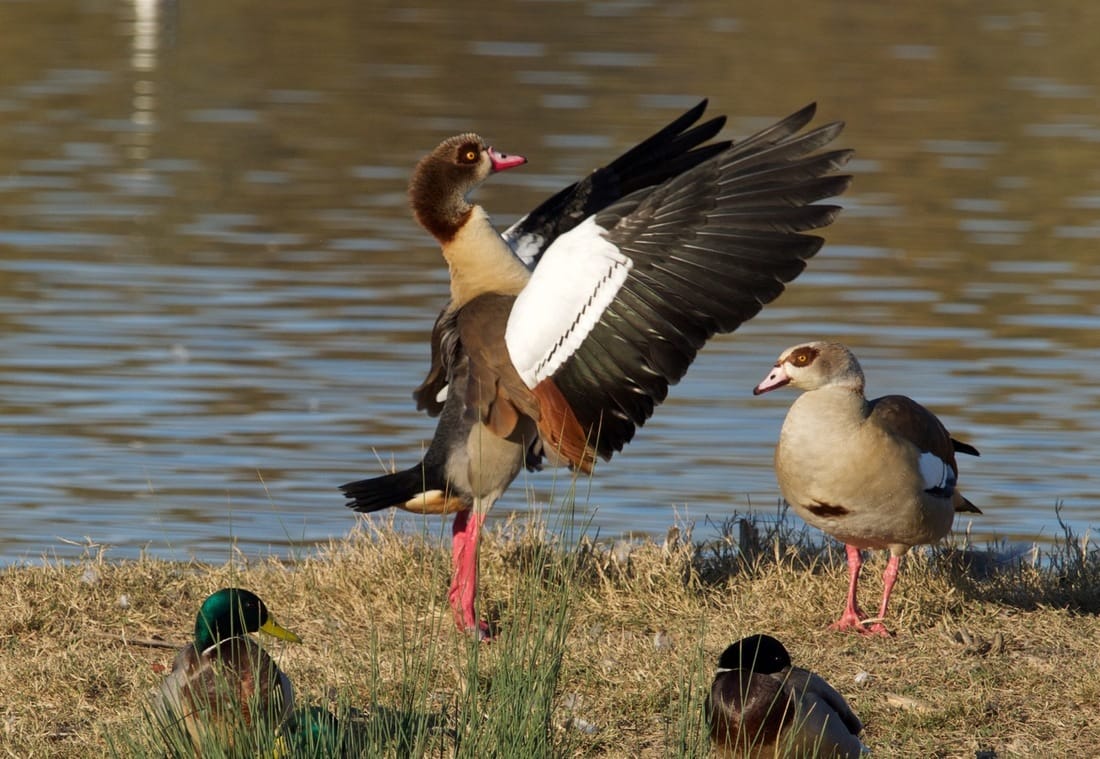
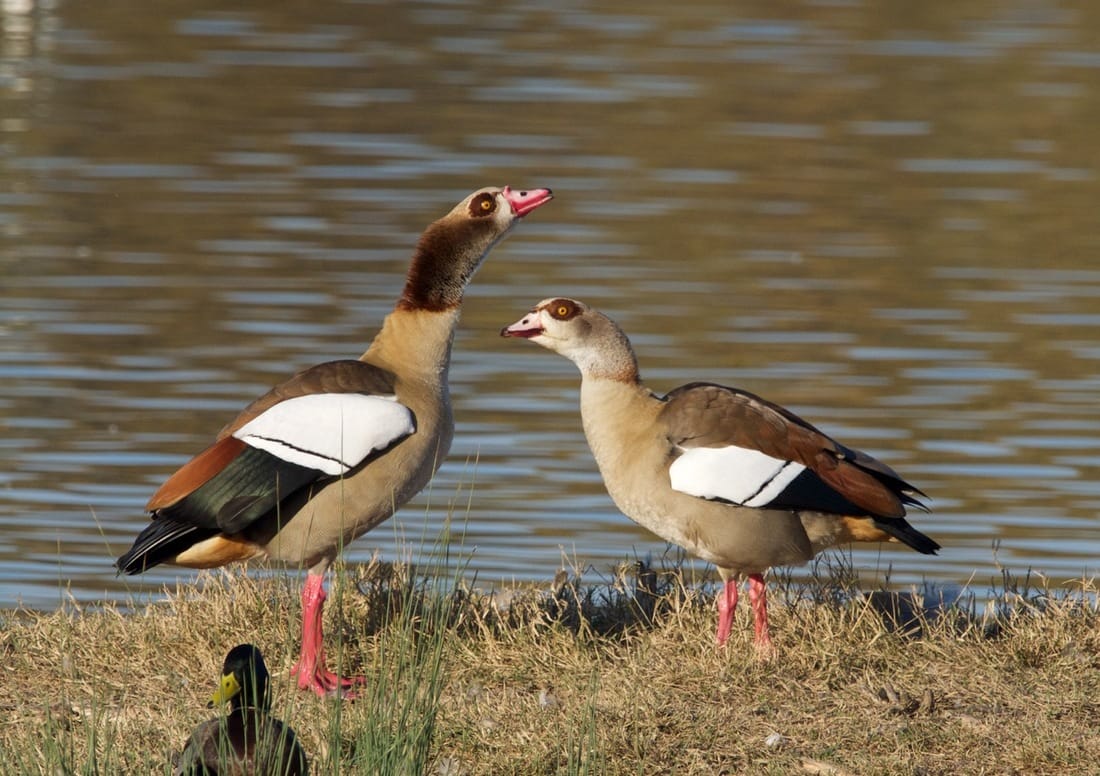
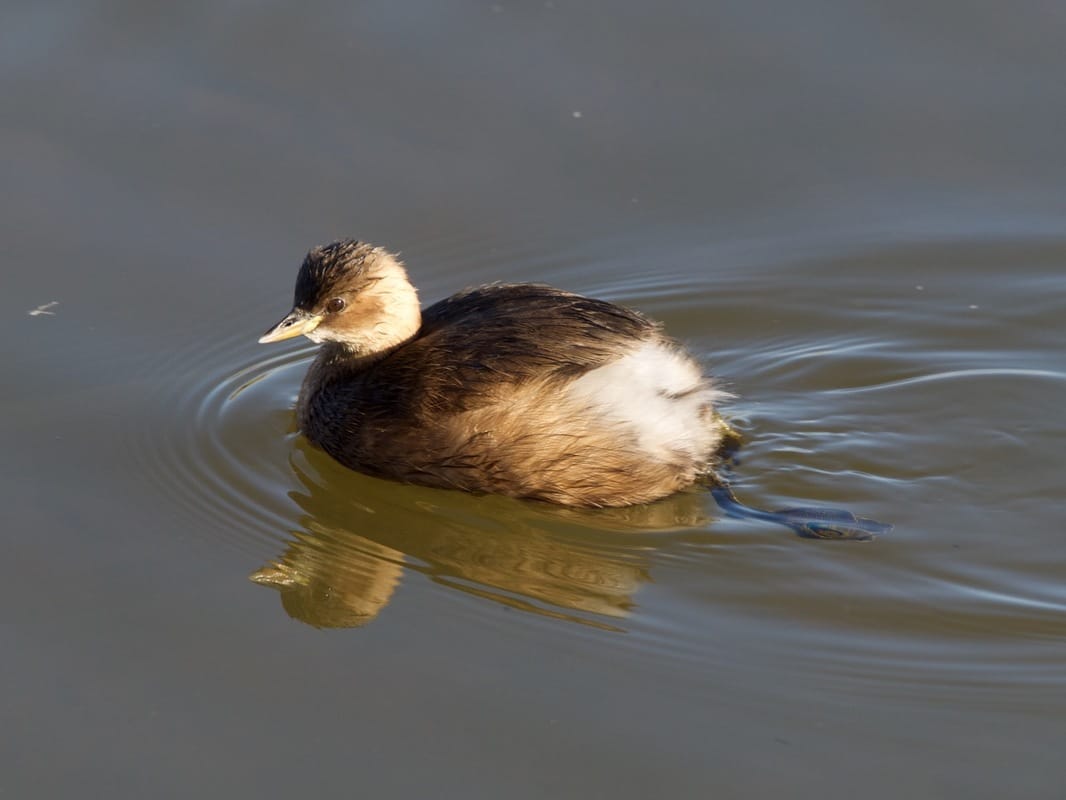
Otherwise, we soon saw the large flock of alpine choughs which live up there, and there were also several flocks of partridges; they flew before we could get a proper look at them, and we always assumed that they are red-legged. Despite the varying colour shown in my bird books, they always seem to appear a brownish grey in the sunlight, and fly fairly fast. There were also a few large flocks of finches; it was very hard to get much of a proper view of these, but when one bird did settle long enough for me to get a decent look, it turned out, rather to my surprise, to be a goldfinch. That need not mean that the whole flock was the same; finches elsewhere often fly in mixed flocks throughout the autumn and winter, and the same may well happen here. The presence of these flocks, especially of the partridges and finches, I think, shows the benefit to the local biodiversity, of the transhumance which still brings the flocks of sheep, and the other herds up to these high, open uplands. (The ponies were still there, but the sheep and cattle were much further down.) Elsewhere, the partridges and finches are essentially birds of farmland, and I have no doubt that the cropped herbage, the grazed bushes, and regularly-placed deposits of various brands of manure replicate the farmed habitat. Our friends, the marmots, were presumably asleep far under the bleached grass. Amid this brilliant, lightly snowy scene, a true glimpse of winter, I found two, isolated gentians still in bloom, their beautiful blue as bright as the sky, bringing memories of wonderful summer days spent on the heights. By Robin Noble Photos by Martine Howard A couple of weekends ago, we went off on a short jaunt, north into what we call “ Cathar-country “ and the Corbières. Basically, we took a reasonably direct route to Quillan, and then headed eastwards back into PO, via forests, rocky uplands, dramatic castles and autumnal vineyards – some even complete with hard-working paysans. This was against the spectacular backdrop of a snow-clad Canigou, and our purpose was to catch the last autumn colours, the deep reds, coppers, sheets of gold with splashes of yellow that inevitably attract the attention of the photographer. This we had expected, and hopped out of the van at regular intervals to try to do justice to the beauty of the unfolding scenery. One day we found ourselves suddenly in a shallow valley whose drama we had not expected; there had been a wide-ranging, serious fire (in August, we later learnt), which had ripped through the wooded upland, leaving large areas of stark, black trees which made an impact on us that was not merely visual, but also, somehow, visceral and emotional. A recent fire looks horrible, but this one had a strange beauty, because it framed the small vineyards which had been saved from the blaze, presumably by the great efforts of the sapeurs-pompiers, and were that red-gold colour. Seen through the blackened branches, it reminded me of a stain-glass window – umpteen photos were duly taken. Such a fire does look like the end of the world, but the landscape does eventually, largely, recover. As we walked about we could see that many of the roadside bushes, the small prickly oaks and others, were sprouting vigorously from the base, which is precisely what Mediterranean vegetation does after such trauma. The relatively heavy rains of the autumn had no doubt helped the new growth to get away; it was about one foot in height. That night our landlady told us about the fire and expressed the hope that the pines might recover; that seemed unlikely to us but we did not say so! Although foresters call pine a “fire-climax” tree, the climax referred to is pretty slow. Generally, the pines themselves are killed; the heat causes the pine-cones to open and the seed to fall into the ash, which makes a nice soft bed with lots of easily-accessed minerals. Slowly the pines grow again from seed. At some stage the whole area will look quite strange with the fresh green of young pine against the old, black trunks. The greatest harm to the overall ecosystem really tends to be that the thin soil in such places is charred and easily washed away in subsequent, heavy rains (which, as mentioned, we have had this autumn), leaving it increasingly bare and rocky. Our landlady did tell us that the fire had been set by a known arsonist from Perpignan, someone, obviously, with a strange and harmful relationship with our lovely countryside. In total contrast, we went south the next weekend, to our much-loved coastal Nature Reserve on the Empordà, where all the wetland was definitely very wet, the light brilliant, and the birds, generally, very obliging! We walked various paths, and sat in various hides, overlooking the well-populated pools. I will not attempt an overall species-count, because what really mattered was that we had excellent views of some which we have not seen so well on previous visits – not necessarily rare in themselves, but lovely just to look at. There were, of course, lots of duck: the ubiquitous mallard, inevitably, but lots of the smart, diminutive teal, as well as the remarkable shoveler, shelduck and a few pochard. Geese, too: the greylag in some numbers, but also a few (rather weird) Egyptian geese. Martine captured a wonderful sequence of the latter; a male leaving the water to land on a tiny islet where he displayed magnificently to a female who seemed duly impressed: We saw birds of all sizes, ranging from the tiny, blithe dabchicks, one of which we were able to follow as it swam underwater among the weeds, through cormorants (drying their wings in the sun) with grey herons and egrets, to storks and flamingos – the latter do seem rather bad-tempered! Once again we watched a few, brisk, domestic inter-actions through the binoculars. There was also a large flock of one of my favourite birds, the heraldic lapwings, which we associate so much with the British uplands whether in Northumbria or the Highlands and Islands. And, overhead, more marsh harriers than I have ever seen, a real thrill. Altogether a wonderful day.
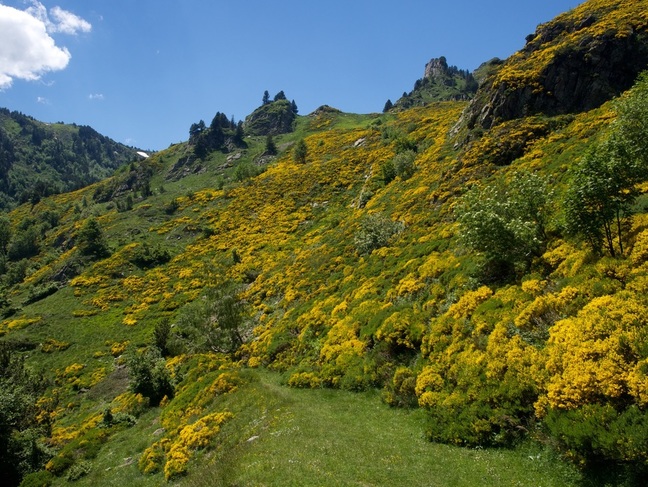
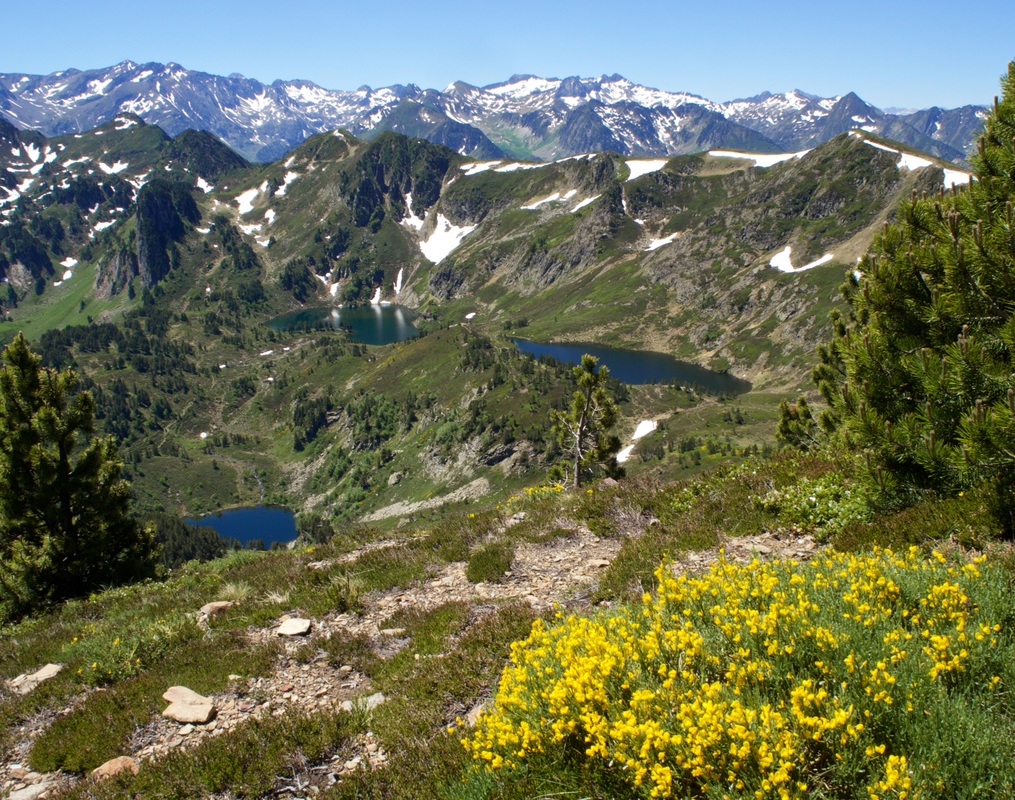
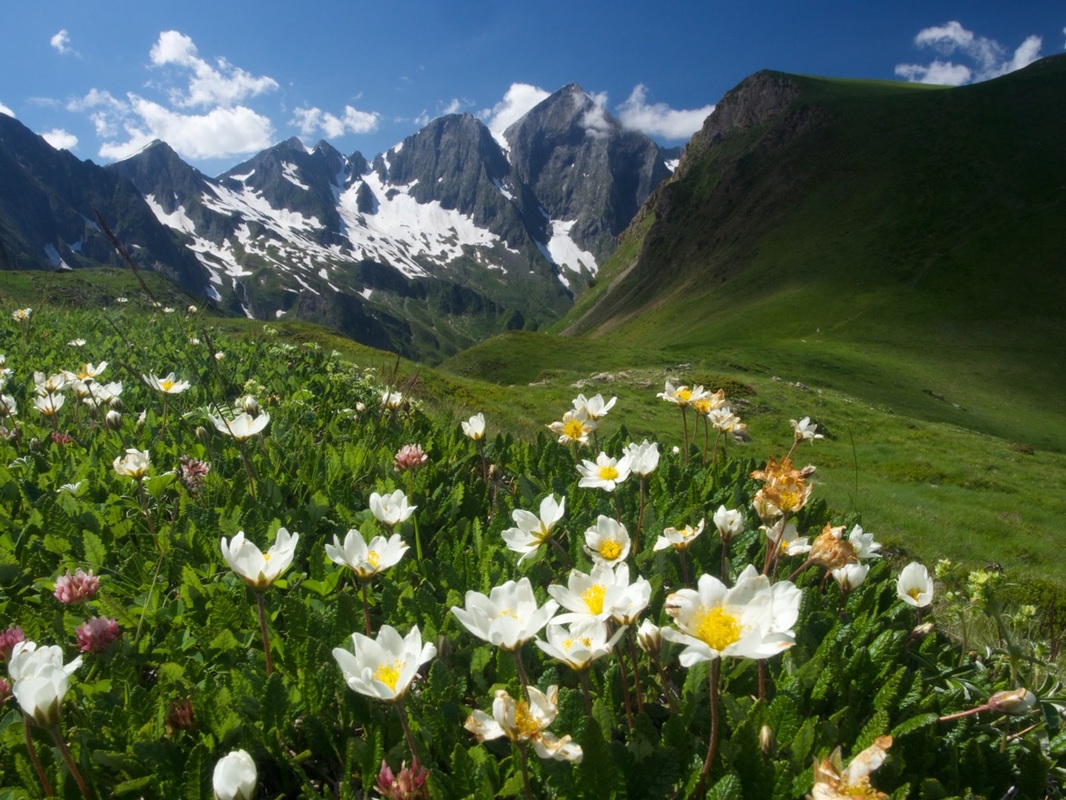
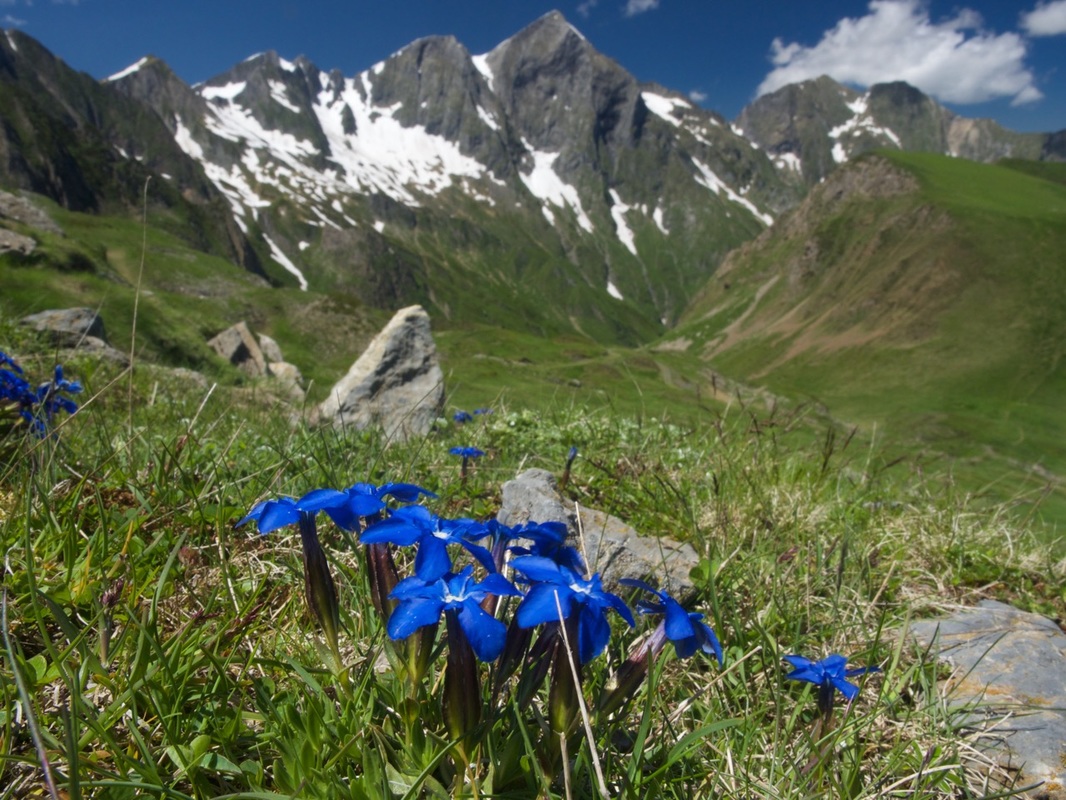
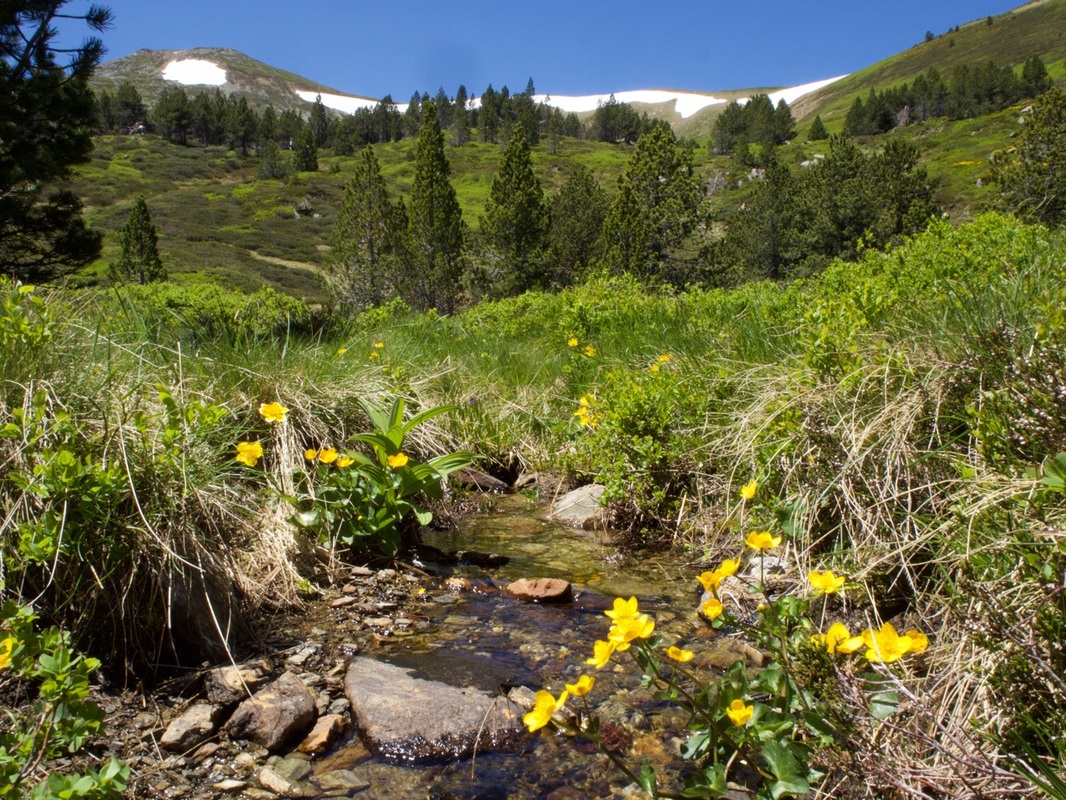
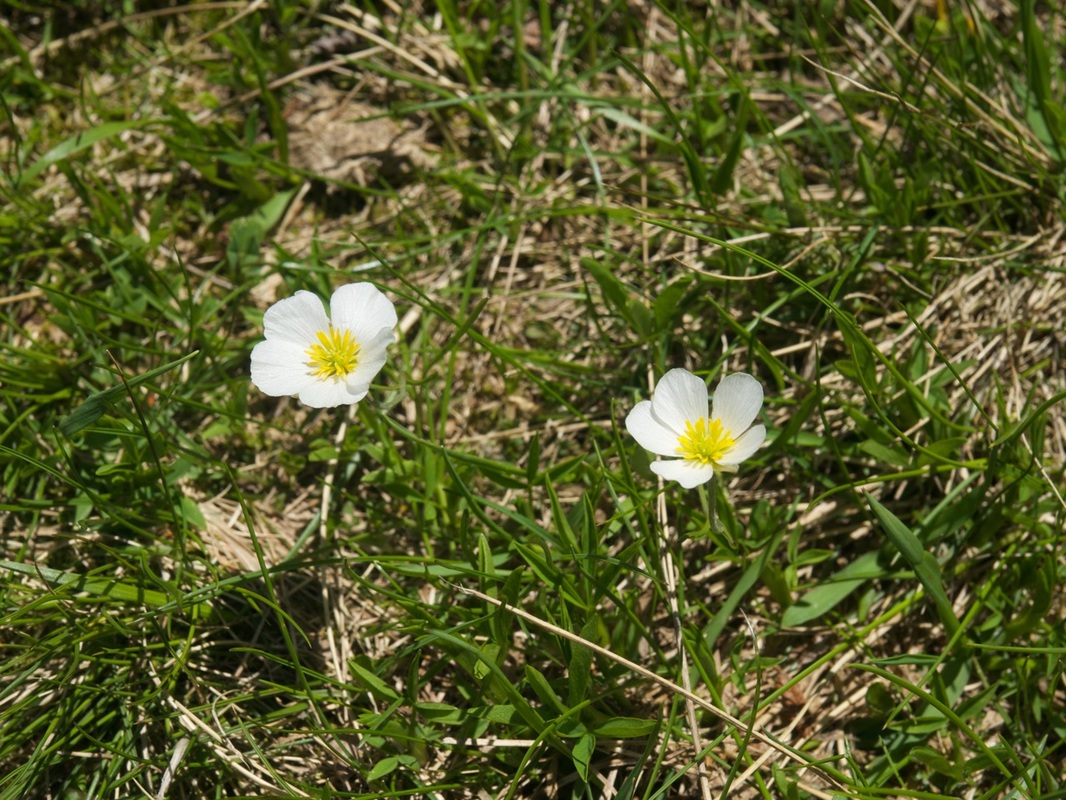
It was quite a busy day, too, being a lovely Sunday with free admission. There were several serious photographers with lenses that I could not even imagine carrying, and many families. At the very least, their children were all having fun on a super day in a beautiful place; we can only hope that a few of them grow up to be enthusiastic about the natural world, and to care passionately for what is left of it. Bonnes Fêtes to you all! And, whatever happens in the wider world, keep enjoying our wonderful countryside! by Robin Noble Photography by Martine Howard For many of us, wildflowers, along with the butterflies that frequent them, are among the supreme beauties of the natural world, and this year they have been incredibly lovely. We recently made one of our quick trips right into the chain of the high Pyrenees, and were rewarded with some wonderful sights. But it was by no means all rarities, or plants of the alpine zone, which gave us such pleasure; sometimes, indeed very often, it was simply the common gorse and broom, which gave sheets of dense, brilliant yellow all over the already magnificent landscape. They presumably enjoyed the greater humidity of this past spring, which had left larger snowfields than is usual at this time of the year, themselves adding brilliance to the far views. (It is interesting, if puzzling, that this year from Orkney in the far North of Scotland, via Brighton on the south coast of England, to the Pyrenees, the gorse and broom has everywhere been remarkable.) During this short trip of real contrasts (which included a walk of two kilometres in an enormous cave system blessed with fine ancient drawings of post-glacial wildlife), we found two locations which we have decided are among the most beautiful we have seen in the world, up there with the incredible Bryce Canyon in the United States. The mountains were, each day, sublime, and the gorse, broom and remaining snow added to their beauty; so, too, did the many other flowers. As ever, it is impossible to provide a comprehensive account of these, without writing a book, so I will have to be very selective. This year, the yellow of the gorse and broom has been matched by that of a small rock-rose, the Helianthemum alpestre, which is carpeting the hillsides up at La Batère also. There was a huge amount of brilliant blue, the gentian (Gentiana bavarica), which we have also featured before, and which, this time, provided a foreground for wonderful views of the amazingly impressive Mont Valier. It was everywhere, and quite magical. Also there we found one cushion of the flowers of the mountain avens, or Dryas octopetala, a lime-loving alpine with cream-and-gold daisy-like flowers, one of the favourites from Assynt in the far North of Scotland where I spent so much of my earlier life. On the other day, in the vicinity of the fine peak called Le Roc Blanc, there were small wetlands below the remaining snowfields, and the clear streams issuing from them were bordered by a flower, which most folk will know from Britain: the marsh marigold or Caltha palustris. But, on both days, there was an exquisite delicate flower that was completely new to us. It either bordered the remaining snowfields, or grew in considerable numbers in areas where they had recently been, the grass still brown and flattened. The leaves were slender and hard to find, the flowers white and delicate, but reminiscent of buttercups. This is exactly what they turned out in the end to be; Lesley lent us her father’s “Alpine Flowers of Britain and Europe” (Collins, Grey-Watson and Blamey), and there we found the (rather obvious) Pyrenean buttercup, Ranunculus parnassifolius), a flower of exquisite beauty. Lurking by a crystal stream was the pink flower of a primrose type. It was hard to see its tiny leaves, and awkward to photograph, but I think it was Primula minima, a sort of remote, mountain-cousin to the tiny, vivid Primula scotica which only grows along the North Coast of Scotland, and in Orkney. It is rather nice to be reminded, when in one astonishing location, of another, over a thousand miles away and totally different. Truly a wonderful world.
by Lesley McLaren
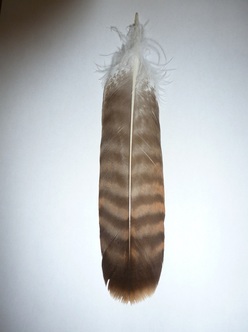
At the moment, when I hear rustling in a hedgerow, more often than not it turns out to be a human, bent double, foraging for wild asparagus or other delicacies I know nothing about. I must confess I'm never tempted by those tender green tips poking through the undergrowth in verges - can't help thinking of all the animals (dogs mostly and mine in particular) that have probably left their mark in passing! I've found one or two very different things in the last few days, however, which I won't be adding to my Easter omelette either. I don't normally collect feathers but couldn't resist bringing this one home because it's in such pristine condition. I didn't think it was the moult season, so was surprised to come across it. At first I thought it might be a kestrel's tail feather, but it's 22cm long - which would make for a very big kestrel - and research confirms it's from a buzzard's tail. According to a wonderful new book I've just bought (The Raptors of Europe and The Middle East by Dick Forsman) resident raptors start to moult during the breeding season. There are buzzards all year round where I found this feather, and nesting begins in March - so that puts me straight; I shouldn't have been surprised at all.
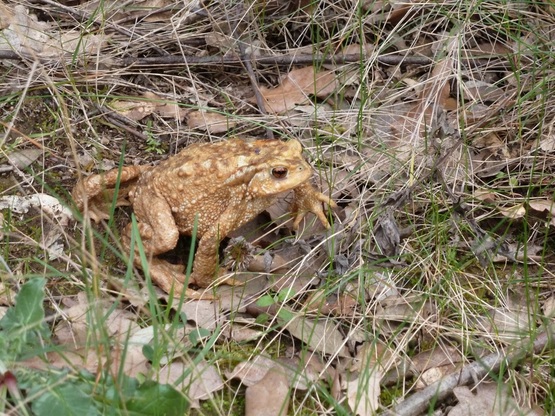
On a different day, I nearly stepped on this wonderful creature.
The orange-y colouring seems unusual, but she is a common spiny toad bufo spinosus (subspecies of the common toad). I believe they can change their colour to suit surroundings and she was quite well camouflaged against the leaves - less so when she moved to a grassier area. I say 'she' but have no idea if I'm right about that. I'm going by size alone (she was a big girl) and I didn't check the length of her nasal vent, or look for "nuptial pads" on the first three fingers...
Interesting to watch the way she moved when she walked away. Common Toad from Lesley McLaren on Vimeo.
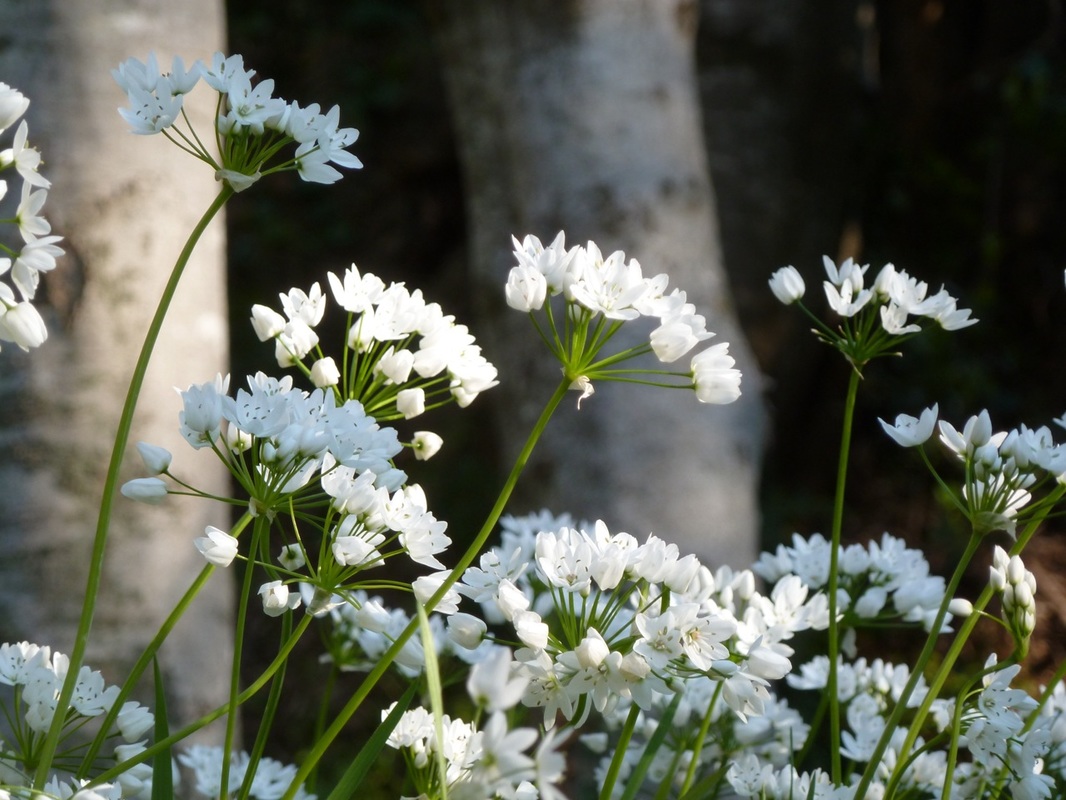
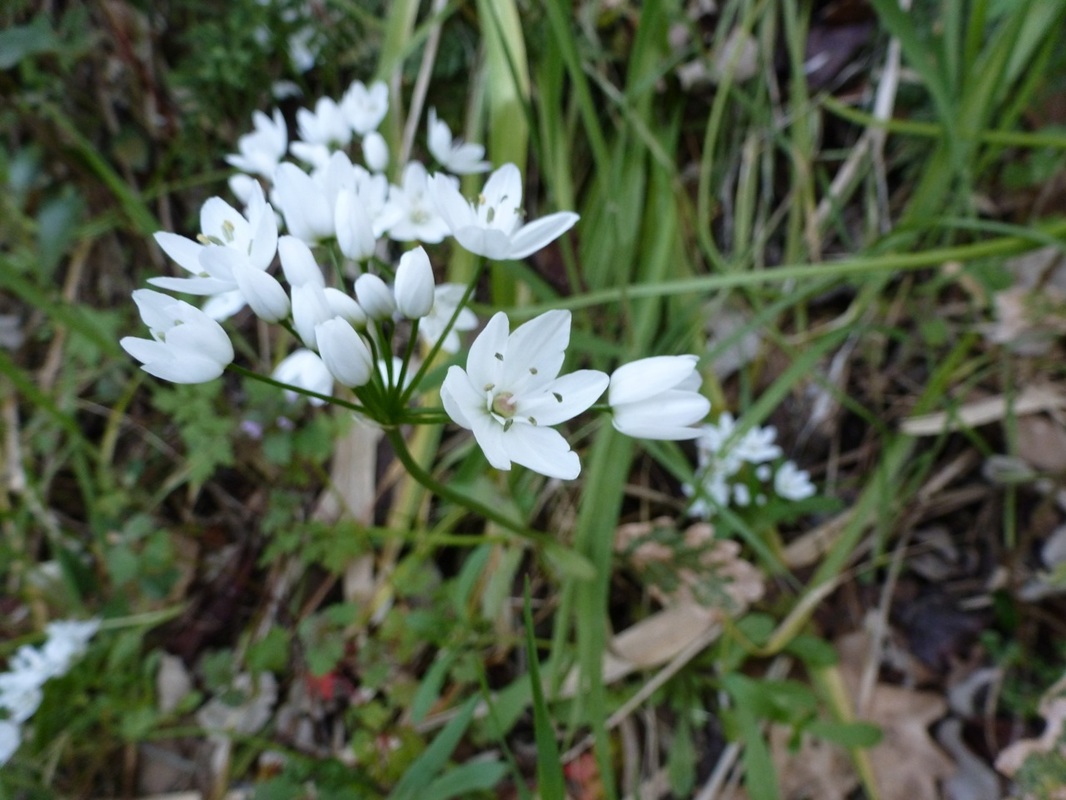
So what is everyone else looking for and plucking out of the hedgerows? Wild garlic? There are a lot of pretty white flowers around at the moment. They must be a type of allium, but which? They don't smell of garlic and their leaves aren't broad enough for wild garlic. The flower doesn't look quite right close up either. So I'm wondering if they are allium neapolitanum - Neapolitan (False) Garlic. Can anyone tell me?
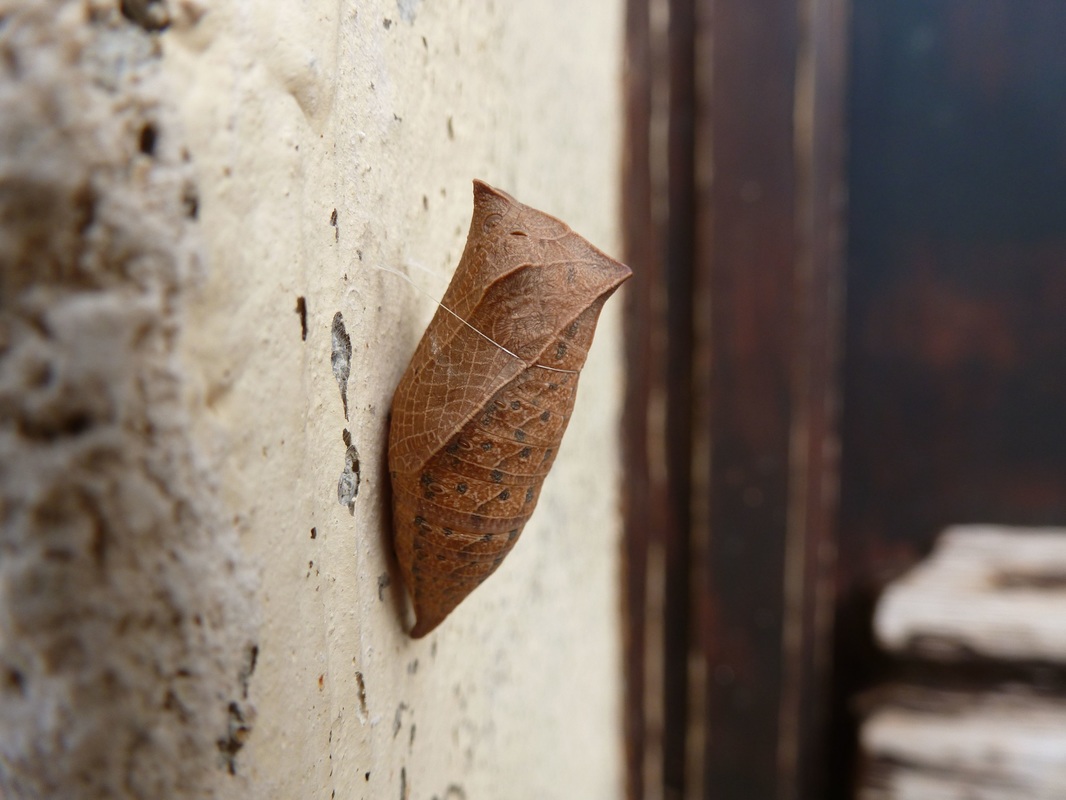
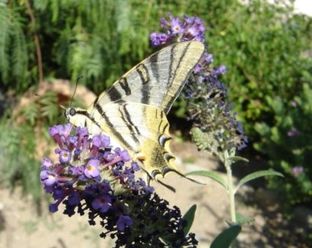
by Lesley McLaren As a swathe of eastern USA is buried under massive amounts of snow, temperatures continue to remain mild in much of Europe, including here. El Nino is having quite an effect this winter. Back in mid December the mimosas were beginning to show yellow, and bougainvilleas were still developing new flowers. This month gorse is in full bloom in hedgerows and hills - and attracting plenty of bees. New leaves have appeared on my olive and lemon tree, and are on the verge of opening on my red robin hedge. Lots of spring-flowering plants are already out - even geraniums left from last summer! - and gardens are looking positively colourful. Birds are tuning up and I've seen a pair of collared doves mating already. There are some butterflies about too - red admiral in particular, and I've seen one clouded yellow - prematurely out of hibernation. With midday temperatures sometimes around 20ºC, and few significant frosts, none of this is surprising. If we don't get a cold snap in February to slow everything down again it will be interesting to see what the knock-on effect of all this is later in the year. But not everything is early. My camelia has started flowering bang on time this month, and my almond tree, which usually flowers later than most (in February) looks like being on schedule too. I wonder how creatures such as metamorphosing caterpillars fare. Can the process speed up or slow down according to the weather? I'm especially interested, having discovered this pupa attached to the wall by our garage. At first glance it looks very plain and boring. Which is doubtless part of nature's grand design. Not much point making yourself conspicuous to predators. It would be better camouflaged - and perhaps more sheltered - in a less open spot, though. Amazing to see how it's held in place by such a fragile-looking silk thread.
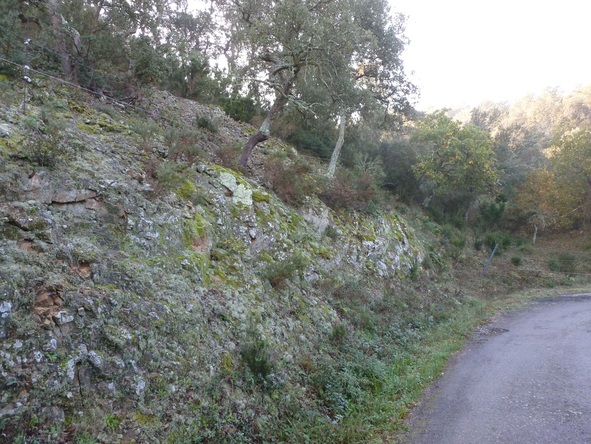
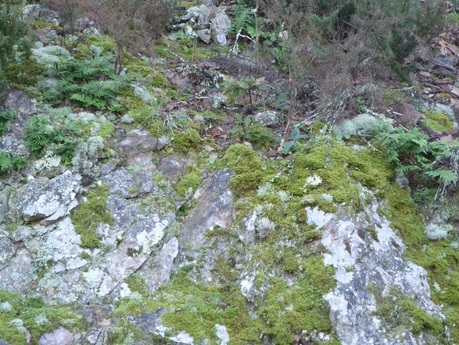
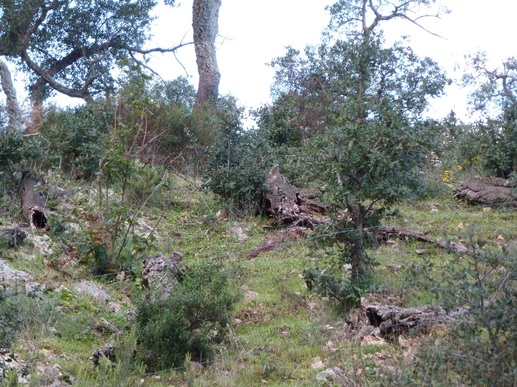
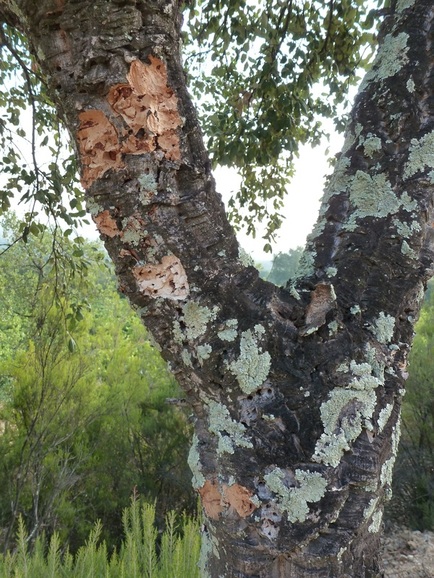
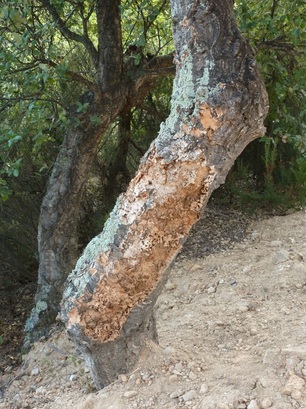
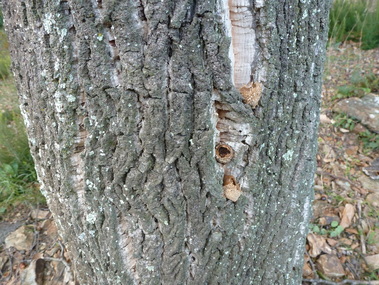
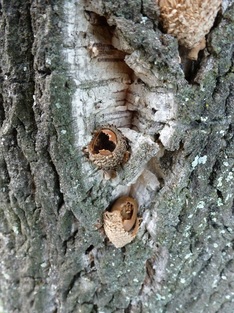
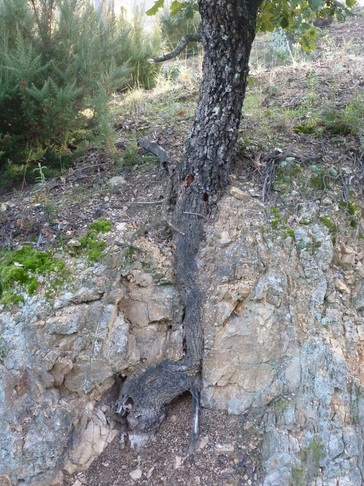
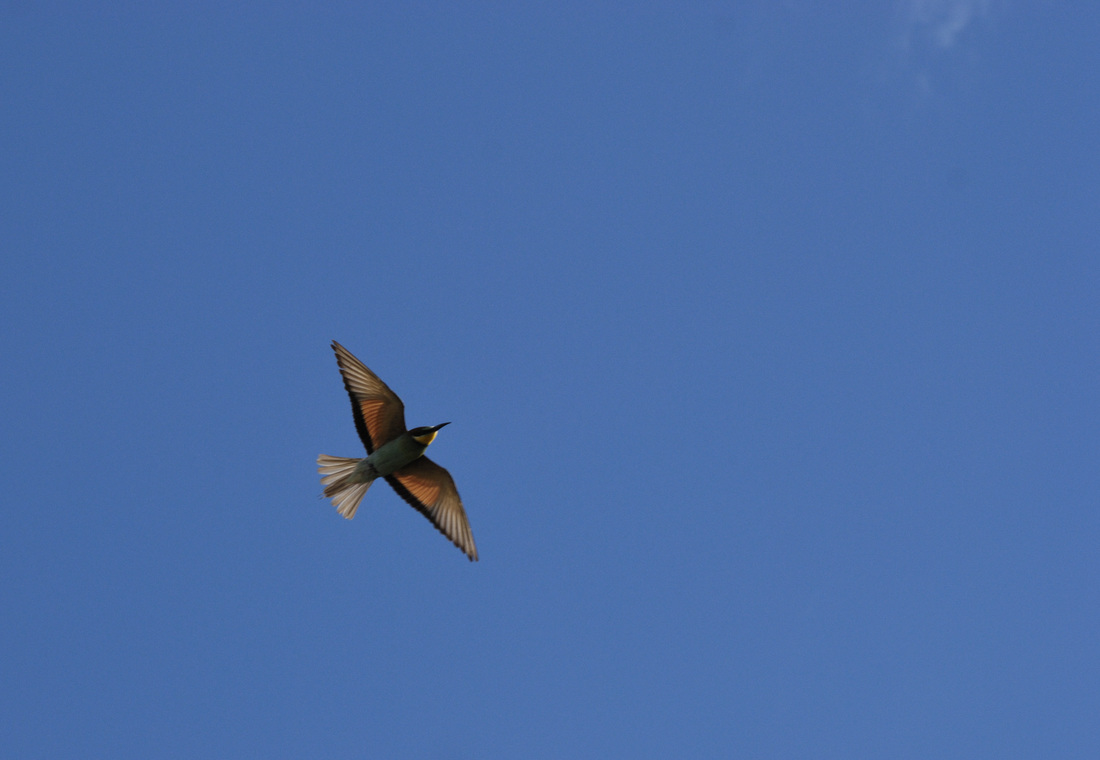
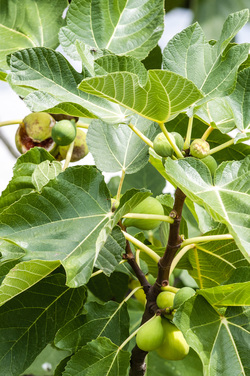
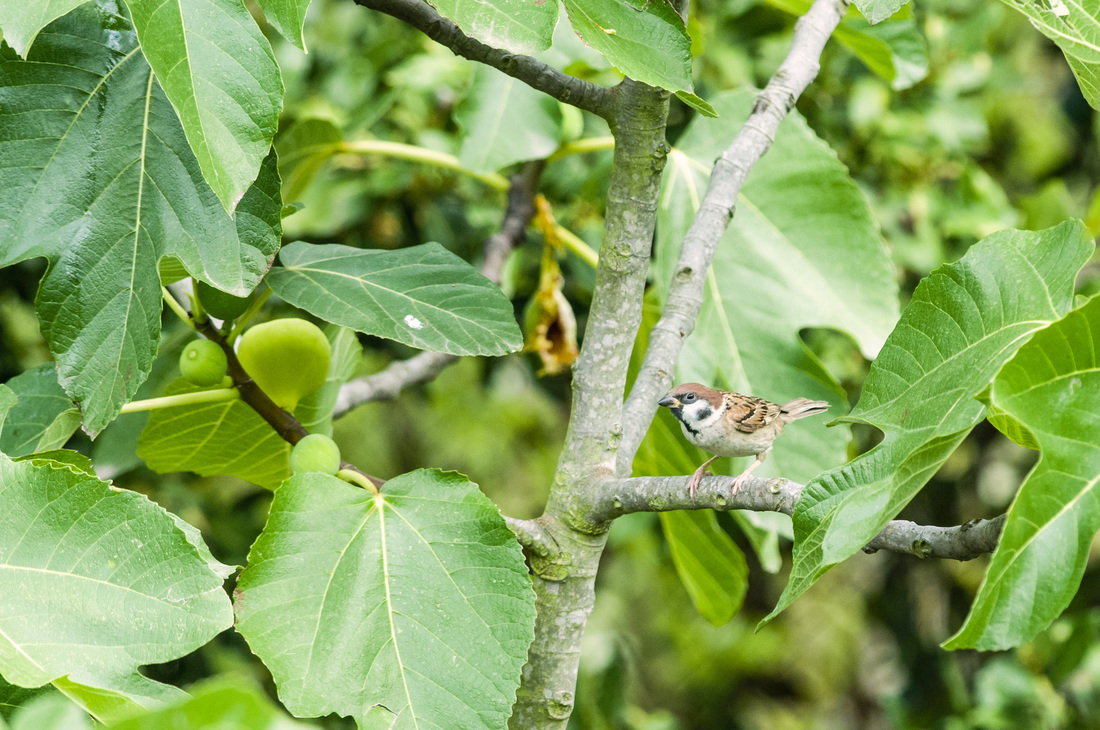
It's quite big, and those horn-like protrusions look interesting, so I've done some internet research to see what it might turn into. And the answer is this: by Lesley McLaren On country walks I'm usually on the lookout for movement in trees, shrubs and sky. But there isn't much going on at this time of year in my regular haunts. Or it so it seems. And before I know it I'm drifting along a familiar route, lost in thought about a scene in the novel I'm writing, or worrying that the washing machine is dead and not just on strike, or wondering if I'll get Christmas cards written in time - and I'm focusing on little except where I'm putting my feet. While that can be a useful meditation, I can miss an awful lot. So today I took my camera with me and also took my time, stopping regularly to look more closely at my surroundings. To pay attention. Here's a tour of a few things I noticed in a half mile stretch either side of a quiet lane. Lichens and mosses thrive where there's little or no sun from autumn to late spring. Fifty shades of green? Around the bend and above the lane, trees have been left where they've fallen. The perfect habitat for beetles and other insects (snakes too?). Worth a careful explore next summer. Something's been hacking bark off cork oaks. Unlikely to be humans mucking about (some is out of reach). Woodpeckers? Maybe, but there are so many nuthatches here, they're my prime suspects. My book doesn't list insect grubs as part of their diet, but that must be what they're after here? Certainly you can often hear them tapping at branches and trunks. And... ... they also use cork oaks to help them hatch those nuts! I've watched one wedge an acorn in a crack in the bark and bash it repeatedly to get at that delicious soft centre. Sometimes it drew its head back, only to find the acorn stuck on its beak, and angrily rammed it back into the crack to free itself. Head back ... Bash. Head back ... Bash. The acorn didn't stand a chance. Here's the evidence, in what must be a favourite tree: Roots follow water, through near-solid rock. This wild cherry has been dying all year. But it's being colonised by other life now. After egg laying by moths in October, new "candyfloss" nests of pine processionary caterpillars are just beginning to show. Plants frazzled to a crisp in the summer are making a comeback in the damp conditions Old cones and new growth. Behind: autumn coloured leaves cling onto some trees. It's still too warm. A few flowers broke up the greenery: Yellow daisy-like things; a single sprig of purple heather; early blooms of gorse and mimosa. And I ate a couple of ripe fruit from a strawberry tree (not much flavour). I wasn't walking in complete silence either. Although most of the more musical birds have stopped singing or are wintering in Africa, I could still hear the rather sad call of robins. There was the occasional chwit-chwit of a nuthatch; a distant great spotted woodpecker; a buzzard somewhere overhead; great tits; squeaks of what might have been goldcrests... There wasn't much to smell (not even dead leaves) and I didn't touch - except for the fruit, and dewy grass when I slid gracelessly onto my bottom while photographing the fungi! - however it's worth consciously using at least four senses in the natural world. Even in the winter. At first glance it may seem very still out there - but it's still life, so that's okay. by Isobel Mackintosh Realising that the resident swifts have left us each year is a reminder that summer is now on the wane in the Mediterranean Pyrenees. Sadly we won't hear that marvellous screeching as squadrons of swifts race in formation around the rooftops again this year. But recently I've noticed the odd group of swifts cruising along at a much higher altitude in the skies above our village in the Alberes. Presumably these are migrating birds from more northerly latitudes passing through. I like to think that this area, being largely unspoiled and forested, must make for a rich source of flying insects - a handy pit stop for migrating birds to refuel en route. I don't know how many small insects there are flying at such heights, but what I can vouch for, painfully, is that there are plenty of the biting kind around at ground level this year. The charming sound of bee eaters gently chirruping away at this time of year is also a sign that the annual migration south of these beautiful, colourful birds is beginning. Happily, however, as I write this, the spectacular and much loved golden orioles are still with us. A glimpse of a bright yellow flash among the green leaves always seems to lift the spirits, and at this time of year each day that I can still hear or see one feels like a bonus – a sign that summer is still clinging on, just. This year the green fig tree in our garden seems to be fruiting earlier than usual. Gardening books tell me to expect two crops of figs each year this far south: one in June and one in September. This year we had virtually none in June, but since then a huge number have appeared, and before the end of the first week of August many of them were already ripe and ready to eat. They are absolutely delicious, but not only to humans. Tree sparrows and blue tits are constantly flitting around the fig tree, and a pair of jays and a magpie are frequently seen helping themselves there as well. I have never seen a golden oriole that close to the house before, but their occasional presence in the tree is an indication that the figs are fully ripe and sugary enough to attract insects for them to eat. I imagine that at the moment they are taking on as much energy as they can before the long flight ahead. Some it seems have left already. But a few nights ago we were delighted to be surprised by a far more exciting and unusual nocturnal visitor. Just after dark, at around 9pm, we were clearing our supper from the terrace, when I heard a rustling in the bushes at the far end of our small garden. It sounded like something quite substantial was moving around there, but I assumed it must be one of the many feral cats living around the village. The rustling, which continued, implied that this was probably larger though. So we both stopped moving around and waited silently, in the hope of glimpsing something. We were certainly rewarded for our patience! The small floodlight above our garden was turned on that night, so we knew that as long as the creature hadn't been frightened away by it, we would be able to see it quite clearly were it to find something of interest in our garden. And sure enough we could sense something coming closer and closer, until we saw what was clearly quite a substantial mammal walking along a low garden wall. At this point we could see very little, so waited stock still, and wondered if perhaps it was a fox. We soon saw a long bushy tail, and brown coloured fur on the trunk of this animal. Shape-wise it looked a bit like a large ferret. By this stage we had become aware that there were TWO of these creatures moving around in our garden, and that both were heading for the heavy laden fig tree. They then jumped up, climbed different branches, and started reaching through the leaves for "our" figs, which they munched happily... without so much as a by-your-leave! By this stage, thanks to the floodlight, we were able to see that these creatures were in fact a pair of martens. The distinctive head shape, the small ears and their almost white-looking chin and bib were very clear now. When they looked up towards us and the light, reflective retinas made their eyes glow back at us brightly (just as dogs' and cats' eyes do when you take a flash photograph at home) I knew that trying to take a worthwhile photograph was out of the question, however I had managed to get my binoculars, so I could be absolutely sure of what I was looking at. And I am very happy to report my first ever sighting of a beech or stone marten (Martes foina, Fouine in French, positively identified almost immediately thanks to the wonderful L'Albera book (which has suddenly and very sadly become more elusive than some of the creatures in its pages, by the way!) In the excitement of this wonderful, if brief sighting, I almost forgot to mention that the night before, at dusk, I had also been incredibly lucky to witness the most amazing aerobatic display from a pair of hobbies (Falco subbuteo) that I have ever seen. The birds swooped around expertly, diving back and forth among the trees in the little valley beyond our garden for several minutes – maybe even a quarter of an hour. I had my binoculars to hand, but following their wildly spectacular flight was quite a challenge, especially as the light was fading fast. No doubt they were "hawking" for swallows, house martins or bats, and at one point I saw one of them apparently eating something, whilst in flight, from its claws. Their flying skills are quite extraordinary and their vision must be incredible to be strong and precise enough to spot and then hunt small, fast-moving targets in such low light. They are handsome beasts too - I could see the black moustache-like markings on on their cheeks very clearly, and the death-dark blue-black of their upper body parts was simply stunning. Again I didn't want to risk missing a moment trying to get my camera set up, so I'm sorry to say that I have no illustrations to help you share in the excitement.
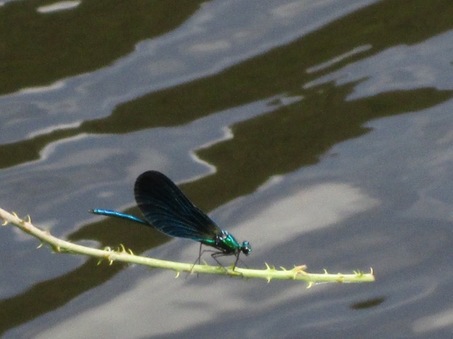
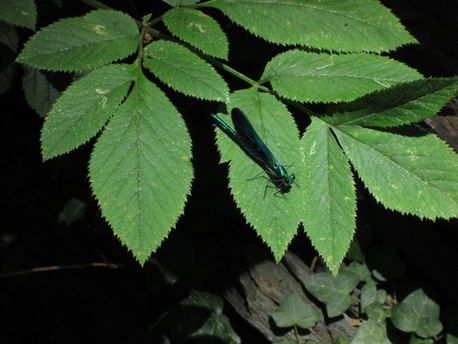
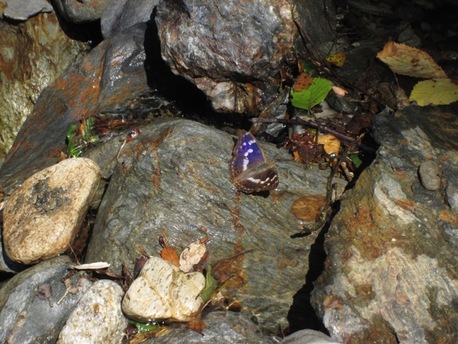
Instead though, I have two amazing memories that I will always cherish, and which I am sure will stay with me for life. So whilst it is sad to be bidding the very hot weather goodbye for 2015, subsequent reports this week prove that such amazing sightings are not freak occurences, or once-in-a-lifetime encounters. Lesley spotted a beech marten at very close quarters in a tree whilst walking under cloudy skies in the Alberes with a friend a few days later. I'm hoping she will write that dramatic encounter up as a blog soon. And another friend was thrilled to see a Genette crossing a track in front of her car at very close quarters in the woods above Chateau Valmy, also in broad daylight! Which confirms that although the nights are drawing in, and the sunshine getting weaker, this really is an excellent time of year to watch wildlife. So keep your eyes peeled - it's all out there! Isobel Mackintosh, August 2015 All photographs © Isobel Mackintosh by Robin Noble Around a year ago, I was writing about a beautiful campsite in the foothills of Canigou, blessed with two cold mountain streams which are the haunt of perhaps the most exquisite insect I have ever seen, the demoiselle agrion (or calopteryx virgo if you find the latin any easier). Well, I have recently been back there, and spent a significant amount of time searching out and watching them. Maybe I am just getting more used to them and now know where to look, or maybe this year there are more, but I certainly had lots of wonderful sightings, many of the closest when I was in the water, and they were flying over my head, sometimes even landing briefly on it ! I still cannot decide why sometimes they look very blue, and at others more green, but this year, for the first time , I have definitely seen the females which are much more green-to-amber in colour, and were attracting a lot of attention from the males, needless to say.... The males do certainly hold territories, perhaps only a couple of metres of wooded bank above water, maybe less, but they do often come close to the boundary and will at times stage something of a "stand-off" with their neighbour. As they fly fairly slowly compared to dragon- and damselflies, this seems a relatively unthreatening affair; once or twice, the movement became much more like a back- and forwards dancing, very beautiful and graceful, which only once I saw performed in Scotland, on the Isle of Skye, one very hot afternoon, when six or more adult males slowly danced above the dark, peaty waters. The pictures attached here are not that good (there are some splendid ones on the Internet), but photographing them always seemed to involve leaning out and around vegetation, and trying not to fall in the water, or actually being in the water and trying not to submerge the camera (Martine's underwater camera would have been handy!). Another wonderful creature had me teetering on awkward stones, as I tried to photograph it without frightening it away. This was what is called a purple emperor butterfly; I say "called" as nearly all the photographs I have seen show the male as definitely blue, and my little book of "papillons" firmly lists it as among those which have "ailes bleues". (Its french name is wonderful: "grand mars changeant", just wish I knew exactly what it signifies!). But, as my picture makes reasonably clear, the colour does obviously depend on the angle of the sun as it falls on the wings. Some books make a lot of the more unsavoury habits of this lovely butterfly, suggesting that it feeds on dung and drinks muddy water, but mine at least had more refined and "appropriate" tastes; the male, for instance, was sipping the crystal-clear waters at the foot of an enchanting pool called "Paradise", and the plainer female I saw later was enjoying nectar from one of the many naturalised buddleias which grow along the banks of the streams and fill the valley with sweet honey-scent. It is a wonderful place. And, "en passant" as it were; both Lesley and I have recently seen and heard bee-eaters, and I had the distinct impression that those I had been hearing were flying south. This seems really quite early; are they leaving after a short, but (hopefully) successful breeding-season? And have the swallows likewise moved away very quickly? - they, and all the hirundines, suddenly seem very quiet to me......
Finally, on the way back from a concert last night in Prades, some of us had a splendid view of a large sanglier; he was at the other verge, but when he saw our lights, rather than just retreating into the bushes, he elected to re-cross the road in front of us. No wonder there are some accidents; in our case, he was a little distance away, and Isobel who was driving had seen him early on, so there was little risk. In any case, he put on an impressive turn of speed, and made a magnificent sight as he crossed in front of the car. |
AuthorsBruce Hyde Archives
August 2020
Categories
All
|