Mediterranean Pyrenees
  • Home
  • About
  • Galleries
    • Birds of the Mediterranean Pyrenees >
      • Common Birds of the Mediterranean Pyrenees by Isobel
    • Weather in the Mediterranean Pyrenees >
      • Weather: skies and storms in the Mediterranean Pyrenees
      • Clouds above the Mediterranean Pyrenees by Isobel
      • The summer of 2015 by Isobel
    • Bruce's Pix >
      • Beetles, Bugs and other insects
      • Birds
      • Butterflies
      • Butterflies of La Batère
      • Canigou
      • Castles
      • Dragonflies
      • Flowers
      • Pyrenees Landscapes
      • TGV
      • UK photos
    • Isobel's Images >
      • Isobel's favourite images
      • Springtime in an Alberes garden
      • In the garden
      • Tour de Batere, spring 2015 with Robin Noble
    • Lesley's Snaps >
      • Insects & Arachnids
      • Bees
      • Birds
      • Les Albères
      • Elsewhere in the region
    • Robin's Photos
    • Martine's Photos
    • GUESTS' Gallery
  • Birdsong
  • Blog
  • Resources
  • Contact

Great Spotted Woodpeckers

17/3/2017

0 Comments

 
by Lesley McLaren

On this warm but misty morning in the woods of the lower slopes of the Albères, I was delighted to come upon three - or possibly four - Great Spotted Woodpeckers, all at the same time. Although I had no binoculars or camera with me (naturally), I did get reasonable views of two working their way up the same tree. At times, in between sounds of drumming, there was an almighty commotion - and racket - as they flew off in pursuit of one another.

The call they made surprised me, because it wasn't the tchick...tchick...tchick that I'm used to
, but a fast, chattering rattle I've never heard before. I suppose it's the equivalent of the Green Woodpecker's laugh or 'yaffle' but, from memory, it more closely resembles a Great Spotted Cuckoo!

You can click on the 'video' below to hear it. I assume a dispute was in progress - over territory or a mate.

Great Spotted Woodpeckers Calling from Lesley McLaren on Vimeo.

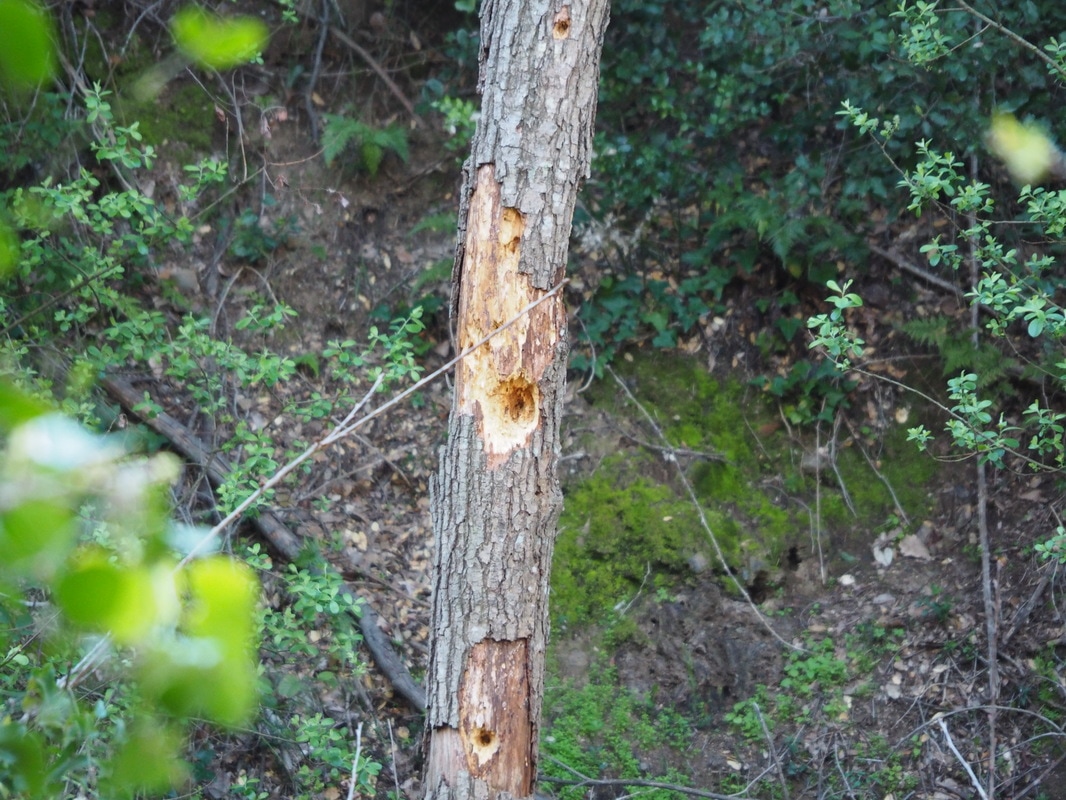
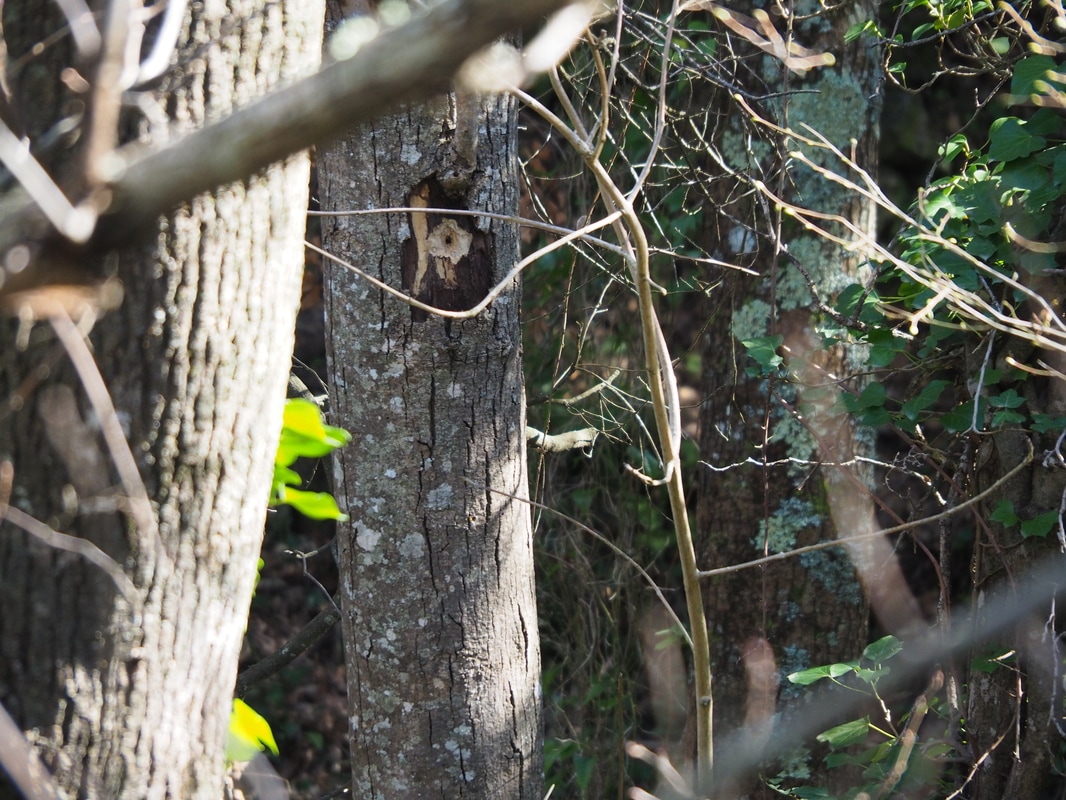
In view of all the drumming, most of which I imagine was experimental, it's no surprise that in the last week or so I've come across signs of fresh tree excavation. Below left, are the beginnings of a hole in the same dead tree where I was lucky enough to film young woodpeckers a few years ago (see my blog). That tree has since lost its top in a storm. I shall have to return to see if work on the hole has continued or been abandoned. The one in the photo on the right is, I think, unlikely to be used as a nest site as it's too close to a well-used track, and there will be no foliage in between to provide cover later in the season. Woodpeckers are shy and easily spooked so I'd be astounded if they persevere in that spot.
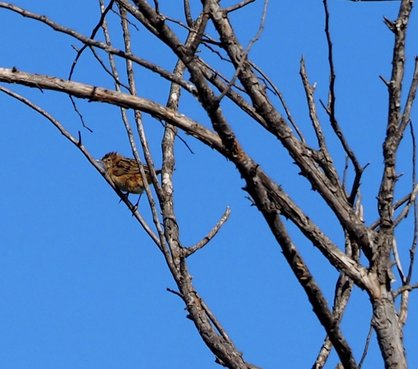
While on the subject of woodpeckers, a week ago I heard my first Wryneck of the year - just the once, so I think it might have been flying through to somewhere further north. It's strange that Robin always hears them in January near Céret, whereas here in the the Albères, I've never heard them before March. This makes me wonder if Robin's neck of the woods is on a special flight path for some that migrate extremely early. More should start turning up any day, I expect. By which time they will undoubtedly be impossible to see in the spring foliage that is now growing apace!
0 Comments

Winter Hibernation and Spring Migration

27/2/2017

0 Comments

 
By Lesley McLaren

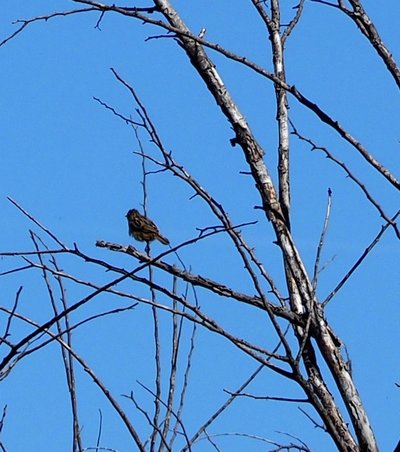
Migrants are returning, and although I've yet to spot any large raptors, yesterday I heard something at the opposite end of the size scale: the distinctive zeet...zeet...zeet of my first fan-tailed warbler of the year. Such tiny birds, very hard to spot in their undulating flight.

Picture
This one looks very ruffled!
Picture
Not a great shot, but you can just make out the heavily streaked back, and slight fan-shape to the tail
Today, as I was admiring the apricot blossom that is suddenly fully out in the orchards, blackcaps and chiffchaffs were singing their more musical songs, alongside serins and goldfinches.

After a wet spell a week or so ago, followed by sunshine and temperatures nudging up to 20 degrees C in our garden, lizards, and even one or two ants, have started appearing, and everything is growing like crazy. So today I made a start tidying it up for the spring. One or two plants have suffered after what I first thought were relatively mild frosts a while ago. Among these, our lemon tree. It seems to me that whenever we have a particularly good crop on the way, they get frosted before they're ripe enough to pick, and then they rot on the tree. Black lemons are not a good look. Enough may have survived for gin and tonics, however!

It was also time to check along the base of the ivy-covered wire fence that runs along the back of the garden - for signs of fresh escape routes my dog might be in the process of creating. Shrubs obscure one stretch, so it's a case of scrawming under, over, and through a tangle of twigs and fronds and prickly things. Soil here is very thin and poor, so I've let it run wild.

Sure enough, at the base of the wire, between self-seeded bay, pyracantha, eleagnus and palms, I glimpsed the beginnings of a hole. Impossible for me to reach without taking a machete to the jungle. But as I crouched down to dog height and peered, I realised that my darling boy hadn't been trying to tunnel out. He had half uncovered a hibernating hedgehog. Normally, the discovery of a resident wild animal would delight me - but my dog is a determined hunter, and I just hope that his paws and nose have been pricked enough to put him off trying again.

The exposed spines of the hedgehog looked unharmed. Although I couldn't see any sign of breathing, when I managed to toss dead leaves back over it, it flinched, which I took to be a good sign. I've also now attempted to block the dog's access with a wedged, broken flowerpot. But he is cunning and talented, so I shall have to keep watch.

With further frosts unlikely now, I'm hoping Hoggy will wake up (if he hasn't been rudely awoken already) and move on to somewhere safer.
0 Comments

High Winter Blog

18/12/2016

0 Comments

 
By Robin Noble      Photos by Martine Howard

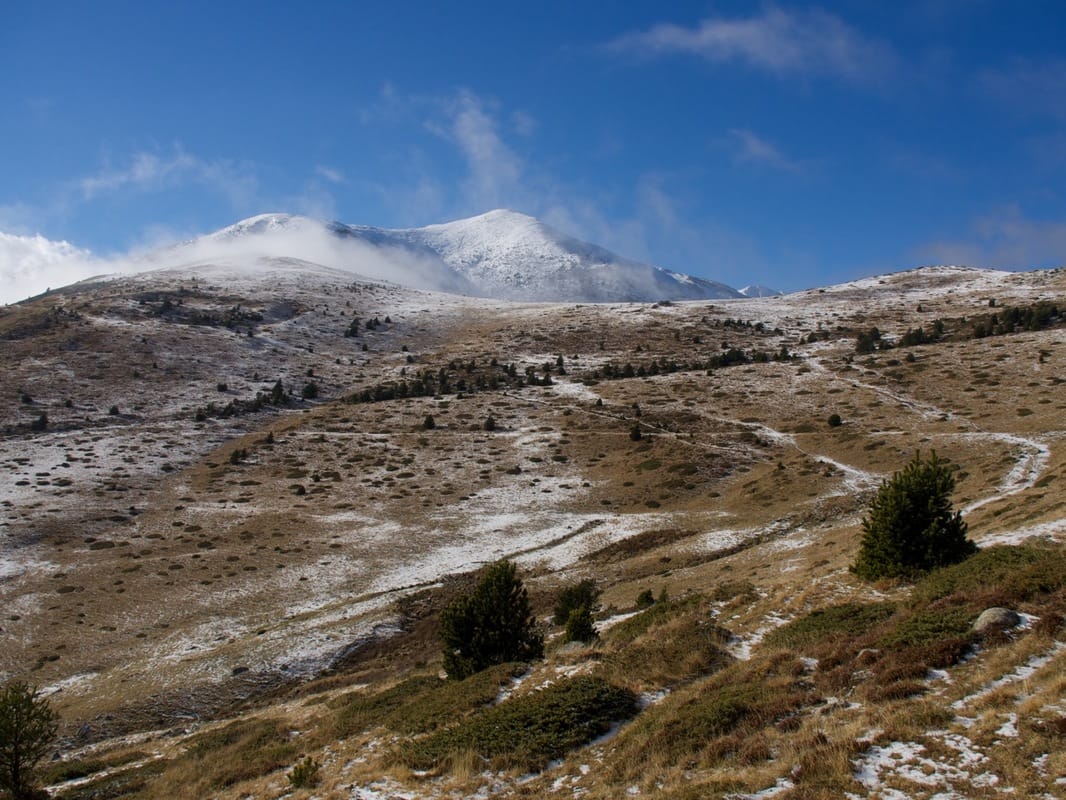
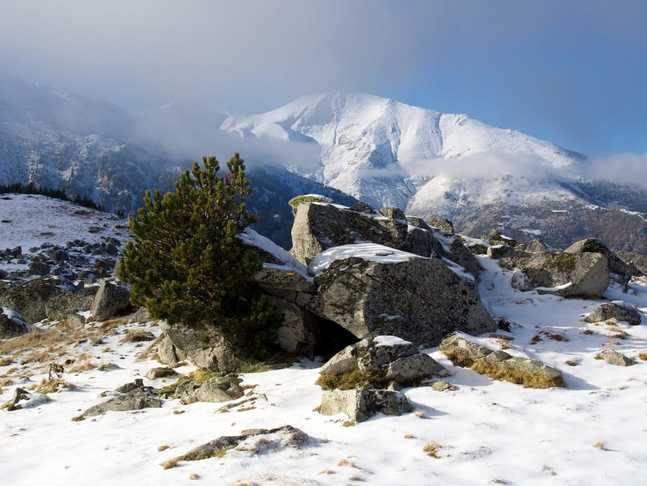
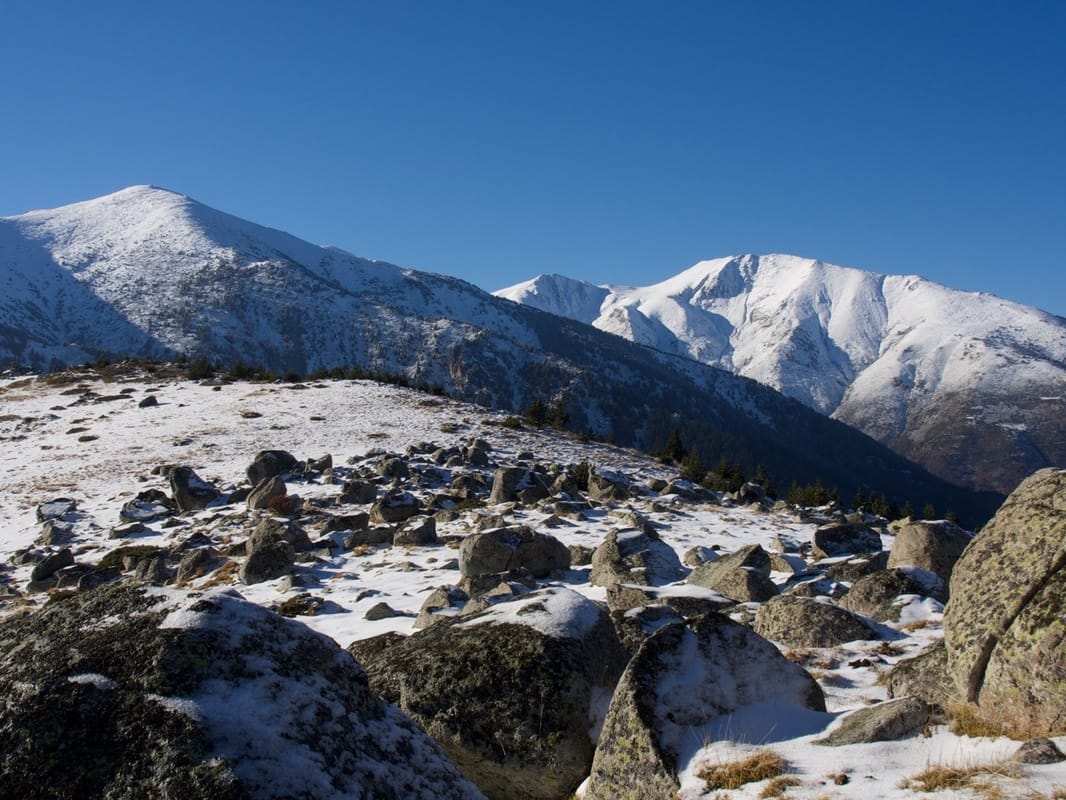
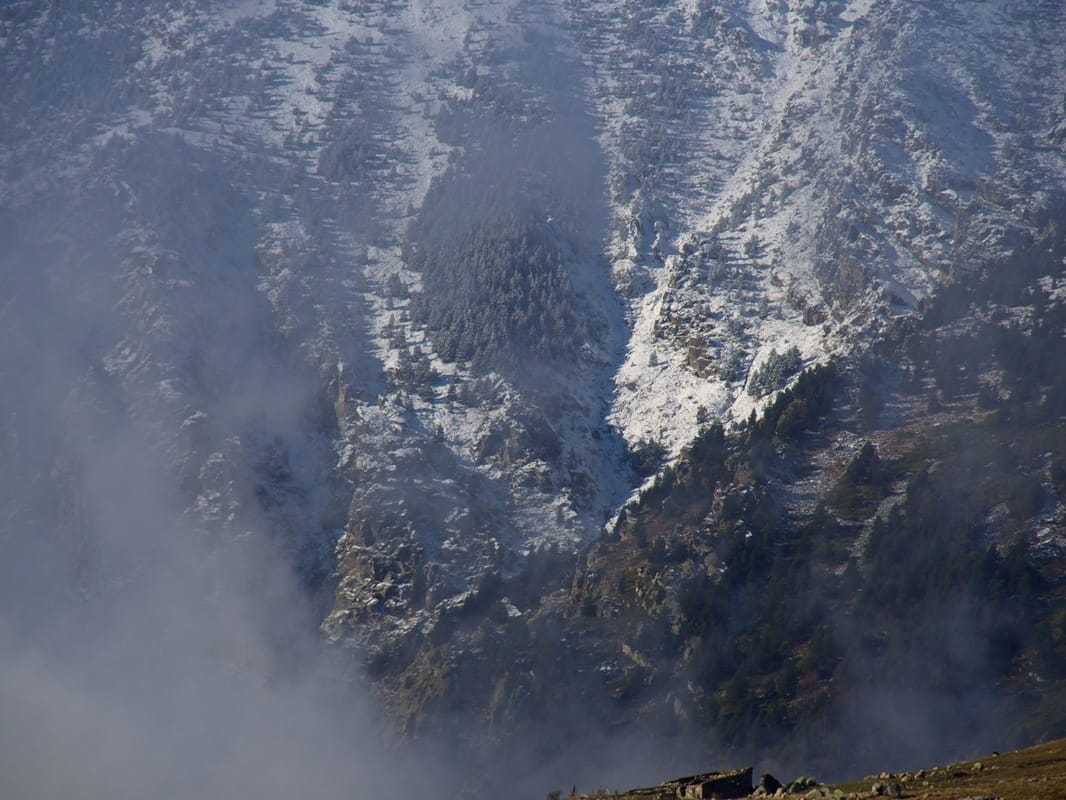
One week before Christmas, with sun forecast for the weekend – to be followed by cold, grey days – we decided to go to the high foothills of Canigou, which so often appear in these blogs. I was not convinced of the wisdom of this, as when we started it was still quite cloudy; in fact the mist seemed to stay around the Albères and the lower Pyrenees, but it slowly cleared above us, and the high, snowy peaks appeared wonderfully – as Martine’s photographs well show.

Picture
Picture
As we started to climb these gentle foothills, we had, through the thinning mist, a splendidly romantic view of an undoubted golden eagle. It was circling, never flapping, and as it headed for a while in my direction it assumed a posture which made it clear that it was certainly not a buzzard; it is surprisingly easy to confuse the two, especially if there is nothing else in sight to give a clear indication of scale. I could see that it had no underwing pattern, its great wings looked as though they were pointing forward, and the truly big pinion feathers were spread and reaching high – no room for doubt!
 
Otherwise, we soon saw the large flock of alpine choughs which live up there, and there were also several flocks of partridges; they flew before we could get a proper look at them, and we always assumed that they are red-legged. Despite the varying colour shown in my bird books, they always seem to appear a brownish grey in the sunlight, and fly fairly fast.
 
There were also a few large flocks of finches; it was very hard to get much of a proper view of these, but when one bird did settle long enough for me to get a decent look, it turned out, rather to my surprise, to be a goldfinch. That need not mean that the whole flock was the same; finches elsewhere often fly in mixed flocks throughout the autumn and winter, and the same may well happen here.
 
The presence of these flocks, especially of the partridges and finches, I think, shows the benefit to the local biodiversity, of the transhumance which still brings the flocks of sheep, and the other herds up to these high, open uplands. (The ponies were still there, but the sheep and cattle were much further down.) Elsewhere, the partridges and finches are essentially birds of farmland, and I have no doubt that the cropped herbage, the grazed bushes, and regularly-placed deposits of various brands of manure replicate the farmed habitat. Our friends, the marmots, were presumably asleep far under the bleached grass.
 
Amid this brilliant, lightly snowy scene, a true glimpse of winter, I found two, isolated gentians still in bloom, their beautiful blue as bright as the sky, bringing memories of wonderful summer days spent on the heights.


Picture
Picture
0 Comments

Different Directions

16/12/2016

0 Comments

 
By Robin Noble        Photos by Martine Howard

A couple of weekends ago, we went off on a short jaunt, north into what we call “ Cathar-country “ and the Corbières. Basically, we took a reasonably direct route to Quillan, and then headed eastwards back into PO, via forests, rocky uplands, dramatic castles and autumnal vineyards – some even complete with hard-working paysans. This was against the spectacular backdrop of a snow-clad Canigou, and our purpose was to catch the last autumn colours, the deep reds, coppers, sheets of gold with splashes of yellow that inevitably attract the attention of the photographer. This we had expected, and hopped out of the van at regular intervals to try to do justice to the beauty of the unfolding scenery.
 
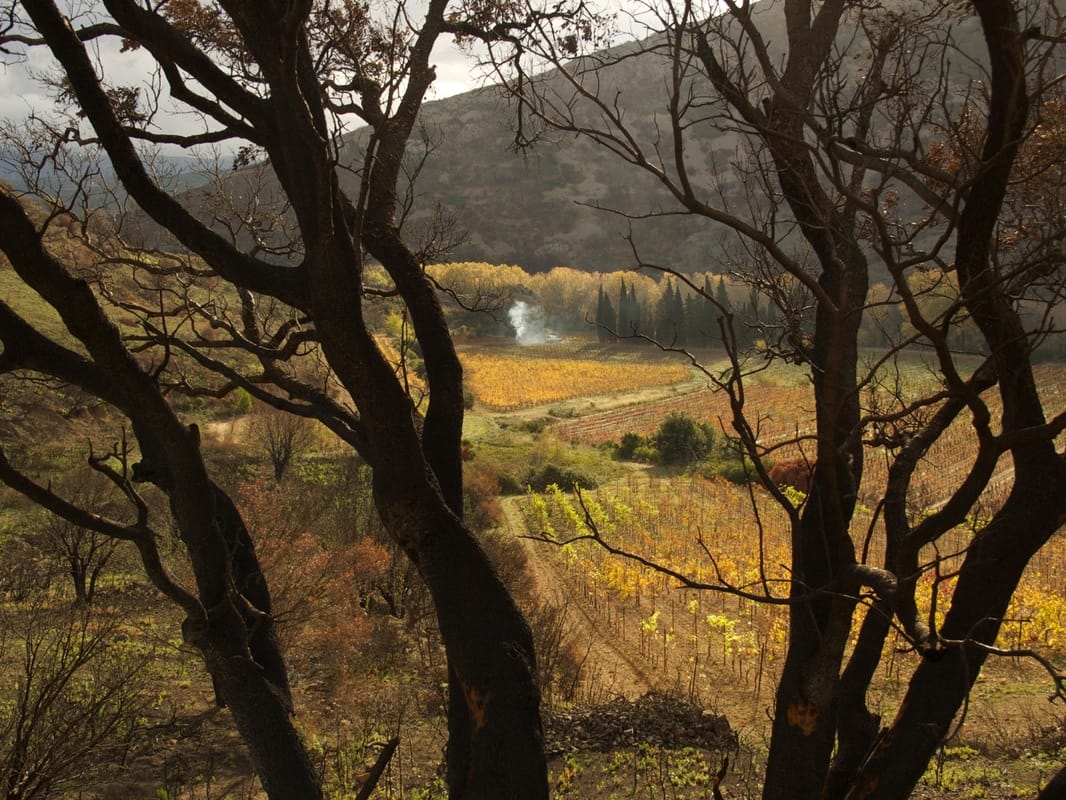
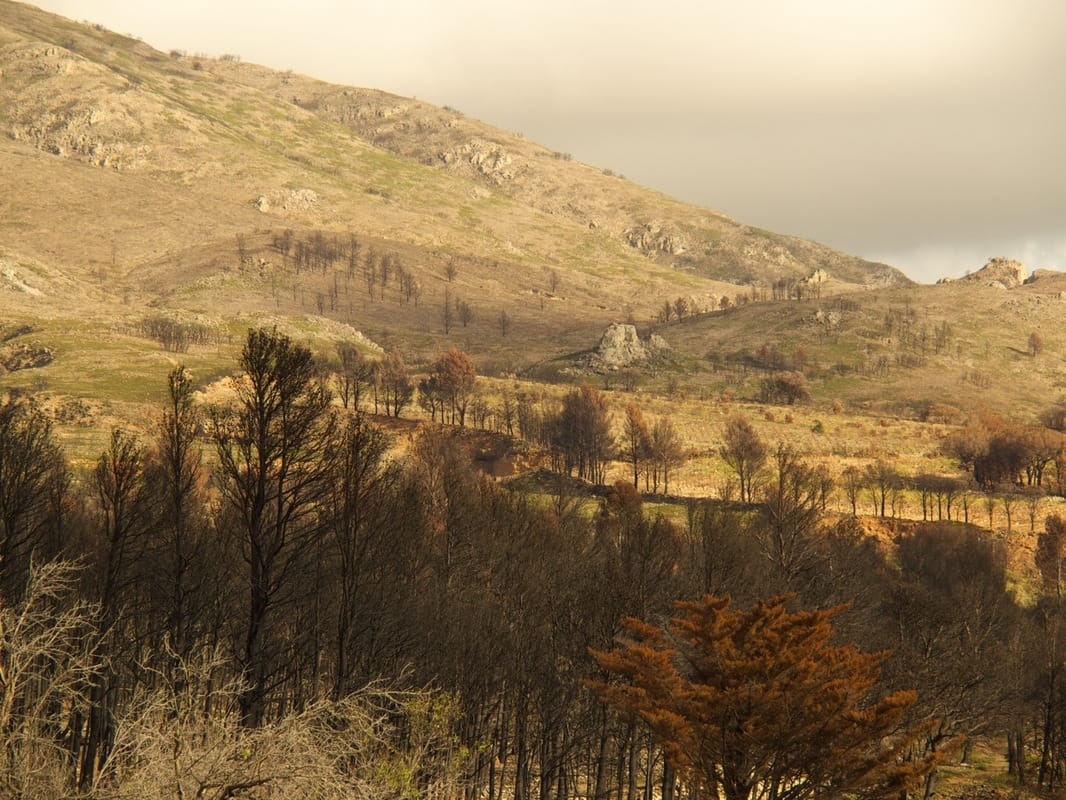
One day we found ourselves suddenly in a shallow valley whose drama we had not expected; there had been a wide-ranging, serious fire (in August, we later learnt), which had ripped through the wooded upland, leaving large areas of stark, black trees which made an impact on us that was not merely visual, but also, somehow, visceral and emotional. A recent fire looks horrible, but this one had a strange beauty, because it framed the small vineyards which had been saved from the blaze, presumably by the great efforts of the sapeurs-pompiers, and were that red-gold colour. Seen through the blackened branches, it reminded me of a stain-glass window – umpteen photos were duly taken.


Picture
Such a fire does look like the end of the world, but the landscape does eventually, largely, recover. As we walked about we could see that many of the roadside bushes, the small prickly oaks and others, were sprouting vigorously from the base, which is precisely what Mediterranean vegetation does after such trauma. The relatively heavy rains of the autumn had no doubt helped the new growth to get away; it was about one foot in height. That night our landlady told us about the fire and expressed the hope that the pines might recover; that seemed unlikely to us but we did not say so! Although foresters call pine a “fire-climax” tree, the climax referred to is pretty slow. Generally, the pines themselves are killed; the heat causes the pine-cones to open and the seed to fall into the ash, which makes a nice soft bed with lots of easily-accessed minerals. Slowly the pines grow again from seed. At some stage the whole area will look quite strange with the fresh green of young pine against the old, black trunks. The greatest harm to the overall ecosystem really tends to be that the thin soil in such places is charred and easily washed away in subsequent, heavy rains (which, as mentioned, we have had this autumn), leaving it increasingly bare and rocky.
 
Our landlady did tell us that the fire had been set by a known arsonist from Perpignan, someone, obviously, with a strange and harmful relationship with our lovely countryside.

Picture
In total contrast, we went south the next weekend, to our much-loved coastal Nature Reserve on the Empordà, where all the wetland was definitely very wet, the light brilliant, and the birds, generally, very obliging! We walked various paths, and sat in various hides, overlooking the well-populated pools. I will not attempt an overall species-count, because what really mattered was that we had excellent views of some which we have not seen so well on previous visits – not necessarily rare in themselves, but lovely just to look at.
 
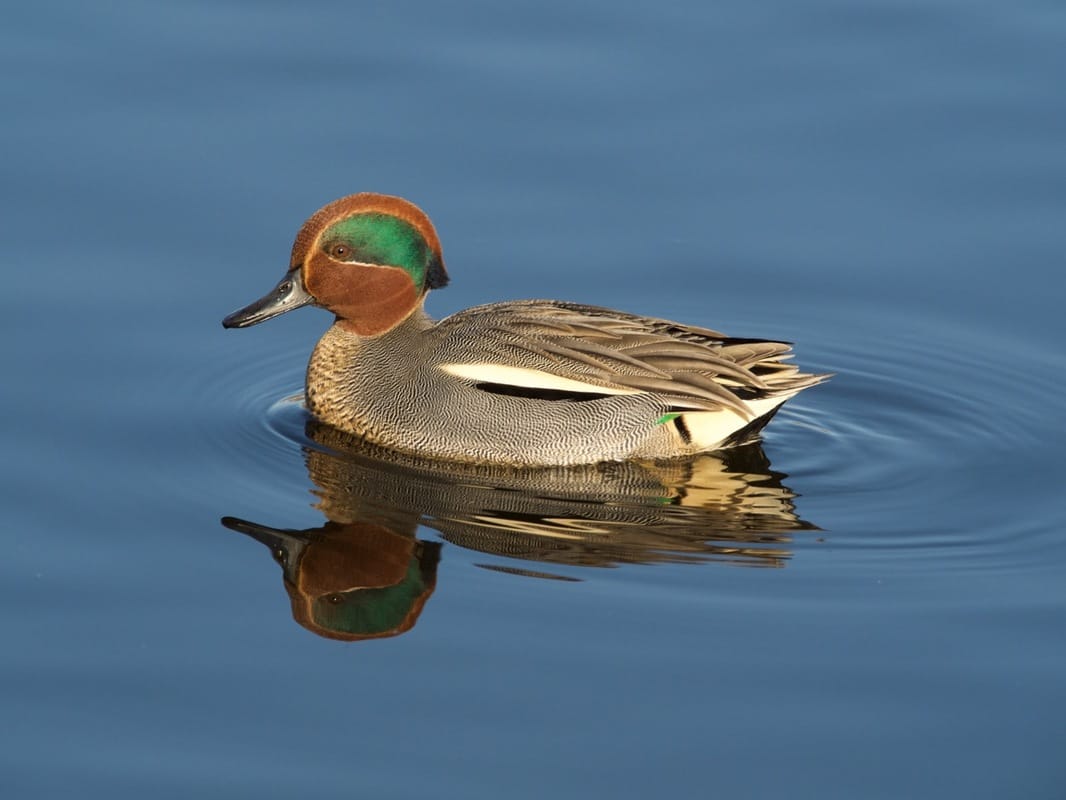
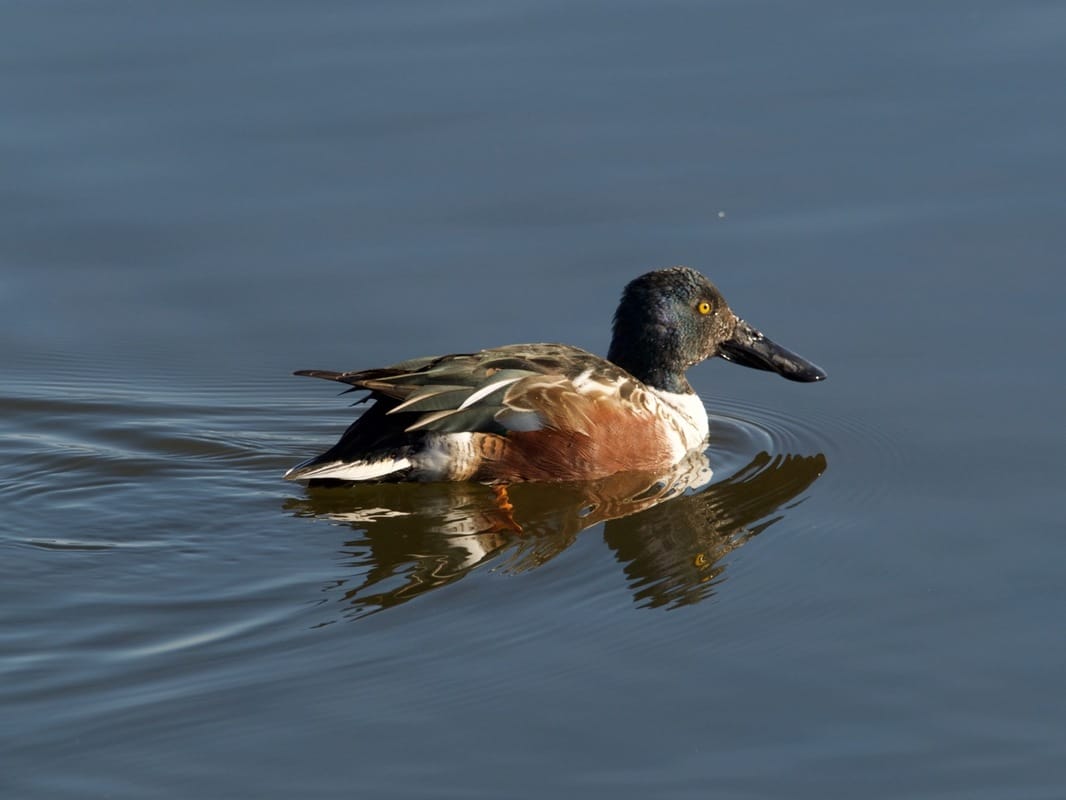
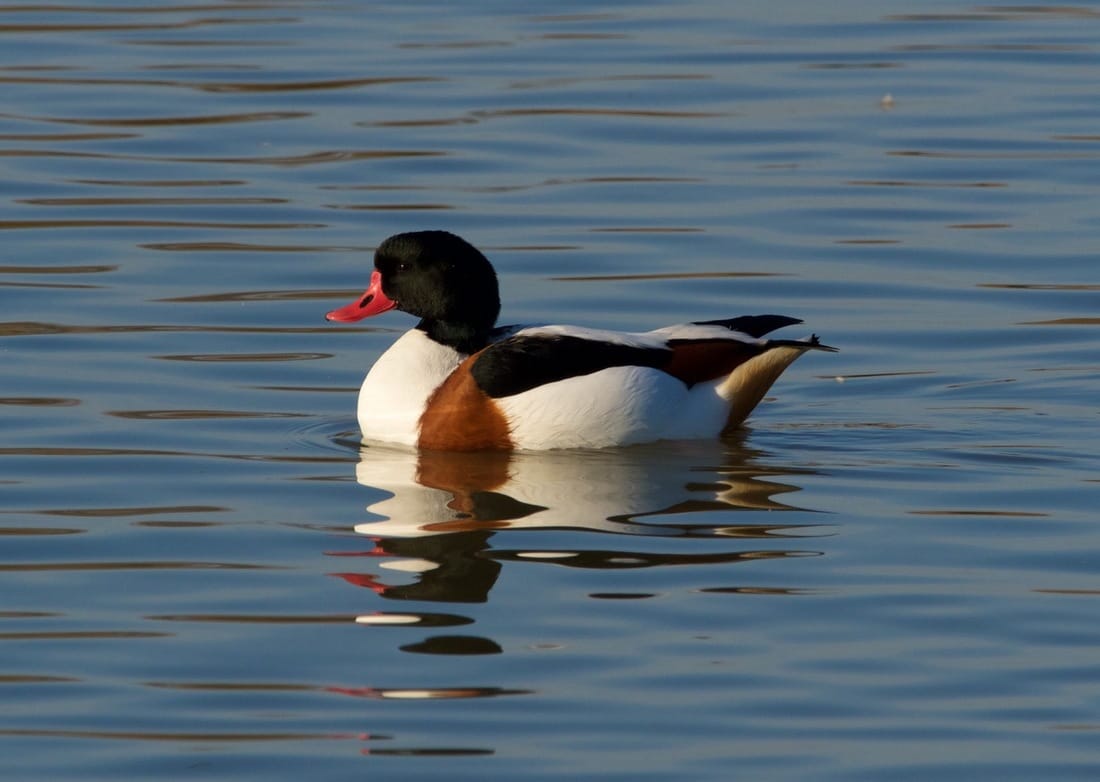
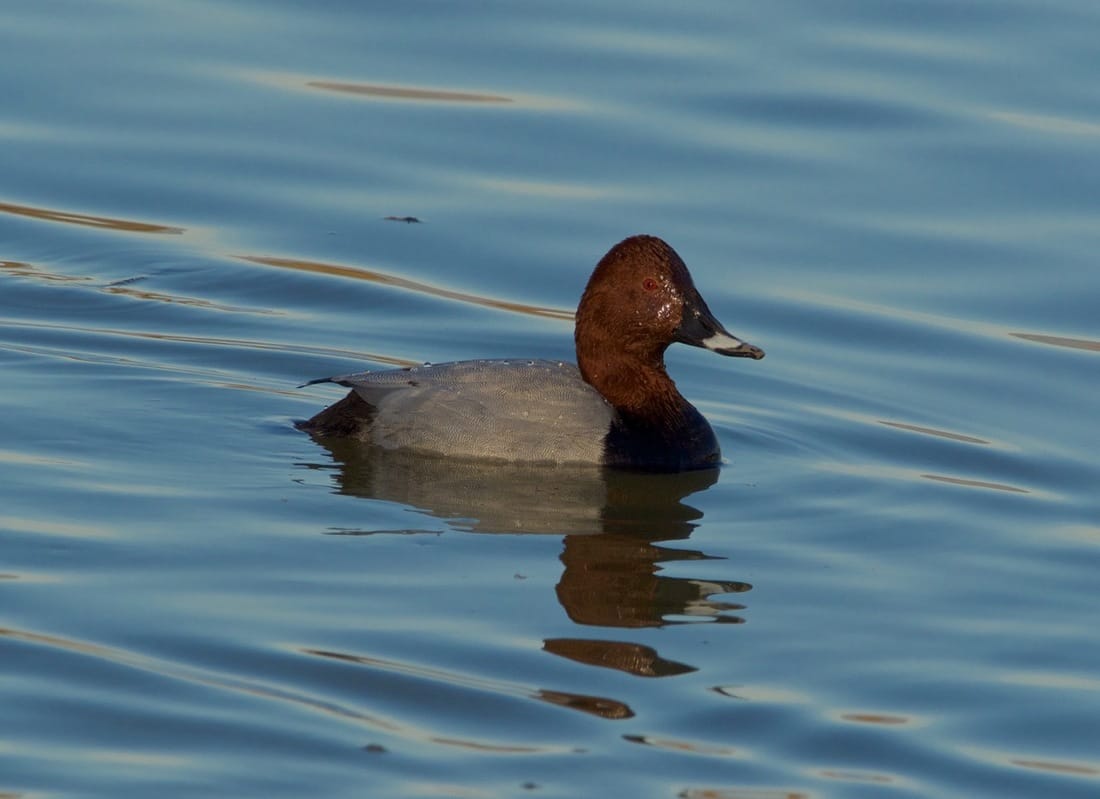
There were, of course, lots of duck: the ubiquitous mallard, inevitably, but lots of the smart, diminutive teal, as well as the remarkable shoveler, shelduck and a few pochard.

Picture
Teal
Picture
Shoveler
Picture
Shelduck
Picture
Pochard
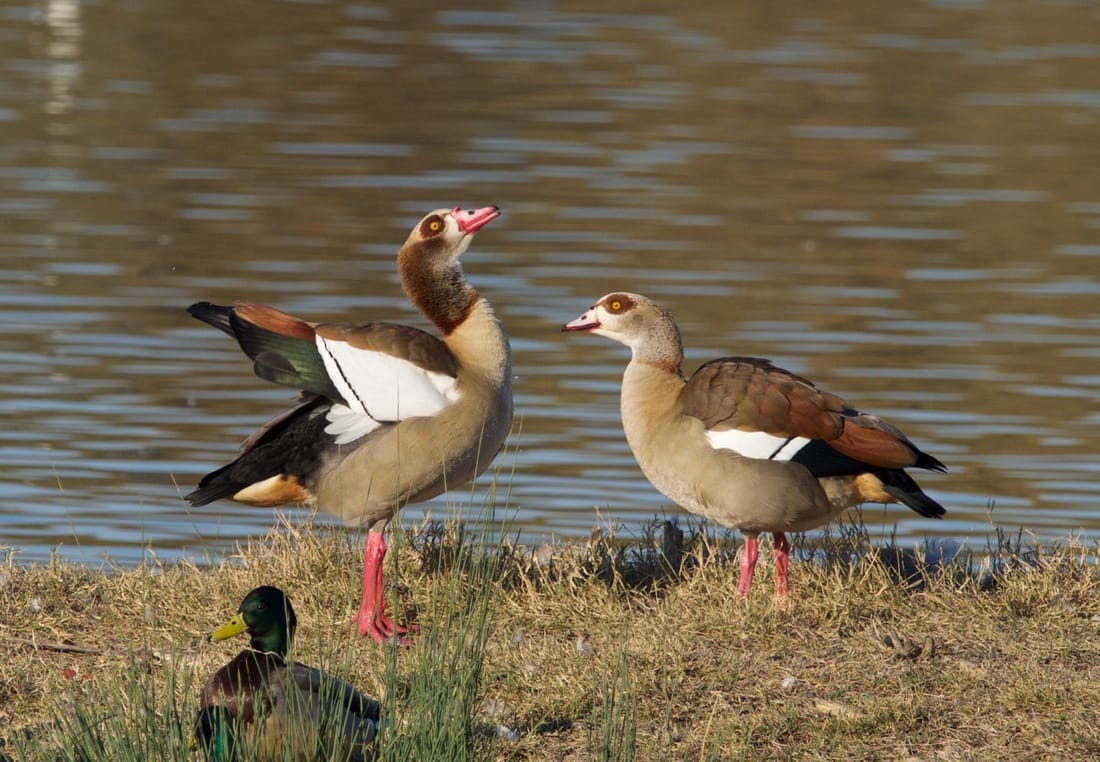
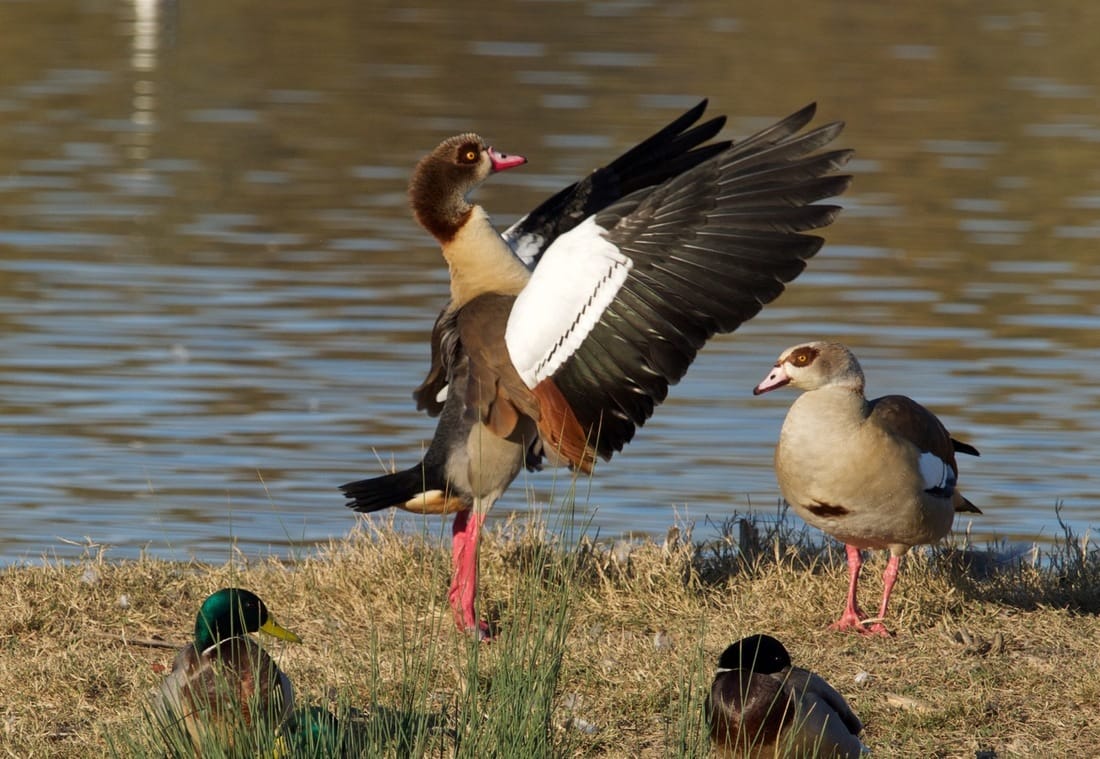
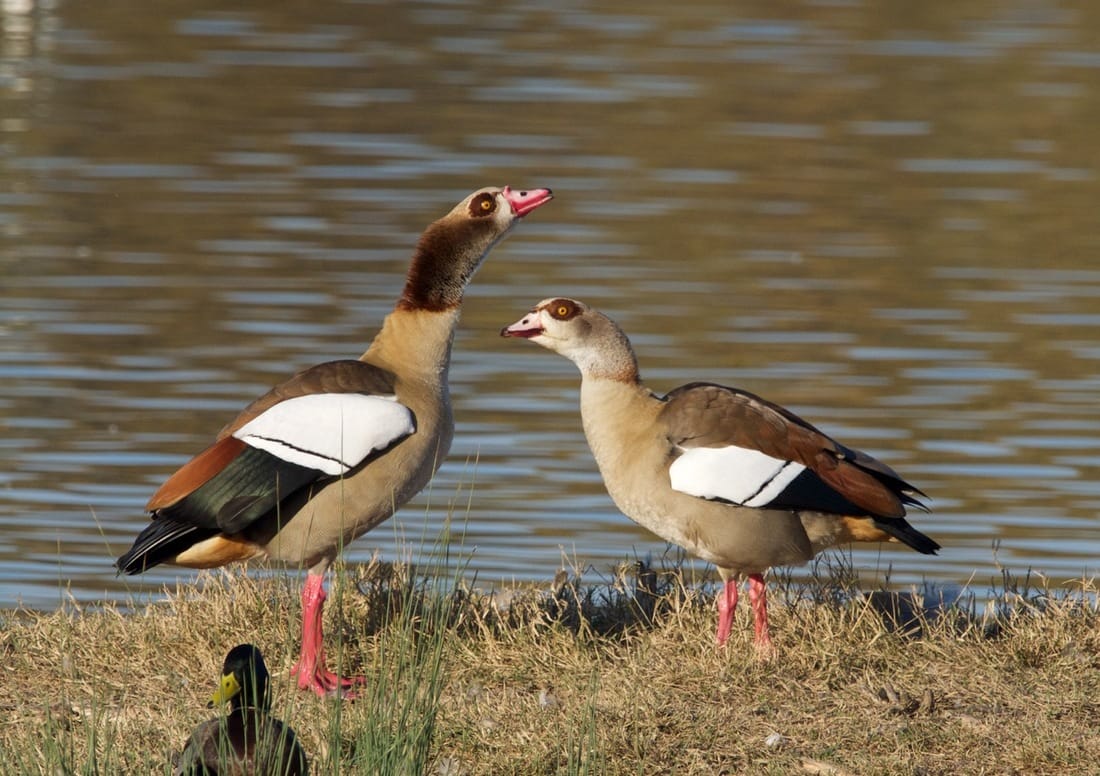
Geese, too: the greylag in some numbers, but also a few (rather weird) Egyptian geese. Martine captured a wonderful sequence of the latter; a male leaving the water to land on a tiny islet where he displayed magnificently to a female who seemed duly impressed:

Picture
Picture
Picture
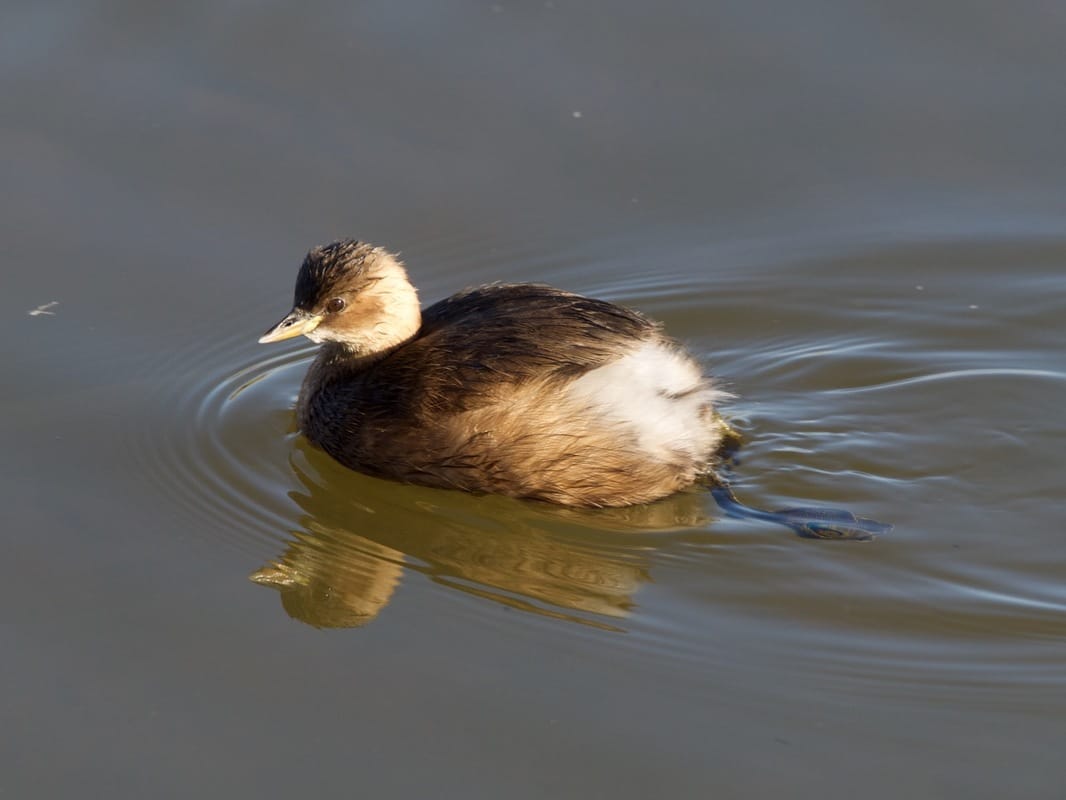
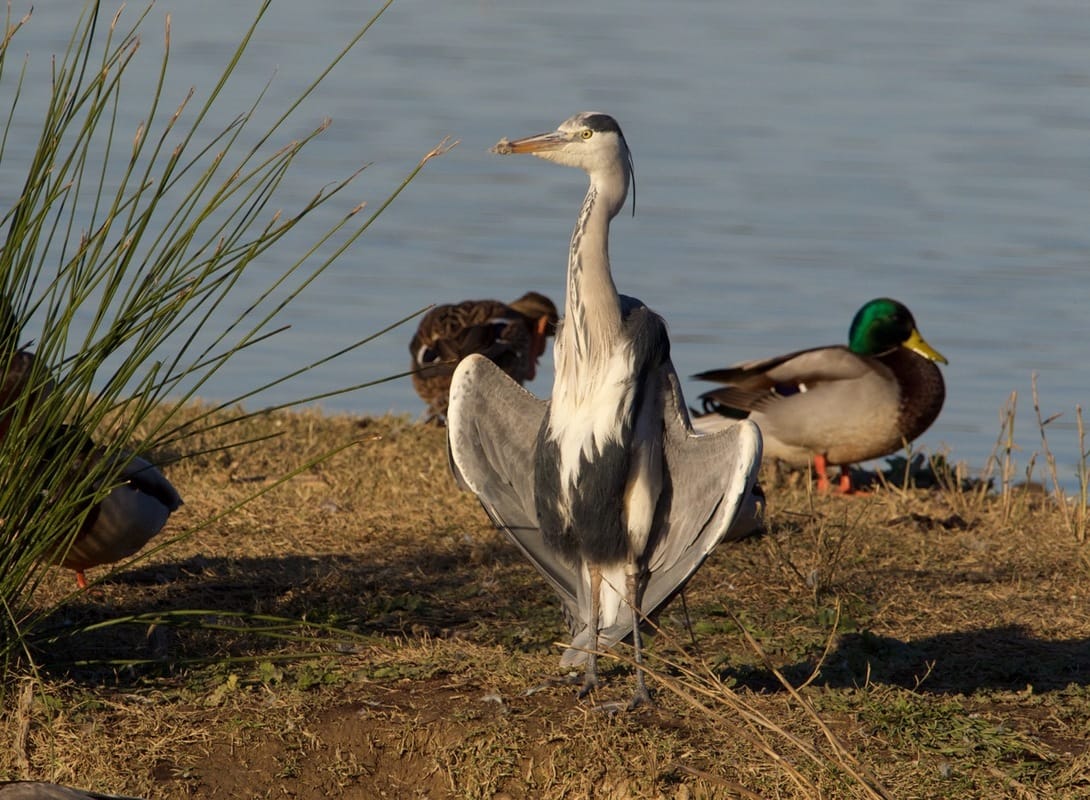
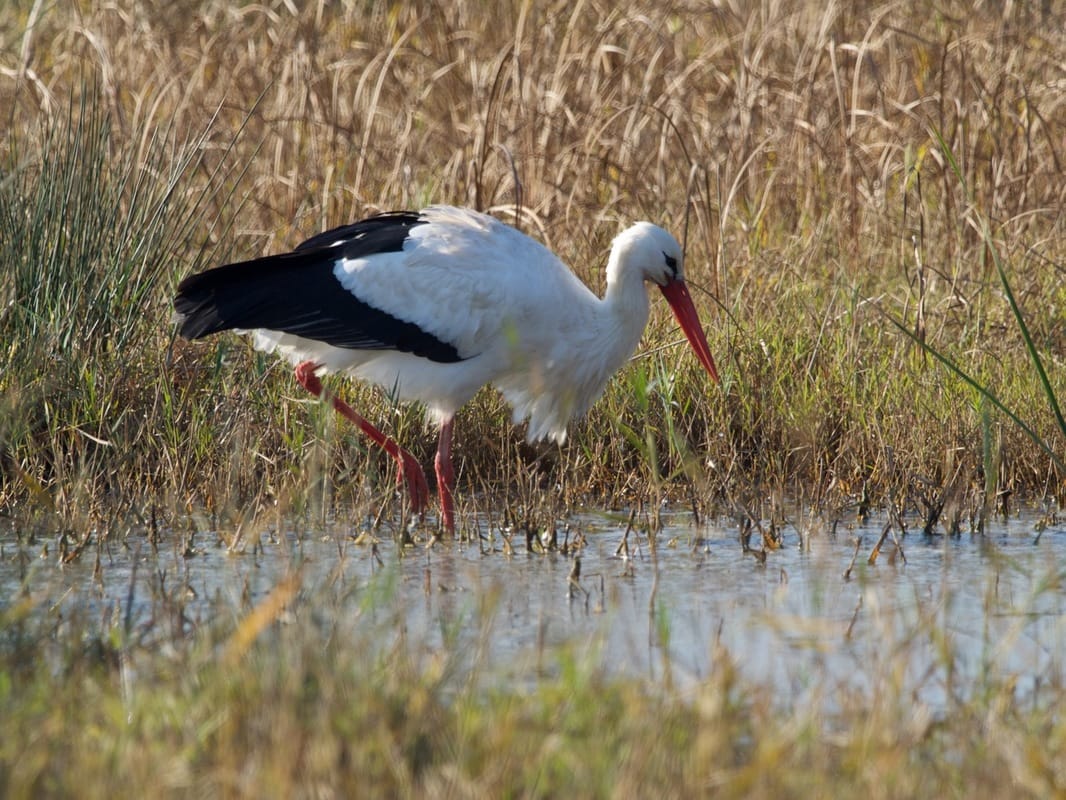
We saw birds of all sizes, ranging from the tiny, blithe dabchicks, one of which we were able to follow as it swam underwater among the weeds, through cormorants (drying their wings in the sun) with grey herons and egrets, to storks and flamingos – the latter do seem rather bad-tempered! Once again we watched a few, brisk, domestic inter-actions through the binoculars.

Picture
Dabchick (Little grebe)
Picture
Grey heron
Picture
White stork
There was also a large flock of one of my favourite birds, the heraldic lapwings, which we associate so much with the British uplands whether in Northumbria or the Highlands and Islands. And, overhead, more marsh harriers than I have ever seen, a real thrill. Altogether a wonderful day.
 
It was quite a busy day, too, being a lovely Sunday with free admission. There were several serious photographers with lenses that I could not even imagine carrying, and many families. At the very least, their children were all having fun on a super day in a beautiful place; we can only hope that a few of them grow up to be enthusiastic about the natural world, and to care passionately for what is left of it.
 
Bonnes Fêtes to you all! And, whatever happens in the wider world, keep enjoying our wonderful countryside!


0 Comments

Looking for Lammergeiers on Canigou

26/11/2016

0 Comments

 
PicturePhoto by Bruce Hyde
by Lesley McLaren


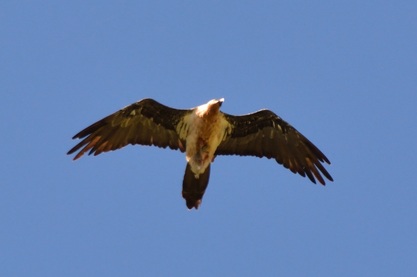
With its wingspan of up to nine feet, and long, diamond-shaped tail, the lammergeier (bearded vulture) is huge and magnificent, but very rare in much of Europe. We only have a handful of this protected species in the Mediterranean Pyrenees, and I've been lucky enough to see one or two on various outings in past years.


On 25th November, when I set off from home in the dark at 6.30am, I hoped my luck would hold. At 7.30 I met Gilles - fellow GOR member - and transferred my gear to his 4x4, after which we headed deeper into the hills for another half hour or so. We would be one of s
everal teams that day, spread across Canigou and other mountains in the region, tasked with simultaneous sitting, watching and recording of sightings between 10am and 4pm. Of course, none of us could guarantee that lammergeiers would turn up, any more than we could guarantee the weather.

Gilles and I were in optimistic mood, however, because the weather forecast, at least, was good. As we shouldered rucksacks and extended walking poles, the skies were clear; there was no wind and only a small chance of rain. It was 4°C where we'd parked - already 1,000m above sea level - and Gilles, familiar with the area, estimated it would take us two hours to climb another 600m, through beech and conifer woods, to our allocated observation post. 'We'll take it slowly,' he said. This was a relief because by now I knew that although he was a few years older than me, he was a keen walker and cross-country skier, who had climbed Canigou twice this year already. I, on the other hand, hadn't tackled anything this tough for a long time, and wasn't at all sure how lungs and knees would cope.

Rain earlier in the week had left the ground very damp. A thick layer of wet beech leaves on top of greasy stones and tree roots made the first section treacherous enough. It was important to watch every step and not get distracted by pretty views of autumn colours against a backdrop of snow on Canigou's upper slopes. Accompanied at first by nuthatches and a green woodpecker, we crossed a fast flowing brook and continued up. Gilles led and, true to his word, didn't walk especially fast, but nor did he stop, except to check his GPS gizmo once in a while. Despite long zigzags, the track was still very steep in places and utterly relentless, never flattening out.

The higher we climbed the colder it got, of course. In a sense this was no problem - gloves and woolly hat were soon stuffed into pockets - but every so often we had to cross rock fields several metres wide. Although the lichen-spotted stones weren't as small and unstable as scree, at this height they weren't just damp, they were lethally slippery with frost. Given the potential for twisting an ankle, or hurtling down the slope to one's death, this was no time to hurry. Not that I was capable of hurrying. My knees were fine, lungs less so, but I hadn't envisaged that my specs would steam up, making it even harder to focus on exactly where I was putting my feet. The hotter I got, the more they steamed up, and cleaning them with increasingly damp tissues ceased to work. Further on, it became unsettling too, to hear my own (rapid) heartbeat. In the end I had to keep stopping for a few seconds and let Gilles plod on, though never out of sight.

I had nearly lost the will to live when he paused to check the GPS. 'Only about another 30m to go,' he said when I caught up again. Feeling sick and wobbly legged, with sweat dripping from nose and glasses, I managed a smile and steeled myself for a final push. A few minutes later I thought he'd miscalculated, until I realised he meant 30m up. It must have been closer to 300m in overall distance, which felt like a lifetime.

But I made it! On the metaphorical stroke of ten, I emerged to join him in a sunny glade in which stood a small wooden refuge. Next to that, a frosty picnic table, from which steam was gently rising. So picturesque; such bliss to stand still, peel off my rucksack and scrabble for an emergency chocolate bar. Almost frozen, it nearly broke my teeth on the first bite. And when my stomach lurched in rebellion, I decided to leave the rest till later. Gilles, meanwhile, looked as fresh as a chamois and wasn't even out of breath.

He pointed out that we couldn't see much from here, except trees, and I reluctantly had to agree that, as observation posts went, it wasn't ideal. In fact, our instructions suggested we position ourselves a little further back down the track, but we already knew that wouldn't be much better. In the end we did retreat about 50m, to the last rocky bit, which gave us a half-decent view of the valley, and even the sea in the very far distance.

This being the north side of the mountain, though, it was in the shade and, added to the frost, there were tiny remnants of snow from the recent rains. All the perspiration that had soaked through every layer of my clothing was now efficiently and rapidly cooling me down. Time to pull on the thermal waterproof trousers and add a fourth layer to my top half. Gilles put another coat over his ski jacket. A warming cup of coffee staved off the shivers while my hair dried out. Then it was back on with the woolly hat, swiftly followed by jacket hood. Hands needed inner gloves and ski gloves. But, dammit, one of my ski gloves must have fallen out of my pocket (we would find it later, on the way back). Never mind. It could have been worse: could have been windy. We would have been facing straight into a tramontane. And the prospect of enduring this for the next six hours wasn't so bad when I thought that a lammergeier might fly up or down the valley at any minute! Failing that, a griffon vulture or golden eagle. Peregrine falcon? Kestrel?


Picture
In the event, it was a chaffinch. A couple of great tits dropped by as well, and a black woodpecker cried out, somewhere to our right, but didn't grace us with a fly-past. I kept glancing back up the track to the sunny glade; it was like looking through a window into another world. But even that wasn't to last. Within twenty minutes, cloud had snaked over the hill from behind, and curled into the valley, bringing with it a further drop in temperature. Soon, visibility was down to the trees directly surrounding us. Gilles must have regretted lugging telescope and tripod all that way for this!

Now we wished for a breeze to disperse it, but no such luck. For a couple of hours or so the mist teased us, lifting just enough here and there to give brief, tantalising glimpses of mountainside and valley. Eventually I surprised myself by suggesting we change position, to a point beyond the refuge, where the map suggested there might be better views - if we could escape the cloud. I couldn't have faced more uphill, but we would be following a contour. We paced it out and the movement proved most welcome. It was easy underfoot - a lovely stroll in comparison with earlier - and after fifteen minutes or so we came upon another rocky area with a very different vista.

Picture
Picture
This was more like it. Encouraged by the views and warmed by the exercise, we made camp once more. Waited ... watched for movement ... scanned with binos ... waited. Gilles told me he'd seen a lot of isards (Pyrenean chamoix) on the slopes of this valley on another occasion. But today, apart from a few cows on a distant hillside, and calls of another black woodpecker and jays, there was no sign of life in the air or on the ground, anywhere. Not even a human - we were on our own. Peaceful and beautiful it certainly was, until the mist crept in from our right again. It was stalking us. And soon our view was blotted out once more - for most of the time we had left.
Picture
A little before four, we gave up and began to head back down so as to beat the dark. On the way, Gilles spotted a red squirrel. Then, further on, we rounded a bend and came upon something I never expected: a band of eight or ten wild boar. All different sizes, including one very big daddy. They were as surprised as we were, but I only felt the briefest spike of fear before they stampeded noisily up and away through the trees, doubtless terrified that we had guns. For me, this sight alone was worth the climb.

The sense of achievement from getting up and down without expiring also made the day worthwhile. It didn't really matter that we saw no lammergeiers (or indeed any other raptor). Hopefully some of the other teams did, and analysis of records will help ongoing protection efforts by local groups. As I drove back home in the dark, twelve hours after setting out, I kept thinking that our lack of success, despite sitting still for hours, shows how incredibly lucky I've been in the past. It makes each sighting of these rare and extraordinary vultures all the more special - never to be forgotten.

0 Comments

A Boating Retrospect: Summer 2016

14/10/2016

0 Comments

 
by Robin Noble   (photos by Martine Howard)

Well, October is here, the weather has changed somewhat (in fact we have just experienced a major coastal storm), and the sea is noticeably cooler although the sun is still very warm some days. Our "good ship" Puffin sits quietly in our garage, and boating is over for another year. But there are still all those photographs to sort through, to enjoy, and memories to savour.

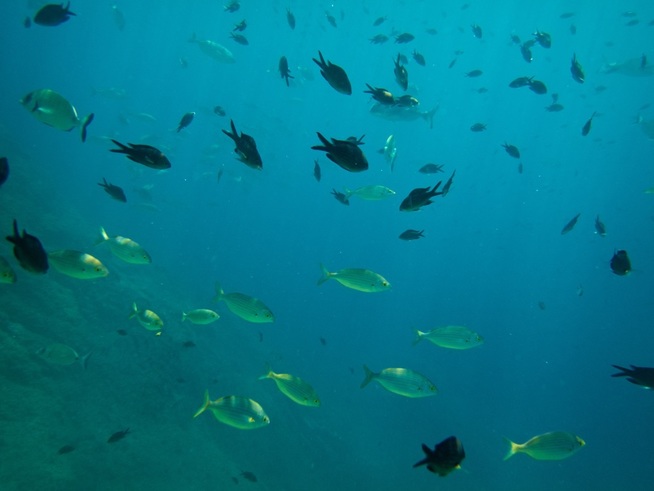
During the course of this season we have very much got into some sort of routine during these boating days out from Banyuls: we are usually on the water before eleven, heading out to the moorings on the Marine Reserve, and hoping for a good one. We will have a quick cup of coffee onboard, and then swim until a latish lunch. Martine goes further than I do, and takes the camera, but we are both in the water for at least an hour and a half at this time of day, swimming around all the time, searching for fish.

The reason for emphasising this routine is to make it clear that any comparison we make between the early season in June, and the later in September, and between years, has some validity – and we have been very struck this year by the very noticeable differences. In September, there were simply more fish than we had ever seen before.

They divided roughly into four groups. The first, because they are small and delicate, with conspicuously forked tails, are the damselfish; there were clouds of them at times.

Picture
Picture

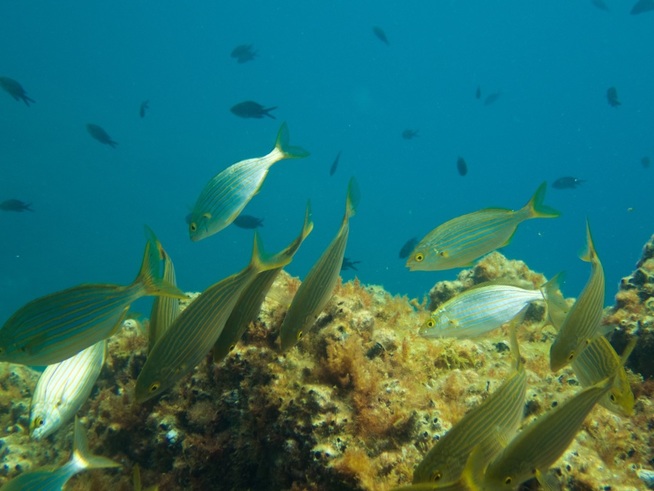
Then the salema, in close-packed shoals, working over the weeds and general gunge on the sea-floor. They are really beautiful, a pale blueish colour with delicate yellow horizontal stripes, and a dot of black and yellow at the base of the fins.


Picture

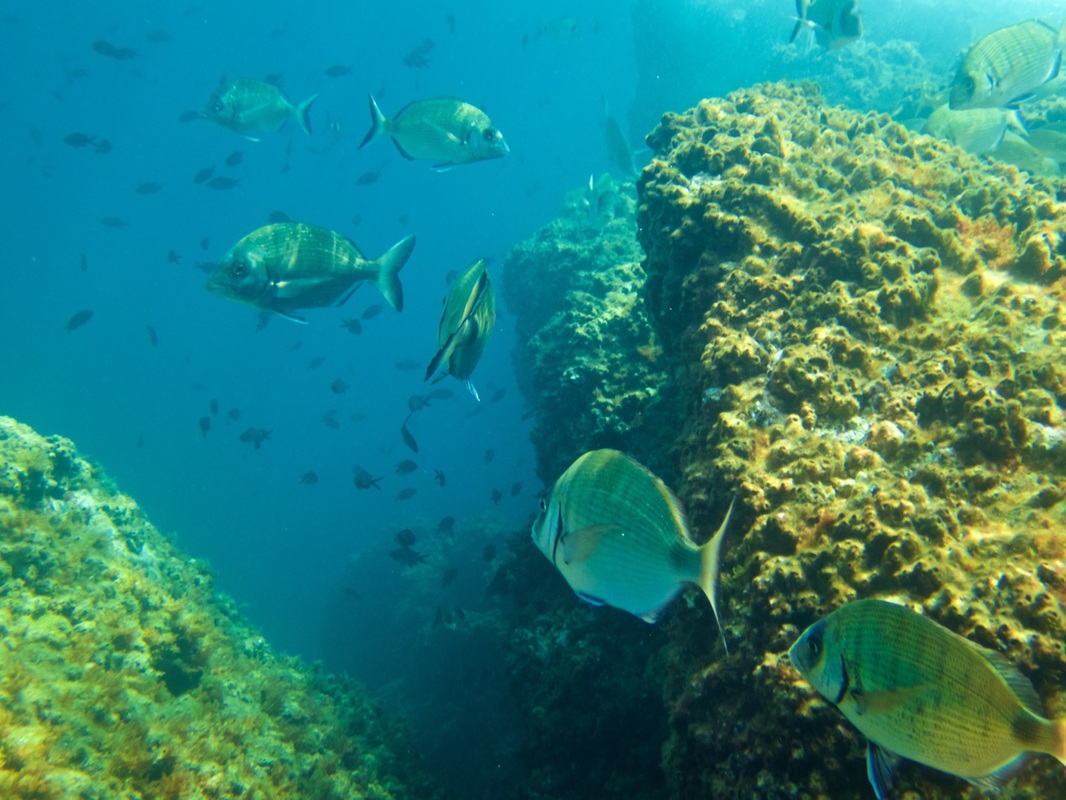
The next group is composed of the various breams, the most immediately obvious of which are the saddled bream, which tend to enjoy the shadow of the hull and hang around below the boat. I think of them as friendly and inquisitive; when I put my head under water for the first time, I will often find that I have one on each side, perhaps only a couple of feet away, and you can attract them closer.


Picture

But there are many other bream including the gilt-head, the annular, the striped and two banded seabream and we have seen them in big groups often hanging motionless in the water beside a steep rock-face, stacked like planes at Heathrow but infinitely more numerous. Then there are the smaller ones which work over the seabed like the salema but more often singly – the wrasse and the various gobies.

There are other fish, of course, too but the above are what we have seen in considerable numbers this September. Martine's photographs and the video below give a good impression of the richness of this Marine Reserve, and may explain the fascination of this coast for us.


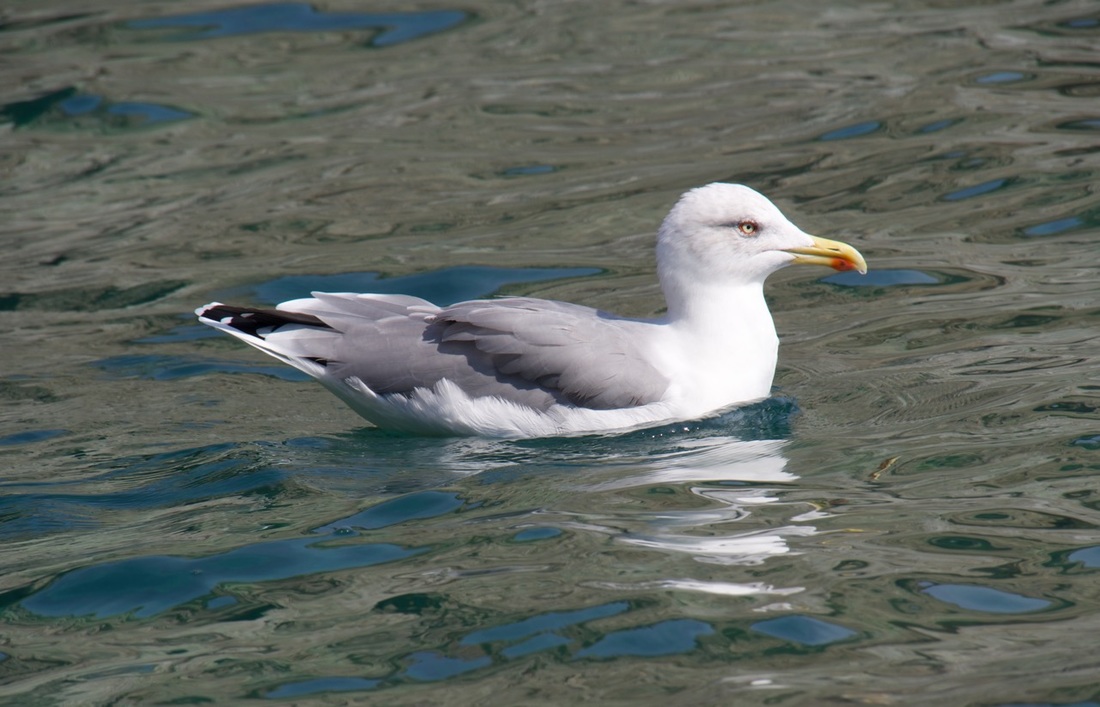
But all this piscatorial richness raises, not for the first time, the rather obvious ecological question: where are the avian predators? There are a few cormorants about, but pretty few, and no more than in previous years. The shearwaters and the occasional gannet mentioned in previous blogs were obviously occasional visitors, and otherwise we have seen only a couple of young sandwich terns, which could dive for fish, and some gulls which can only take things close to the surface. One day a yellow-legged gull came close to us and we watched it for quite a while; it made no effort to look for food under the water and was presumably hoping for scraps from the boats.

Picture
Yellow legged gull

We have never had the gulls around us while we have been anchored on the Reserve, nor do they even hang around the small boats out there, which are obviously fishing. There really does seem to be what you might term an "ecological gap" here, a rich and growing marine resource, which appears free from predation from the air...

Can't wait till next year to see how the situation may develop!


0 Comments

Moths, Butterflies & Bees at La Batère

3/9/2016

0 Comments

 
by Lesley McLaren

Early September, it was good to escape the heat of the Roussillon plain and head into the mountains again. Bruce and I were on a mission. He suspected there might be some interesting butterflies alongside the stream below the main track to the tower.

After parking (no other cars - we had the place to ourselves), we set off right, following a trail of cowpats down the footpath that leads eventually to Arles-sur-Tech, although we'd only be going a kilometre or so. Even at this height it was hot. There was hardly any wind, little shade, and it was blissfully peaceful. All we could hear were the stream and the gentle buzz of bees.

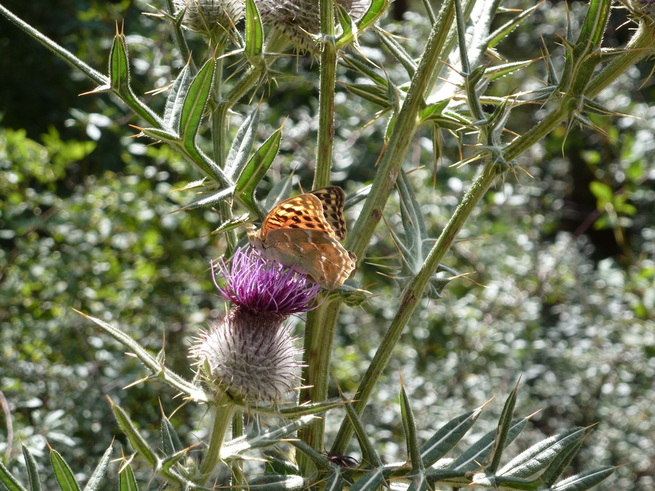
So many bees! And many different species too. There were some especially big ones, covered in pollen that made them look more grey than black. Not quite big enough (and too hairy) for Carpenters, I think, but so far I haven't managed to identify them. They were enjoying the beautiful thistles. As were the butterflies. Bruce's suspicion was spot on and it was hard to know where to look next. Many were attracted to flowering horse mint as well. By the end of the day we knew we'd seen at least 17 different butterfly species. (When Bruce subsequently checked his photos, that tally would get closer to 30).

Picture
Silver washed fritillary
For me, though, the hummingbird hawkmoths stole the show. As we stood and stared at a particularly popular patch of thistles, they came within inches of us, hovering and probing with their super-long proboscis. They are such extraordinary insects.

Here's a very short video of one with a couple of friends (plus background sound effects from my dog!).

Hairy bee, red admiral and hummingbird hawkmoth from Lesley McLaren on Vimeo.

And here's that last hummingbird hawkmoth again (with an industrious bee), at a quarter the speed:

slow motion Hummingbird hawkmoth from Lesley McLaren on Vimeo.

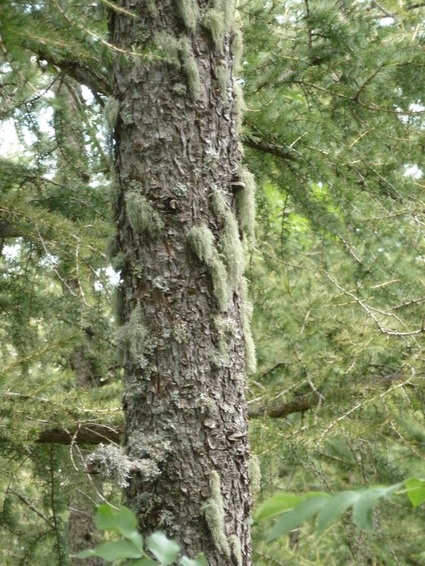
Later we returned to the piste and headed for the tower, pausing in the welcome shade of larch for a picnic lunch. In contrast to springtime, this spot was now very quiet. No birdsong, nothing flitting from branch to branch. But there was some splendid lichen, which shows how pure the air must be up here.

Picture
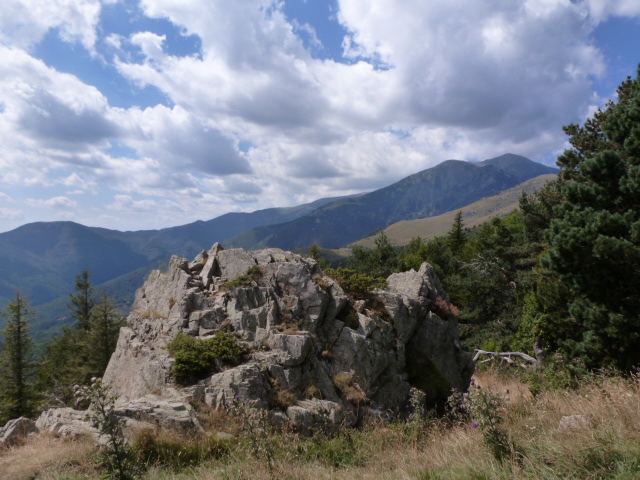
I didn't expect to see many birds - especially vultures or large raptors, because they would be riding too high on the thermals. Nevertheless, three griffons did circle the cols periodically and, as we admired the views next to the tower, a golden eagle flew directly overhead. The resident kestrel was around as usual (as were ravens and alpine chough), and I glimpsed another falcon, flying fast away from us as we returned to the car.

By now a few clouds had bubbled up and there was a light breeze, but neither offered much relief.

Picture
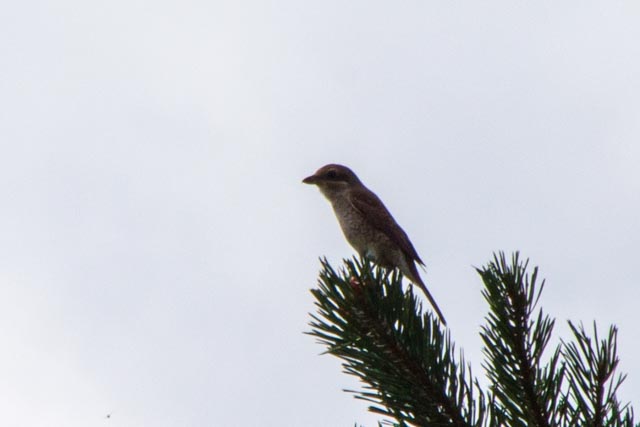
At the last bend something caught my eye, flying across the track and settling on the top of a stubby tree some distance away. Roughly the size of a lark. But not a lark. This was something different but, against the light, annoyingly I couldn't make out any markings, even through binoculars. How exciting, then, to identify it later from Bruce's photo: a female Red-backed shrike. Her speckled chest is distinctive, as is that heavy bill, with its small hook, just visible. I'm more used to seeing Woodchat shrikes in the P-O and this was a first for me! Something else to look out for next time I'm up there.
Picture
It was 27 degrees when we called it a day. The heat had sapped our strength but, as usual, La Batère had not disappointed.
0 Comments

End of Summer Sights and Sounds

31/8/2016

0 Comments

 
by Lesley McLaren

Although grateful for more refreshing temperatures at the start and end of the day now, I can't believe we're already at the end of August and it's la rentrée for school children, holidaymakers, and a lot of bird species.

To be accurate, swifts left a while ago. I've also been hearing small flocks of bee eaters almost daily for the last week or so, but most have been too high to see well. The local bird group (GOR) reports that raptors are also on the move. The autumn migration is monitored at a spot near Eyne in the Cerdagne, and of particular interest each year is le rush (as they describe it) of honey buzzards. 2,500 were counted only yesterday, bringing the total to 6,000 for that species alone since 7th August. (Numbers of all species counted are updated daily here.)

I've been keeping out of the searing heat as much as possible during the high season, as do many other creatures, but my dog has still needed walking and it's always worth keeping eyes peeled and ears pricked. Apart from those bee eaters, there is little birdsong now. But on our regular circuit there is a very talkative buzzard. He (or she) has a favourite area in the orchards, and a particularly favourite telegraph pole. I'm more used to hearing them call when soaring rather than than perched, but this one just never shuts up, no matter where it is or what it's doing. I wonder how much success it has when hunting, because it's always advertising its presence! I'm sure it's the same bird too, because the call doesn't sound quite right (it definitely is a buzzard though). Which makes me wonder: do some birds have speech impediments? Or could it be a juvenile and hasn't quite got the hang of its voice yet? I have no idea how long it takes for young birds to perfect their songs and calls (it may be immediate). Plumage markings do vary according to age though, so perhaps I shall return with my binoculars and book and try to at least establish if it's an adult or not.*
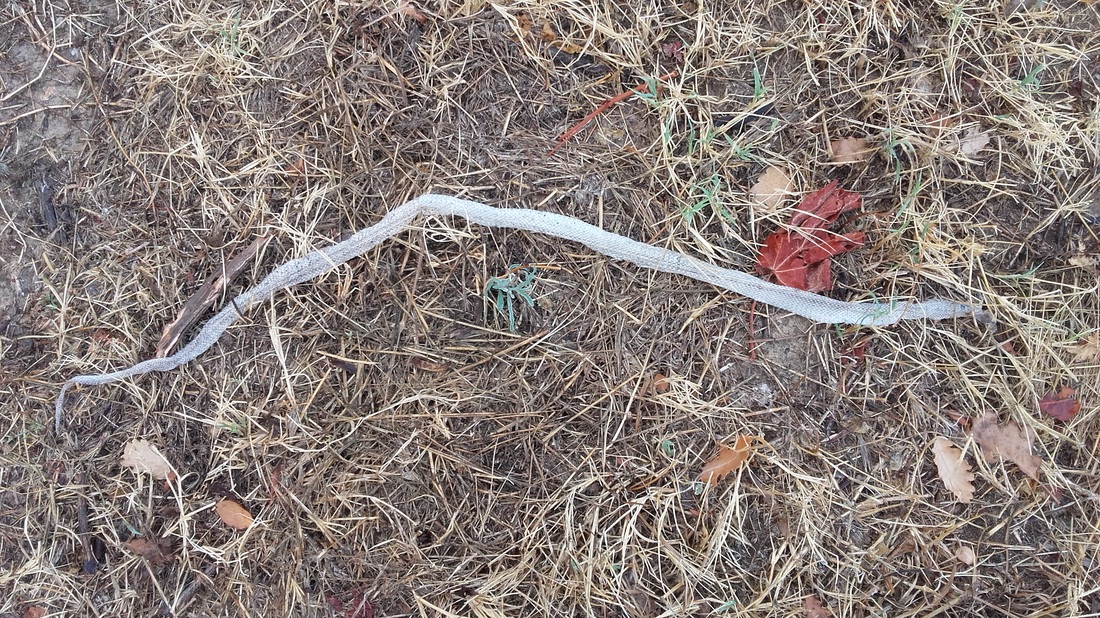
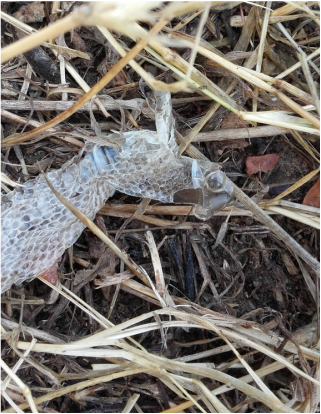
In the same general area the other day - close to where I met my first crayfish earlier in the year - I spotted something that at first looked like a narrow tube of plastic netting (perhaps about a foot and a half long), which turned out to be the cast skin of a snake. All the more remarkable because it was complete; unbroken except for the back of the head, from where I assume the (bigger) snake had slithered out. Perhaps we only just missed the event.


Picture
Close up, I could even see where the eye had been.

Picture
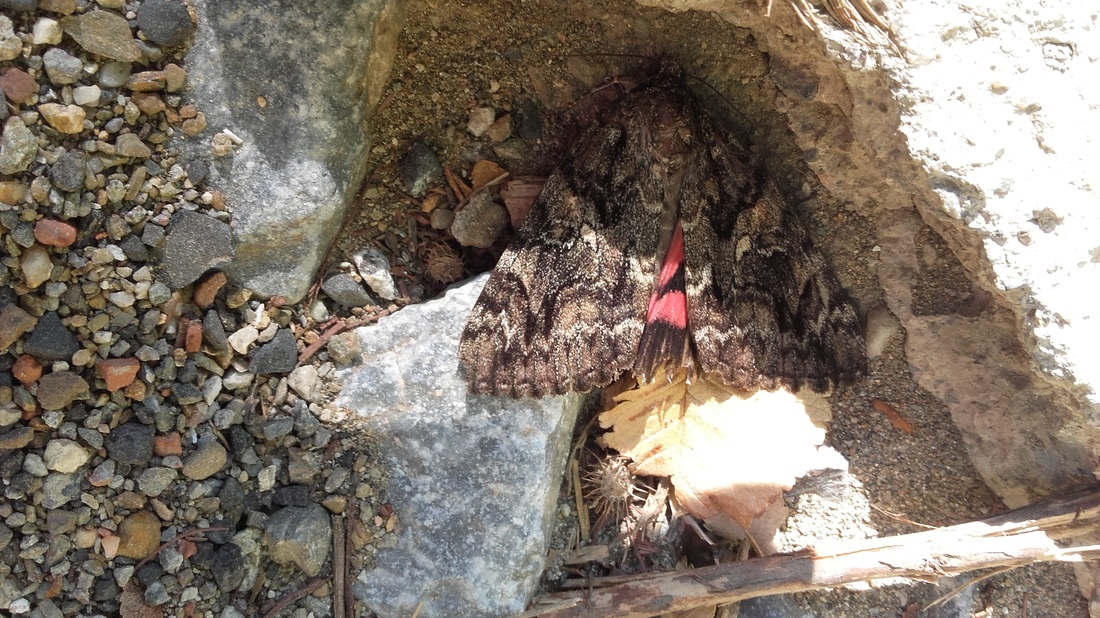
From reptiles to insects: Today's find was a big moth. It's definitely a member of the noctuid family but I'm less sure which. Either the Red Underwing (Catocala nupta) or the Dark Crimson Underwing (Catocala sponsa). My bet is on the Dark Crimson. Had it not been fluttering around when I saw it, I'm sure I'd have walked straight past. Unfortunately those pretty red and black hind wings were almost tucked out of sight by the time I took the photo, but the brown-grey patterning is itself beautiful - and provides extraordinary camouflage.
Picture
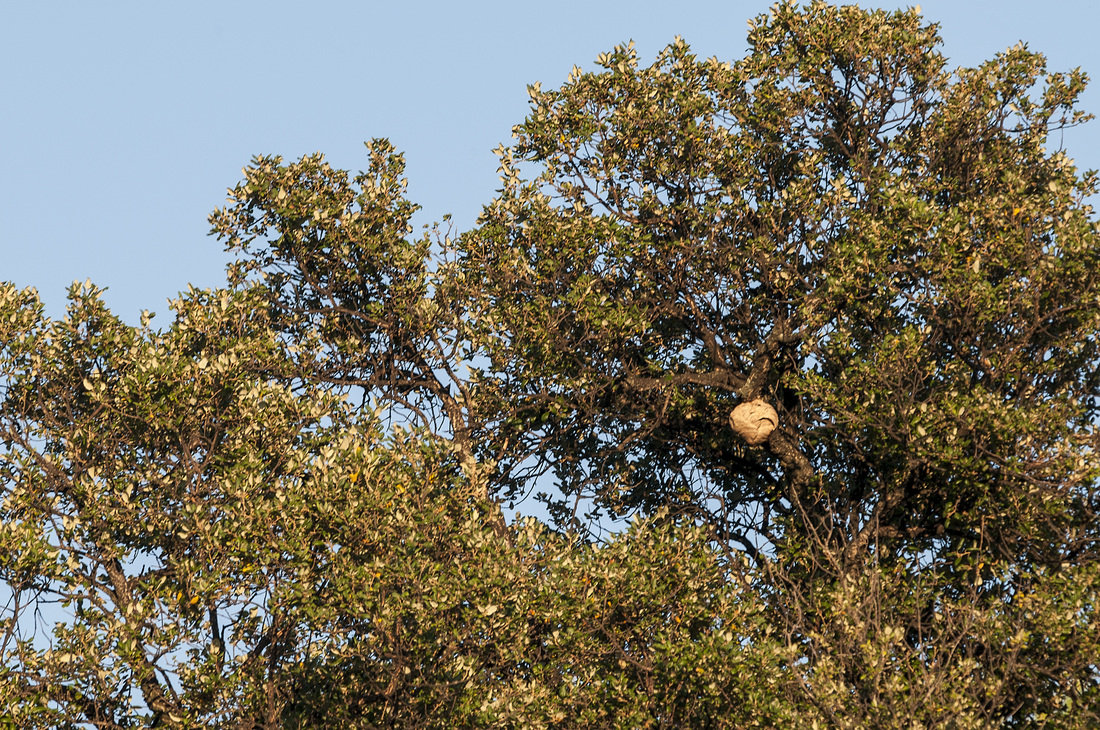
Isobel has also been photographing the extraordinary, from her balcony. Somewhat pumpkin-like, near the top of a huge old cork oak:
Picture
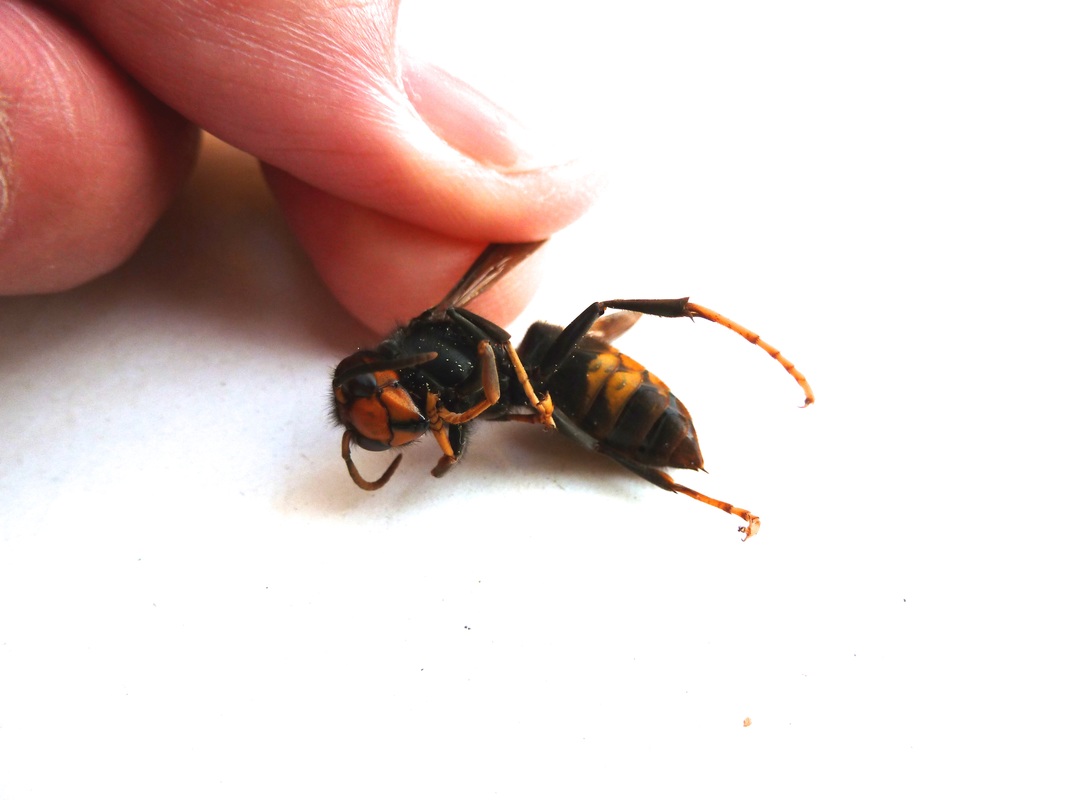
It's an Asian hornet's nest - and very active. Accidentally introduced into Europe, these are spreading and, sadly, they are devastating to bees: wiping out whole hives. Unfortunately the only current way to destroy them is by chemical pesticides, which can result in the deaths of other, harmless insects, as well as creatures higher up the food chain, like birds. We hear that a new, ecologically friendly method is under development, but funding is a problem. Donations welcome! More information on the project can be found here.

For reference, the Asian hornet has an orange head and legs, and looks quite different from our endemic European species (which does not attack bees).

I imagine the hornets in this nest will start to die off soon, leaving only their queen to over-winter and start a new colony next year. It's all change, as another summer draws to a close, days shorten and autumn approaches!

* Buzzard puzzle solved:
Robin, who has much more experience of buzzards, says: "I'm sure your buzzard is a young one; that sort of constant complaining voice is absolutely typical! I imagine the parents are trying to encourage it to fly and forage for itself, and it can't be bothered - very like the average teenager!" It does sound as though it's whining, and its 'spot' is where I often see a pair, so this fits perfectly. Thanks, Robin!


0 Comments

Late Spring Seabird Blog

17/6/2016

0 Comments

 
by Robin Noble

The constantly changing weather is making planning ahead quite difficult, but the sea is definitely warming up, and so the boating season is firmly underway. I have remarked before that I do not understand why we should have so few seabirds (although there seem to be more gulls about this year), when there is certainly no shortage of fish. However, from time to time something interesting quite literally appears on the horizon.
 
We were out one day last week when we saw a low, planing flight over the sea, dark against the sombre water on a day of oily calm or occasional slight swell. It was immediately evocative for both of us; we are familiar with the manx shearwater which nests on the dramatic island of Rum in the Small Isles off Scotland's West Coast, and this clearly had to belong to the same family, which includes the bulkier fulmar with which some readers may be more familiar. We went in the direction of the bird we had seen, and as we got closer, it turned out that there were, ultimately, six of them, as well as one immature gannet; this was, interestingly, often followed by one of the other birds.
 
As we got nearer and switched off the motor, the birds began to circle around the boat at intervals, and it became clear that these were definitely shearwaters, but of a type we had not seen before. They were perhaps larger, at least longer-winged than a fulmar, but much slimmer, more like a larger version of the manx, but definitely brownish on the back and wing. There was also a conspicuous, narrow, white band above the short, dark tail, and the birds had a dark cap above a pale throat and white breast. Having noted these main characteristics, we sat entranced, as they flew around us, skimming the surface of the sea in a long, low, undulating flight. We could see quite clearly the complex tube-nose which all members of the petrel family possess, from the tiny storm petrel to the mighty albatross. I have recently read that it is now thought that this characteristic nose helps the bird gauge the air pressure as it passes over the waves.
 
Once home, it was out with the books and we were surprised how many possible candidates there were, including the balearic and Cory's shearwaters. But although the former are clearly rather more "local", we decided eventually that these were definitely the great (or greater!) shearwater, which really belongs to the Atlantic. Looking carefully at the illustrations, I have come to the conclusion that these were immature birds, non-breeders. The petrels do not breed until they are perhaps eight or nine years old; several of them seem to live to be at least forty. In those first years, they range all over the oceans of the world, and our birds had clearly opted for a Mediterranean break - and who can blame them?


0 Comments

Little Eagle Blog

13/4/2016

0 Comments

 
by Robin Noble

A couple of weeks ago, we succumbed to temptation in the local Jardinerie, and acquired a modestly-sized, but quite solid, olive tree. We got it, in the van, close to the back door, and had begun the process of lugging it, between us, into the orchard, where it was to rest until I had dug a hole for it, and the wind had calmed down so that it would be easier to plant (some hope!). Just as we started to shunt the load which was merely awkward rather than heavy, it happened......

For a would-be ornithologist, my eyes are in fact not as sharp as they might be. Add to that the fact that I have lived in several densely-wooded glens in my life (Vallespir being only the latest), and you will realise that much of my "bird-watching" is actually done with my ears, which are actually (still!), reasonably good. And what happened at that moment was that a bird called overhead, not once but twice.

Having heard the call, something out of my memory simply said : "eagle", and I did not wait to think how unlikely this might be; after all, we were in a small suburban garden in a lotissement in the quite well-populated Vallespir at the time. "Eagle?" I simply said to Martine, in a rush , "I am going to put this down", did so at once, and looked straight up - and there it was; no, there they were, directly above us, their pale undersides clear even in shadow. There were two short-toed eagles above us, gliding, but moving fast up the valley. There was obviously no time to rush to find binoculars, they would be out of sight within moments - and were.

There was no doubt what they were; they were big birds, significantly bigger than the buzzards which we do see cross the valley on occasion. Their underparts were noticeably pale, despite the speckling and banding, and there was that "eagle" call. I had seen them a few times before, but in rather wilder locations; I rather enjoyed adding short-toed eagle to my list of garden birds!

0 Comments
<<Previous
Forward>>

    Authors

    Bruce Hyde
    Isobel Mackintosh
    Lesley McLaren
    Robin Noble

    Archives

    August 2020
    May 2020
    September 2019
    August 2019
    July 2019
    March 2019
    February 2019
    September 2018
    August 2018
    July 2018
    May 2018
    April 2018
    March 2018
    January 2018
    September 2017
    August 2017
    July 2017
    June 2017
    May 2017
    April 2017
    March 2017
    February 2017
    December 2016
    November 2016
    October 2016
    September 2016
    August 2016
    July 2016
    June 2016
    April 2016
    March 2016
    February 2016
    January 2016
    December 2015
    November 2015
    October 2015
    September 2015
    August 2015
    July 2015
    June 2015
    May 2015
    April 2015
    March 2015
    February 2015
    December 2014
    October 2014
    September 2014
    August 2014
    July 2014
    June 2014
    May 2014
    April 2014
    March 2014
    February 2014
    January 2014
    December 2013
    November 2013

    Categories

    All
    Amphibians
    Arachnids
    Birds
    Bruce Hyde
    Dragonfly Differences
    Insects
    Isobel Mackintosh
    Lesley McLaren
    Mammals
    Marine Life
    Misc
    Mushrooms & Fungi
    Plants
    Reptiles
    Robin Noble
    Sea & Coast
    Tracks/Traces
    Weather

    Click icon for notification of new posts
    Subscribe
Lesley McLaren, Bruce Hyde, Isobel Mackintosh, Robin Noble, Martine Howard, mediterraneanpyrenees.com associates and affiliates do not warrant or assume any legal liability or responsibility for the accuracy, completeness or usefulness of any information, product or process disclosed. Lesley McLaren, Bruce Hyde, Isobel Mackintosh, Robin Noble, Martine Howard, mediterraneanpyrenees.com and affiliates do not endorse or recommend any commercial products, processes or services and cannot be held liable for any result of the use of such information, products, processes or services discussed on this website.